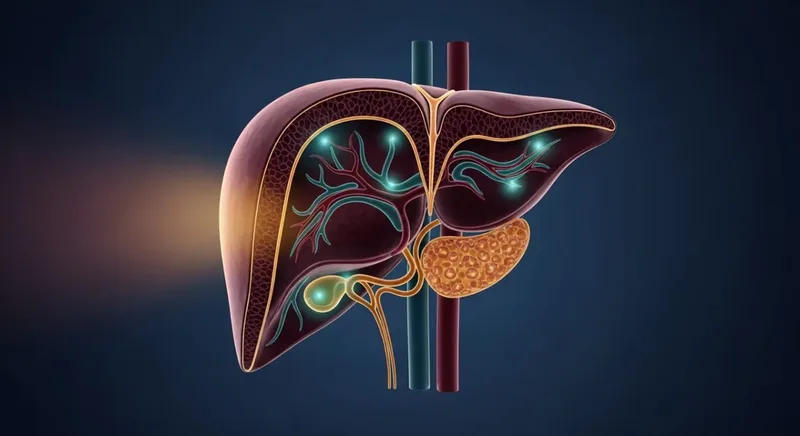
Funkcja wątroby
Wątroba jest jednym z największych i najważniejszych narządów wewnętrznych, którego głównym zadaniem jest przetwarzanie pokarmów i płynów. Wątroba magazynuje składniki odżywcze, usuwa z krwi zużyte komórki i odpady. Wątroba filtruje również toksyny znajdujące się w lekach lub alkoholu i produkuje żółć, która pomaga trawić tłuszcze.
Przerzuty
Rak wątroby to choroba dwóch rodzajów. W jednym przypadku guzy pojawiają się w samej wątrobie, podczas gdy w drugim guzy w wątrobie pochodzą z innego ogniska raka – innymi słowy, przerzuty w wątrobie rozprzestrzeniają się z innych narządów.
W pierwszym przypadku guzy pojawiają się w wątrobie, najczęściej w głównych komórkach wątroby – hepatocytach – tworząc złośliwy guz w wątrobie. Choroba ta, zwana również rakiem wątrobowokomórkowym (HCC), jest najczęstszym nowotworem wątroby.
Rak wątroby – dlaczego na niego chorujemy?
Najczęstsze przyczyny raka wątroby to:
- Nadwaga
- Alkohol
- Palenie tytoniu
- Przewlekłe wirusowe zapalenie wątroby typu B
- Przewlekłe wirusowe zapalenie wątroby typu C
W niektórych przypadkach stłuszczenie wątroby jest również wymieniane jako przyczyna raka wątroby, ale przyczyny tej choroby są prawie identyczne z przyczynami samego raka wątroby: alkohol (toksyny), nadwaga (przejadanie się), fruktoza (przejadanie się), trójglicerydy (alkohol, fruktoza, przejadanie się), wysoki poziom glukozy we krwi (przejadanie się), wirusowe zapalenie wątroby typu C i wirusowe zapalenie wątroby typu B [5].
Stadia
Istnieją 4 stadia raka wątroby [6]:
Stadium 1 (bardzo wczesne stadium) dzieli się na stadium 1A i stadium 1B: Guz znajduje się tylko w wątrobie i jest pojedynczy, o wielkości mniejszej niż 2 cm.
Stadium 2 (stadium wczesne): występuje pojedynczy guzek w wątrobie o wielkości 5 cm lub mniejszej, albo występuje wiele guzków, z których każdy ma mniej niż 3 cm. Guzki mogły rozprzestrzenić się do naczyń krwionośnych.
Stadium 3 (stadium pośrednie) dzieli się na stadia 3A i 3B: Na tym etapie może występować więcej niż jeden guzek, każdy o wielkości ponad 5 cm. Przerzuty do wątroby (rozsiew) mogą obejmować węzły chłonne, duże naczynia krwionośne lub inny narząd.
Stadium 4 (stadium zaawansowane), dzielone na stadia 4A i 4B: Rak wątroby dał przerzuty do innych części ciała, takich jak płuca lub kości, a także do węzłów chłonnych.
Rak wątroby – oczekiwana długość życia
Chociaż oczekiwana długość życia w przypadku raka wątroby znacznie wzrosła w ciągu ostatnich 20 lat, [7], rokowania w raku wątroby nie są zachęcające.
Oczekiwana długość życia i rokowanie zależą od wielu czynników:
- Stopień zaawansowania
- Liczba zmian
- Przerzuty
- Stan zdrowia otaczającej tkanki wątrobowej
- Ogólny stan zdrowia pacjenta
Amerykańskie Towarzystwo Onkologiczne (American Cancer Society) podaje, że ogólny 5-letni wskaźnik przeżycia w przypadku raka wątroby wynosi 20% [8].
Bardziej szczegółowa tabela oczekiwanej długości życia.
Czy można wydłużyć oczekiwaną długość życia w raku wątroby?
Rokowanie w raku wątroby zależy nie tylko od stadium czy metody leczenia – równie ważnym czynnikiem jest zdolność organizmu do walki z chorobą. Układ odpornościowy odgrywa kluczową rolę: rozpoznaje zmienione komórki, hamuje rozprzestrzenianie się przerzutów i wspomaga powrót do zdrowia po leczeniu chirurgicznym lub chemioterapeutycznym.
Badania naukowe potwierdzają, że niektóre polisacharydy grzybowe mogą wzmacniać odpowiedź immunologiczną w trakcie chorób onkologicznych. Te substancje aktywne pomagają organizmowi skuteczniej mobilizować komórki obronne – komórki NK (naturalni zabójcy) i limfocyty T – które bezpośrednio zwalczają postęp nowotworu.
Doświadczenie kliniczne pokazuje, że pacjenci, którzy łączą standardowe leczenie z suplementami wspomagającymi odporność, częściej osiągają lepsze wskaźniki odpowiedzi. Suplementy nie są lekiem na raka, ale są stosowane jako środek wspomagający, w połączeniu z leczeniem podstawowym.
Lentinan AXT od Zenius Labs™ – zaawansowana formuła polisacharydów grzybowych o przebadanym klinicznie składzie, opracowana w celu wspierania układu odpornościowego w trakcie chorób onkologicznych.
Dowiedz się więcej o Lentinan AXT →Często zadawane pytania
Rak — wszystko, co musisz wiedzieć
Dieta przeciwnowotworowa
Lentinan
- Kawarada Y et al. Significance of multidisciplinary therapy for hepatocellular carcinoma. Cancer chemotherapy and pharmacology. 1992. PubMed
- Zou Y et al. A polysaccharide from mushroom Huaier retards human hepatocellular carcinoma growth, angiogenesis, and metastasis in nude mice. Tumour biology : the journal of the International Society for Oncodevelopmental Biology and Medicine. 2015. PubMed
- Khinsar KH et al. Anti-tumor effect of polysaccharide from Pleurotus ostreatus on H22 mouse Hepatoma ascites in-vivo and hepatocellular carcinoma in-vitro model. AMB Express. 2021. PubMed
- Li GL et al. The anti-hepatocellular carcinoma effects of polysaccharides from Ganoderma lucidum by regulating macrophage polarization via the MAPK/NF-κB signaling pathway. Food & function. 2023. PubMed
- Yang P et al. Clinical application of a combination therapy of lentinan, multi-electrode RFA and TACE in HCC. Advances in therapy. 2008. PubMed
- Yuan Y et al. TACE-HAIC combined with targeted therapy and immunotherapy versus TACE alone for hepatocellular carcinoma with portal vein tumour thrombus: a propensity score matching study. International journal of surgery (London, England). 2023. PubMed
- Maataoui A et al. Transarterial chemoembolization alone and in combination with other therapies: a comparative study in an animal HCC model. European radiology. 2005. PubMed
- Guo N et al. Transcatheter hepatic arterial chemoembolization plus cinobufotalin injection adjuvant therapy for advanced hepatocellular carcinoma: a meta-analysis of 27 trials involving 2,079 patients. OncoTargets and therapy. 2018. PubMed
- Yang Y et al. Compound kushen injection relieves tumor-associated macrophage-mediated immunosuppression through TNFR1 and sensitizes hepatocellular carcinoma to [placeholder for name of the medicine]. Journal for immunotherapy of cancer. 2020. PubMed
- Wang C et al. Astragali radix - Curcumae rhizoma herb pair enhances [placeholder for name of the medicine] efficacy by inducing ferroptosis and activates Th1 cell immune response synergistically against hepatocellular carcinoma. Phytomedicine : international journal of phytotherapy and phytopharmacology. 2025. PubMed
- Zhang QB et al. Suppression of natural killer cells by [placeholder for name of the medicine] contributes to prometastatic effects in hepatocellular carcinoma. PloS one. 2013. PubMed
- Sun Q et al. Targeting NAD(+) metabolism of hepatocellular carcinoma cells by [placeholder for name of the medicine] promotes M2 macrophages reverse polarization, suppressing the HCC progression. Hepatology international. 2023. PubMed
- Mani SKK et al. Hepatitis B Virus-Associated Hepatocellular Carcinoma and Hepatic Cancer Stem Cells. Genes. 2018. PubMed
- Meng Y et al. Hepatitis B Virus-Mediated m6A Demethylation Increases Hepatocellular Carcinoma Stemness and Immune Escape. Molecular cancer research : MCR. 2024. PubMed
- Ortega-Prieto AM et al. Immune Evasion Strategies during Chronic Hepatitis B and C Virus Infection. Vaccines. 2017. PubMed
- Chisari FV et al. Hepatitis B virus immunopathology. Springer seminars in immunopathology. 1995. PubMed
- Meunier L et al. Chemotherapy-associated steatohepatitis. Annals of hepatology. 2020. PubMed
- Farrell GC Drugs and steatohepatitis. Seminars in liver disease. 2002. PubMed
- Huang DQ et al. Global epidemiology of NAFLD-related HCC: trends, predictions, risk factors and prevention. Nature reviews. Gastroenterology & hepatology. 2021. PubMed
- Llovet JM et al. Nonalcoholic steatohepatitis-related hepatocellular carcinoma: pathogenesis and treatment. Nature reviews. Gastroenterology & hepatology. 2023. PubMed
- Thomas SK et al. Kupffer cells prevent pancreatic ductal adenocarcinoma metastasis to the liver in mice. Nature communications. 2023. PubMed
- Pereira FE et al. Kupffer cell activation with BCG. Corynebacterium parvum or zymosan protects against acute liver injury induced by carbon tetrachloride in rats. Arquivos de gastroenterologia. 1997. PubMed
- Armbrust T et al. Functional characterization of two different Kupffer cell populations of normal rat liver. Journal of hepatology. 1996. PubMed
- Youssef J et al. Activated Kupffer cells attenuate the liver response to the peroxisome proliferator perfluorooctanoic acid. Molecular and cellular biochemistry. 1997. PubMed
- Lau HC et al. Gut microbiome in metabolic dysfunction-associated steatotic liver disease and associated hepatocellular carcinoma. Nature reviews. Gastroenterology & hepatology. 2025. PubMed
- Yu LX et al. The gut microbiome and liver cancer: mechanisms and clinical translation. Nature reviews. Gastroenterology & hepatology. 2017. PubMed
- Jiang JW et al. Gut microbial dysbiosis associates hepatocellular carcinoma via the gut-liver axis. Hepatobiliary & pancreatic diseases international : HBPD INT. 2019. PubMed
- Ahmad MF et al. Ganoderma lucidum: Novel Insight into Hepatoprotective Potential with Mechanisms of Action. Nutrients. 2023. PubMed
- Bahmani M et al. Silybum marianum: Beyond Hepatoprotection. Journal of evidence-based complementary & alternative medicine. 2015. PubMed
- Lu X et al. Pretransplant immunotherapy increases acute rejection yet improves survival outcome of HCC patients with MVI post-liver transplantation. Cancer immunology, immunotherapy : CII. 2024. PubMed
- Rezaee-Zavareh MS et al. Impact of pre-transplant immune checkpoint inhibitor use on post-transplant outcomes in HCC: A systematic review and individual patient data meta-analysis. Journal of hepatology. 2025. PubMed
- Ersan V et al. The Timing of Liver Transplantation Following Downstaging: Wait of Not to Wait?. Journal of gastrointestinal cancer. 2020. PubMed
- Hong G et al. Safety and Therapeutic Outcomes of Adjuvant Immunotherapy With Autologous Cytokine-induced Killer Cells for Patients With Hepatocellular Carcinoma Beyond Milan Criteria After Liver Transplantation. Transplantation. 2025. PubMed
- Leuchte K et al. Microwave ablation enhances tumor-specific immune response in patients with hepatocellular carcinoma. Cancer immunology, immunotherapy : CII. 2021. PubMed
- Lei Y et al. COX-2/PGE(2) axis blockade with [placeholder for name of the medicine] enhances anti-PD-1 efficacy by activating natural killer cells for residual hepatocellular carcinoma after radiofrequency ablation. Journal of experimental & clinical cancer research : CR. 2025. PubMed
- Qian L et al. Potent induction of antitumor immunity by combining cryo-thermal ablation with immune checkpoint inhibitors in hepatocellular carcinoma. Liver international : official journal of the International Association for the Study of the Liver. 2024. PubMed
- Xu X et al. Activation of Anti-tumor Immune Response by Ablation of HCC with Nanosecond Pulsed Electric Field. Journal of clinical and translational hepatology. 2018. PubMed
- Li J et al. Astaxanthin Inhibits Proliferation and Induces Apoptosis of Human Hepatocellular Carcinoma Cells via Inhibition of Nf-Κb P65 and Wnt/Β-Catenin in Vitro. Marine drugs. 2015. PubMed
- Laderian A et al. Hepatoprotective effect of astaxanthin against cholestasis liver fibrosis induced by bile duct ligation in adult Wistar rats. Journal of biochemical and molecular toxicology. 2024. PubMed
- Takada T et al. [Case of hepatocellular carcinoma with a marked reduction in the tumor size induced by PSK administration alone]. Gan to kagaku ryoho. Cancer & chemotherapy. 1983. PubMed
- Hara Y et al. [Disappearance of lung metastases from hepatocellular carcinoma following PSK administration]. Rinsho hoshasen. Clinical radiography. 1988. PubMed
- You J et al. Lentinan induces apoptosis of mouse hepatocellular carcinoma cells through the EGR1/PTEN/AKT signaling axis. Oncology reports. 2023. PubMed
- Wang Z et al. Apaf1 nanoLuc biosensors identified lentinan as a potent synergizer of [placeholder for name of the medicine] in targeting hepatocellular carcinoma cells. Biochemical and biophysical research communications. 2021. PubMed
- Wang Y et al. Effects of tumor-specific antigen induced by lentinan on murine H22 hepatocellular carcinoma immunoprophylaxis. European review for medical and pharmacological sciences. 2015. PubMed
- Isoda N et al. Clinical efficacy of superfine dispersed lentinan (beta-1,3-glucan) in patients with hepatocellular carcinoma. Hepato-gastroenterology. 2009. PubMed
- Wang H et al. Efficacy of biological response modifier lentinan with chemotherapy for advanced cancer: a meta-analysis. Cancer medicine. 2017. PubMed
- Oba K et al. Efficacy of adjuvant immunochemotherapy with polysaccharide K for patients with curative resections of gastric cancer. Cancer immunology, immunotherapy : CII. 2007. PubMed
- Cheng SC et al. mTOR- and HIF-1α-mediated aerobic glycolysis as metabolic basis for trained immunity. Science (New York, N.Y.). 2014. PubMed
- Kidd P Astaxanthin, cell membrane nutrient with diverse clinical benefits and anti-aging potential. Alternative medicine review : a journal of clinical therapeutic. 2011. PubMed
- Wang Y et al. Systematic review and meta-analysis on the efficacy and safety of Injectable Lentinan combined with chemotherapy in the treatment of gastric cancer. Phytomedicine : international journal of phytotherapy and phytopharmacology. 2024. PubMed