- Le rôle du foie
- Métastases dans le foie
- Pourquoi en est-on atteint ?
- Stade 4
- Espérance de vie
- Comment la prolonger ?
Fonction hépatique
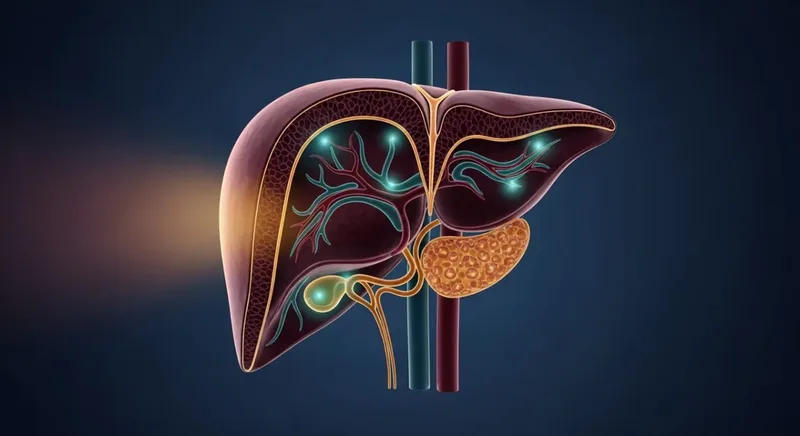
Le foie est l'un des organes internes les plus grands et les plus importants, dont la tâche principale est de traiter les aliments et les liquides. Le foie stocke les nutriments, élimine les cellules usées et les déchets du sang. Le foie filtre également les toxines présentes dans les médicaments ou l'alcool et produit de la bile, qui aide à digérer les graisses.
Métastases
Le cancer du foie est une maladie de deux types. Dans un cas, des excroissances apparaissent dans le foie lui-même, tandis que dans l'autre, les excroissances dans le foie proviennent d'un autre site cancéreux – en d'autres termes, les métastases dans le foie se propagent à partir d'autres organes.
Dans le premier cas, des excroissances apparaissent dans le foie, le plus souvent dans les principales cellules hépatiques – les hépatocytes – formant une tumeur maligne dans le foie. Cette maladie, également appelée carcinome hépatocellulaire (CHC), est le cancer du foie le plus courant.
Cancer du foie – pourquoi en est-on atteint ?
Les causes les plus fréquentes du cancer du foie sont :
- Surpoids
- Alcool
- Tabagisme
- Hépatite B chronique
- Hépatite C chronique
Dans certains cas, la stéatose hépatique est également citée comme une cause de cancer du foie, mais les causes de cette maladie sont presque identiques à celles du cancer du foie lui-même : alcool (toxines), surpoids (suralimentation), fructose (suralimentation), triglycérides (alcool, fructose, suralimentation), glycémie élevée (suralimentation), hépatite C et hépatite B [5].
Stades
Il existe 4 stades de cancer du foie [6] :
Le stade 1 (stade très précoce) est divisé en stade 1A et en stade 1B : La tumeur est uniquement dans le foie et est unique, avec une taille inférieure à 2 cm.
Stade 2 (stade précoce) : il y a un seul nodule dans le foie mesurant 5 cm ou moins, ou il y a plusieurs nodules mesurant chacun moins de 3 cm. Les nodules peuvent s'être propagés dans les vaisseaux sanguins.
Stade 3 (stade intermédiaire) est divisé en stades 3A et 3B : à ce stade, il peut y avoir plus d'un nodule, chacun mesurant plus de 5 cm. Les métastases hépatiques (propagation) peuvent toucher les ganglions lymphatiques, les gros vaisseaux sanguins ou un autre organe.
Stade 4 (stade avancé), divisé en stades 4A et 4B : le cancer du foie s'est métastasé à d'autres parties du corps, comme les poumons ou les os, ainsi qu'aux ganglions lymphatiques.
Cancer du foie – espérance de vie
Bien que l'espérance de vie pour le cancer du foie ait considérablement augmenté au cours des 20 dernières années, [7], le pronostic du cancer du foie n'est pas encourageant.
L'espérance de vie et le pronostic dépendent de nombreux facteurs :
- Stade
- Nombre de lésions
- Métastases
- Santé du tissu hépatique environnant
- État de santé général du patient
L'American Cancer Society indique que le taux de survie global à 5 ans pour le cancer du foie est de 20 % [8].
Tableau plus détaillé de l'espérance de vie.
L'espérance de vie peut-elle être prolongée en cas de cancer du foie ?
Le pronostic du cancer du foie ne dépend pas seulement du stade ou de la méthode de traitement – la capacité du corps à combattre la maladie est un facteur tout aussi important. Le système immunitaire joue un rôle crucial : il reconnaît les cellules altérées, arrête la propagation des métastases et aide à la récupération après un traitement chirurgical ou chimiothérapeutique.
La recherche scientifique confirme que certains polysaccharides fongiques peuvent améliorer la réponse immunitaire lors de maladies oncologiques. Ces substances actives aident le corps à mobiliser plus efficacement les cellules de défense – les cellules NK (Natural Killer ou tueuses naturelles) et les lymphocytes T – qui luttent directement contre la progression tumorale.
L'expérience clinique montre que les patients qui combinent un traitement standard avec des compléments de soutien immunitaire obtiennent plus souvent de meilleurs taux de réponse. Les compléments ne sont pas un remède contre le cancer, mais ils sont utilisés comme mesure d'appoint, en association avec le traitement principal.
Lentinan AXT de Zenius Labs™ – une formule avancée de polysaccharides de champignons avec une composition étudiée cliniquement, conçue pour soutenir le système immunitaire lors de maladies oncologiques.
En savoir plus sur Lentinan AXT →Foire aux questions
- Kawarada Y et al. Significance of multidisciplinary therapy for hepatocellular carcinoma. Cancer chemotherapy and pharmacology. 1992. PubMed
- Zou Y et al. A polysaccharide from mushroom Huaier retards human hepatocellular carcinoma growth, angiogenesis, and metastasis in nude mice. Tumour biology : the journal of the International Society for Oncodevelopmental Biology and Medicine. 2015. PubMed
- Khinsar KH et al. Anti-tumor effect of polysaccharide from Pleurotus ostreatus on H22 mouse Hepatoma ascites in-vivo and hepatocellular carcinoma in-vitro model. AMB Express. 2021. PubMed
- Li GL et al. The anti-hepatocellular carcinoma effects of polysaccharides from Ganoderma lucidum by regulating macrophage polarization via the MAPK/NF-κB signaling pathway. Food & function. 2023. PubMed
- Yang P et al. Clinical application of a combination therapy of lentinan, multi-electrode RFA and TACE in HCC. Advances in therapy. 2008. PubMed
- Yuan Y et al. TACE-HAIC combined with targeted therapy and immunotherapy versus TACE alone for hepatocellular carcinoma with portal vein tumour thrombus: a propensity score matching study. International journal of surgery (London, England). 2023. PubMed
- Maataoui A et al. Transarterial chemoembolization alone and in combination with other therapies: a comparative study in an animal HCC model. European radiology. 2005. PubMed
- Guo N et al. Transcatheter hepatic arterial chemoembolization plus cinobufotalin injection adjuvant therapy for advanced hepatocellular carcinoma: a meta-analysis of 27 trials involving 2,079 patients. OncoTargets and therapy. 2018. PubMed
- Yang Y et al. Compound kushen injection relieves tumor-associated macrophage-mediated immunosuppression through TNFR1 and sensitizes hepatocellular carcinoma to [placeholder for name of the medicine]. Journal for immunotherapy of cancer. 2020. PubMed
- Wang C et al. Astragali radix - Curcumae rhizoma herb pair enhances [placeholder for name of the medicine] efficacy by inducing ferroptosis and activates Th1 cell immune response synergistically against hepatocellular carcinoma. Phytomedicine : international journal of phytotherapy and phytopharmacology. 2025. PubMed
- Zhang QB et al. Suppression of natural killer cells by [placeholder for name of the medicine] contributes to prometastatic effects in hepatocellular carcinoma. PloS one. 2013. PubMed
- Sun Q et al. Targeting NAD(+) metabolism of hepatocellular carcinoma cells by [placeholder for name of the medicine] promotes M2 macrophages reverse polarization, suppressing the HCC progression. Hepatology international. 2023. PubMed
- Mani SKK et al. Hepatitis B Virus-Associated Hepatocellular Carcinoma and Hepatic Cancer Stem Cells. Genes. 2018. PubMed
- Meng Y et al. Hepatitis B Virus-Mediated m6A Demethylation Increases Hepatocellular Carcinoma Stemness and Immune Escape. Molecular cancer research : MCR. 2024. PubMed
- Ortega-Prieto AM et al. Immune Evasion Strategies during Chronic Hepatitis B and C Virus Infection. Vaccines. 2017. PubMed
- Chisari FV et al. Hepatitis B virus immunopathology. Springer seminars in immunopathology. 1995. PubMed
- Meunier L et al. Chemotherapy-associated steatohepatitis. Annals of hepatology. 2020. PubMed
- Farrell GC Drugs and steatohepatitis. Seminars in liver disease. 2002. PubMed
- Huang DQ et al. Global epidemiology of NAFLD-related HCC: trends, predictions, risk factors and prevention. Nature reviews. Gastroenterology & hepatology. 2021. PubMed
- Llovet JM et al. Nonalcoholic steatohepatitis-related hepatocellular carcinoma: pathogenesis and treatment. Nature reviews. Gastroenterology & hepatology. 2023. PubMed
- Thomas SK et al. Kupffer cells prevent pancreatic ductal adenocarcinoma metastasis to the liver in mice. Nature communications. 2023. PubMed
- Pereira FE et al. Kupffer cell activation with BCG. Corynebacterium parvum or zymosan protects against acute liver injury induced by carbon tetrachloride in rats. Arquivos de gastroenterologia. 1997. PubMed
- Armbrust T et al. Functional characterization of two different Kupffer cell populations of normal rat liver. Journal of hepatology. 1996. PubMed
- Youssef J et al. Activated Kupffer cells attenuate the liver response to the peroxisome proliferator perfluorooctanoic acid. Molecular and cellular biochemistry. 1997. PubMed
- Lau HC et al. Gut microbiome in metabolic dysfunction-associated steatotic liver disease and associated hepatocellular carcinoma. Nature reviews. Gastroenterology & hepatology. 2025. PubMed
- Yu LX et al. The gut microbiome and liver cancer: mechanisms and clinical translation. Nature reviews. Gastroenterology & hepatology. 2017. PubMed
- Jiang JW et al. Gut microbial dysbiosis associates hepatocellular carcinoma via the gut-liver axis. Hepatobiliary & pancreatic diseases international : HBPD INT. 2019. PubMed
- Ahmad MF et al. Ganoderma lucidum: Novel Insight into Hepatoprotective Potential with Mechanisms of Action. Nutrients. 2023. PubMed
- Bahmani M et al. Silybum marianum: Beyond Hepatoprotection. Journal of evidence-based complementary & alternative medicine. 2015. PubMed
- Lu X et al. Pretransplant immunotherapy increases acute rejection yet improves survival outcome of HCC patients with MVI post-liver transplantation. Cancer immunology, immunotherapy : CII. 2024. PubMed
- Rezaee-Zavareh MS et al. Impact of pre-transplant immune checkpoint inhibitor use on post-transplant outcomes in HCC: A systematic review and individual patient data meta-analysis. Journal of hepatology. 2025. PubMed
- Ersan V et al. The Timing of Liver Transplantation Following Downstaging: Wait of Not to Wait?. Journal of gastrointestinal cancer. 2020. PubMed
- Hong G et al. Safety and Therapeutic Outcomes of Adjuvant Immunotherapy With Autologous Cytokine-induced Killer Cells for Patients With Hepatocellular Carcinoma Beyond Milan Criteria After Liver Transplantation. Transplantation. 2025. PubMed
- Leuchte K et al. Microwave ablation enhances tumor-specific immune response in patients with hepatocellular carcinoma. Cancer immunology, immunotherapy : CII. 2021. PubMed
- Lei Y et al. COX-2/PGE(2) axis blockade with [placeholder for name of the medicine] enhances anti-PD-1 efficacy by activating natural killer cells for residual hepatocellular carcinoma after radiofrequency ablation. Journal of experimental & clinical cancer research : CR. 2025. PubMed
- Qian L et al. Potent induction of antitumor immunity by combining cryo-thermal ablation with immune checkpoint inhibitors in hepatocellular carcinoma. Liver international : official journal of the International Association for the Study of the Liver. 2024. PubMed
- Xu X et al. Activation of Anti-tumor Immune Response by Ablation of HCC with Nanosecond Pulsed Electric Field. Journal of clinical and translational hepatology. 2018. PubMed
- Li J et al. Astaxanthin Inhibits Proliferation and Induces Apoptosis of Human Hepatocellular Carcinoma Cells via Inhibition of Nf-Κb P65 and Wnt/Β-Catenin in Vitro. Marine drugs. 2015. PubMed
- Laderian A et al. Hepatoprotective effect of astaxanthin against cholestasis liver fibrosis induced by bile duct ligation in adult Wistar rats. Journal of biochemical and molecular toxicology. 2024. PubMed
- Takada T et al. [Case of hepatocellular carcinoma with a marked reduction in the tumor size induced by PSK administration alone]. Gan to kagaku ryoho. Cancer & chemotherapy. 1983. PubMed
- Hara Y et al. [Disappearance of lung metastases from hepatocellular carcinoma following PSK administration]. Rinsho hoshasen. Clinical radiography. 1988. PubMed
- You J et al. Lentinan induces apoptosis of mouse hepatocellular carcinoma cells through the EGR1/PTEN/AKT signaling axis. Oncology reports. 2023. PubMed
- Wang Z et al. Apaf1 nanoLuc biosensors identified lentinan as a potent synergizer of [placeholder for name of the medicine] in targeting hepatocellular carcinoma cells. Biochemical and biophysical research communications. 2021. PubMed
- Wang Y et al. Effects of tumor-specific antigen induced by lentinan on murine H22 hepatocellular carcinoma immunoprophylaxis. European review for medical and pharmacological sciences. 2015. PubMed
- Isoda N et al. Clinical efficacy of superfine dispersed lentinan (beta-1,3-glucan) in patients with hepatocellular carcinoma. Hepato-gastroenterology. 2009. PubMed
- Wang H et al. Efficacy of biological response modifier lentinan with chemotherapy for advanced cancer: a meta-analysis. Cancer medicine. 2017. PubMed
- Oba K et al. Efficacy of adjuvant immunochemotherapy with polysaccharide K for patients with curative resections of gastric cancer. Cancer immunology, immunotherapy : CII. 2007. PubMed
- Cheng SC et al. mTOR- and HIF-1α-mediated aerobic glycolysis as metabolic basis for trained immunity. Science (New York, N.Y.). 2014. PubMed
- Kidd P Astaxanthin, cell membrane nutrient with diverse clinical benefits and anti-aging potential. Alternative medicine review : a journal of clinical therapeutic. 2011. PubMed
- Wang Y et al. Systematic review and meta-analysis on the efficacy and safety of Injectable Lentinan combined with chemotherapy in the treatment of gastric cancer. Phytomedicine : international journal of phytotherapy and phytopharmacology. 2024. PubMed