- Wat de lever doet
- Uitzaaiingen in de lever
- Waarom krijgen we het?
- Stadium 4
- Levensverwachting
- Hoe kan deze worden verlengd?
Leverfunctie
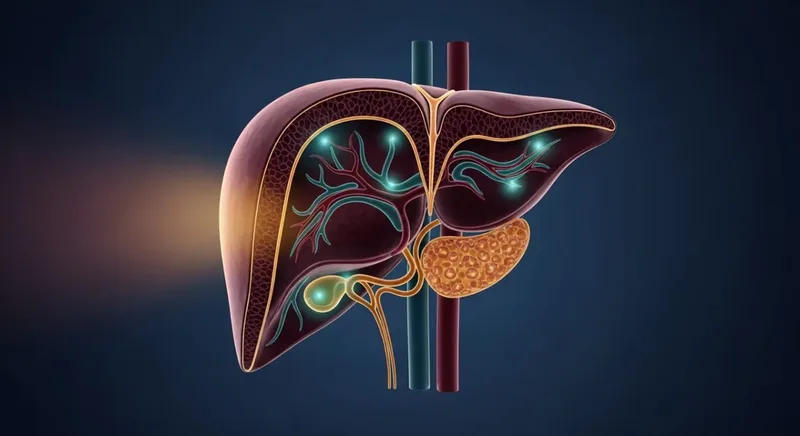
De lever is een van de grootste en belangrijkste inwendige organen, met als belangrijkste taak het verwerken van voedsel en vloeistoffen. De lever slaat voedingsstoffen op en verwijdert versleten cellen en afvalstoffen uit het bloed. De lever filtert ook gifstoffen die in medicijnen of alcohol zitten en produceert gal, wat helpt bij de vertering van vetten.
Uitzaaiingen
Leverkanker is een ziekte van twee soorten. In het ene geval ontstaan er gezwellen in de lever zelf, terwijl in het andere geval gezwellen in de lever afkomstig zijn van een andere kankerhaard – met andere woorden, uitzaaiingen in de lever verspreiden zich vanuit andere organen.
In het eerste geval ontstaan er gezwellen in de lever, meestal in de belangrijkste levercellen – hepatocyten – die een kwaadaardig gezwel in de lever vormen. Deze ziekte, ook wel hepatocellulair carcinoom (HCC) genoemd, is de meest voorkomende vorm van leverkanker.
Leverkanker – waarom krijgen we het?
De meest voorkomende oorzaken van leverkanker zijn:
- Overgewicht
- Alcohol
- Roken
- Chronische hepatitis B
- Chronische hepatitis C
In sommige gevallen wordt leververvetting ook genoemd als oorzaak van leverkanker, maar de oorzaken van deze ziekte zijn bijna identiek aan die van leverkanker zelf: alcohol (gifstoffen), overgewicht (te veel eten), fructose (te veel eten), triglyceriden (alcohol, fructose, te veel eten), hoge bloedglucose (te veel eten), hepatitis C en hepatitis B [5].
Stadia
Er zijn 4 stadia van leverkanker [6]:
Stadium 1 (zeer vroeg stadium) wordt onderverdeeld in stadium 1A en stadium 1B: De tumor bevindt zich alleen in de lever en is enkelvoudig, met een grootte van minder dan 2 cm.
Stadium 2 (vroeg stadium): er is één enkele nodule in de lever van 5 cm of minder, of er zijn meerdere nodules die elk kleiner zijn dan 3 cm. De nodules kunnen zich hebben verspreid naar de bloedvaten.
Stadium 3 (intermediair stadium) wordt onderverdeeld in stadium 3A en 3B: In dit stadium kan er meer dan één nodule zijn, elk groter dan 5 cm. Levermetastasen (uitzaaiingen) kunnen de lymfeklieren, grote bloedvaten of een ander orgaan aantasten.
Stadium 4 (gevorderd stadium), onderverdeeld in stadium 4A en 4B: Leverkanker is uitgezaaid naar andere delen van het lichaam, zoals de longen of botten, en ook naar de lymfeklieren.
Leverkanker – levensverwachting
Hoewel de levensverwachting voor leverkanker de afgelopen 20 jaar aanzienlijk is gestegen, [7], is de prognose voor leverkanker niet bemoedigend.
De levensverwachting en prognose zijn afhankelijk van vele factoren:
- Stadium
- Aantal laesies
- Uitzaaiingen
- Gezondheid van het omliggende leverweefsel
- Algehele gezondheidstoestand van de patiënt
De American Cancer Society stelt dat het algehele 5-jaarsoverlevingspercentage voor leverkanker 20% is [8].
Meer gedetailleerde tabel met levensverwachting.
Kan de levensverwachting bij leverkanker worden verlengd?
De prognose voor leverkanker hangt niet alleen af van het stadium of de behandelmethode – het vermogen van het lichaam om de ziekte te bestrijden is een even belangrijke factor. Het immuunsysteem speelt een cruciale rol: het herkent veranderde cellen, stopt de verspreiding van metastasen en helpt bij het herstel na een chirurgische of chemotherapeutische behandeling.
Wetenschappelijk onderzoek bevestigt dat bepaalde schimmelpolysachariden de immuunrespons bij oncologische aandoeningen kunnen versterken. Deze actieve stoffen helpen het lichaam om afweercellen effectiever te mobiliseren – NK-cellen (natural killer-cellen) en T-lymfocyten – die de tumorprogressie direct bestrijden.
Klinische ervaring toont aan dat patiënten die een standaardbehandeling combineren met immuunondersteunende supplementen vaker betere responspercentages bereiken. Supplementen zijn geen geneesmiddel voor kanker, maar worden gebruikt als een aanvullende maatregel, in combinatie met de primaire behandeling.
Lentinan AXT van Zenius Labs™ – een geavanceerde formule van paddenstoelpolysachariden met een klinisch onderzochte samenstelling, ontworpen om het immuunsysteem te ondersteunen bij oncologische aandoeningen.
Lees meer over Lentinan AXT →Veelgestelde vragen
- Kawarada Y et al. Significance of multidisciplinary therapy for hepatocellular carcinoma. Cancer chemotherapy and pharmacology. 1992. PubMed
- Zou Y et al. A polysaccharide from mushroom Huaier retards human hepatocellular carcinoma growth, angiogenesis, and metastasis in nude mice. Tumour biology : the journal of the International Society for Oncodevelopmental Biology and Medicine. 2015. PubMed
- Khinsar KH et al. Anti-tumor effect of polysaccharide from Pleurotus ostreatus on H22 mouse Hepatoma ascites in-vivo and hepatocellular carcinoma in-vitro model. AMB Express. 2021. PubMed
- Li GL et al. The anti-hepatocellular carcinoma effects of polysaccharides from Ganoderma lucidum by regulating macrophage polarization via the MAPK/NF-κB signaling pathway. Food & function. 2023. PubMed
- Yang P et al. Clinical application of a combination therapy of lentinan, multi-electrode RFA and TACE in HCC. Advances in therapy. 2008. PubMed
- Yuan Y et al. TACE-HAIC combined with targeted therapy and immunotherapy versus TACE alone for hepatocellular carcinoma with portal vein tumour thrombus: a propensity score matching study. International journal of surgery (London, England). 2023. PubMed
- Maataoui A et al. Transarterial chemoembolization alone and in combination with other therapies: a comparative study in an animal HCC model. European radiology. 2005. PubMed
- Guo N et al. Transcatheter hepatic arterial chemoembolization plus cinobufotalin injection adjuvant therapy for advanced hepatocellular carcinoma: a meta-analysis of 27 trials involving 2,079 patients. OncoTargets and therapy. 2018. PubMed
- Yang Y et al. Compound kushen injection relieves tumor-associated macrophage-mediated immunosuppression through TNFR1 and sensitizes hepatocellular carcinoma to [placeholder for name of the medicine]. Journal for immunotherapy of cancer. 2020. PubMed
- Wang C et al. Astragali radix - Curcumae rhizoma herb pair enhances [placeholder for name of the medicine] efficacy by inducing ferroptosis and activates Th1 cell immune response synergistically against hepatocellular carcinoma. Phytomedicine : international journal of phytotherapy and phytopharmacology. 2025. PubMed
- Zhang QB et al. Suppression of natural killer cells by [placeholder for name of the medicine] contributes to prometastatic effects in hepatocellular carcinoma. PloS one. 2013. PubMed
- Sun Q et al. Targeting NAD(+) metabolism of hepatocellular carcinoma cells by [placeholder for name of the medicine] promotes M2 macrophages reverse polarization, suppressing the HCC progression. Hepatology international. 2023. PubMed
- Mani SKK et al. Hepatitis B Virus-Associated Hepatocellular Carcinoma and Hepatic Cancer Stem Cells. Genes. 2018. PubMed
- Meng Y et al. Hepatitis B Virus-Mediated m6A Demethylation Increases Hepatocellular Carcinoma Stemness and Immune Escape. Molecular cancer research : MCR. 2024. PubMed
- Ortega-Prieto AM et al. Immune Evasion Strategies during Chronic Hepatitis B and C Virus Infection. Vaccines. 2017. PubMed
- Chisari FV et al. Hepatitis B virus immunopathology. Springer seminars in immunopathology. 1995. PubMed
- Meunier L et al. Chemotherapy-associated steatohepatitis. Annals of hepatology. 2020. PubMed
- Farrell GC Drugs and steatohepatitis. Seminars in liver disease. 2002. PubMed
- Huang DQ et al. Global epidemiology of NAFLD-related HCC: trends, predictions, risk factors and prevention. Nature reviews. Gastroenterology & hepatology. 2021. PubMed
- Llovet JM et al. Nonalcoholic steatohepatitis-related hepatocellular carcinoma: pathogenesis and treatment. Nature reviews. Gastroenterology & hepatology. 2023. PubMed
- Thomas SK et al. Kupffer cells prevent pancreatic ductal adenocarcinoma metastasis to the liver in mice. Nature communications. 2023. PubMed
- Pereira FE et al. Kupffer cell activation with BCG. Corynebacterium parvum or zymosan protects against acute liver injury induced by carbon tetrachloride in rats. Arquivos de gastroenterologia. 1997. PubMed
- Armbrust T et al. Functional characterization of two different Kupffer cell populations of normal rat liver. Journal of hepatology. 1996. PubMed
- Youssef J et al. Activated Kupffer cells attenuate the liver response to the peroxisome proliferator perfluorooctanoic acid. Molecular and cellular biochemistry. 1997. PubMed
- Lau HC et al. Gut microbiome in metabolic dysfunction-associated steatotic liver disease and associated hepatocellular carcinoma. Nature reviews. Gastroenterology & hepatology. 2025. PubMed
- Yu LX et al. The gut microbiome and liver cancer: mechanisms and clinical translation. Nature reviews. Gastroenterology & hepatology. 2017. PubMed
- Jiang JW et al. Gut microbial dysbiosis associates hepatocellular carcinoma via the gut-liver axis. Hepatobiliary & pancreatic diseases international : HBPD INT. 2019. PubMed
- Ahmad MF et al. Ganoderma lucidum: Novel Insight into Hepatoprotective Potential with Mechanisms of Action. Nutrients. 2023. PubMed
- Bahmani M et al. Silybum marianum: Beyond Hepatoprotection. Journal of evidence-based complementary & alternative medicine. 2015. PubMed
- Lu X et al. Pretransplant immunotherapy increases acute rejection yet improves survival outcome of HCC patients with MVI post-liver transplantation. Cancer immunology, immunotherapy : CII. 2024. PubMed
- Rezaee-Zavareh MS et al. Impact of pre-transplant immune checkpoint inhibitor use on post-transplant outcomes in HCC: A systematic review and individual patient data meta-analysis. Journal of hepatology. 2025. PubMed
- Ersan V et al. The Timing of Liver Transplantation Following Downstaging: Wait of Not to Wait?. Journal of gastrointestinal cancer. 2020. PubMed
- Hong G et al. Safety and Therapeutic Outcomes of Adjuvant Immunotherapy With Autologous Cytokine-induced Killer Cells for Patients With Hepatocellular Carcinoma Beyond Milan Criteria After Liver Transplantation. Transplantation. 2025. PubMed
- Leuchte K et al. Microwave ablation enhances tumor-specific immune response in patients with hepatocellular carcinoma. Cancer immunology, immunotherapy : CII. 2021. PubMed
- Lei Y et al. COX-2/PGE(2) axis blockade with [placeholder for name of the medicine] enhances anti-PD-1 efficacy by activating natural killer cells for residual hepatocellular carcinoma after radiofrequency ablation. Journal of experimental & clinical cancer research : CR. 2025. PubMed
- Qian L et al. Potent induction of antitumor immunity by combining cryo-thermal ablation with immune checkpoint inhibitors in hepatocellular carcinoma. Liver international : official journal of the International Association for the Study of the Liver. 2024. PubMed
- Xu X et al. Activation of Anti-tumor Immune Response by Ablation of HCC with Nanosecond Pulsed Electric Field. Journal of clinical and translational hepatology. 2018. PubMed
- Li J et al. Astaxanthin Inhibits Proliferation and Induces Apoptosis of Human Hepatocellular Carcinoma Cells via Inhibition of Nf-Κb P65 and Wnt/Β-Catenin in Vitro. Marine drugs. 2015. PubMed
- Laderian A et al. Hepatoprotective effect of astaxanthin against cholestasis liver fibrosis induced by bile duct ligation in adult Wistar rats. Journal of biochemical and molecular toxicology. 2024. PubMed
- Takada T et al. [Case of hepatocellular carcinoma with a marked reduction in the tumor size induced by PSK administration alone]. Gan to kagaku ryoho. Cancer & chemotherapy. 1983. PubMed
- Hara Y et al. [Disappearance of lung metastases from hepatocellular carcinoma following PSK administration]. Rinsho hoshasen. Clinical radiography. 1988. PubMed
- You J et al. Lentinan induces apoptosis of mouse hepatocellular carcinoma cells through the EGR1/PTEN/AKT signaling axis. Oncology reports. 2023. PubMed
- Wang Z et al. Apaf1 nanoLuc biosensors identified lentinan as a potent synergizer of [placeholder for name of the medicine] in targeting hepatocellular carcinoma cells. Biochemical and biophysical research communications. 2021. PubMed
- Wang Y et al. Effects of tumor-specific antigen induced by lentinan on murine H22 hepatocellular carcinoma immunoprophylaxis. European review for medical and pharmacological sciences. 2015. PubMed
- Isoda N et al. Clinical efficacy of superfine dispersed lentinan (beta-1,3-glucan) in patients with hepatocellular carcinoma. Hepato-gastroenterology. 2009. PubMed
- Wang H et al. Efficacy of biological response modifier lentinan with chemotherapy for advanced cancer: a meta-analysis. Cancer medicine. 2017. PubMed
- Oba K et al. Efficacy of adjuvant immunochemotherapy with polysaccharide K for patients with curative resections of gastric cancer. Cancer immunology, immunotherapy : CII. 2007. PubMed
- Cheng SC et al. mTOR- and HIF-1α-mediated aerobic glycolysis as metabolic basis for trained immunity. Science (New York, N.Y.). 2014. PubMed
- Kidd P Astaxanthin, cell membrane nutrient with diverse clinical benefits and anti-aging potential. Alternative medicine review : a journal of clinical therapeutic. 2011. PubMed
- Wang Y et al. Systematic review and meta-analysis on the efficacy and safety of Injectable Lentinan combined with chemotherapy in the treatment of gastric cancer. Phytomedicine : international journal of phytotherapy and phytopharmacology. 2024. PubMed