- What the liver does
- Metastases in the liver
- Why do we get it?
- Stage 4
- Life expectancy
- How to extend it?
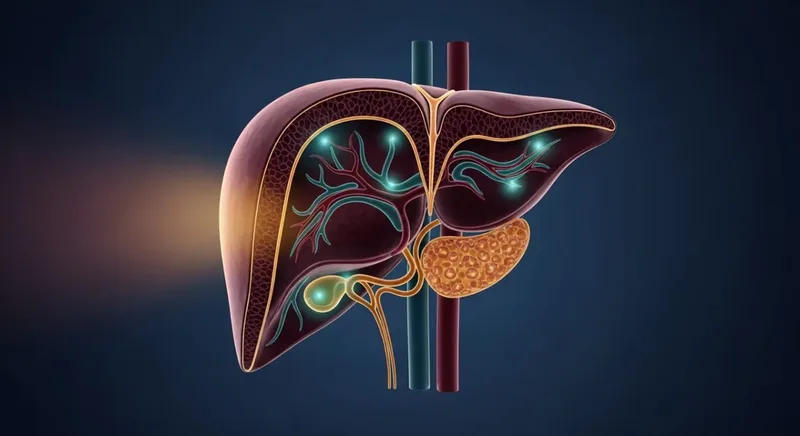
Liver function
The liver is one of the largest and most important internal organs, whose main task is processing food and fluids. The liver stores nutrients, removes worn-out cells and waste from the blood. The liver also filters toxins found in medications or alcohol and produces bile, which helps digest fats.
Metastases
Liver cancer is a disease of two types. In one case, growths appear in the liver itself, while in the other, growths in the liver originate from another cancer site – in other words, metastases in the liver spread from other organs.
In the first case, growths appear in the liver, most often in the main liver cells – hepatocytes – forming a malignant growth in the liver. This disease, also called hepatocellular carcinoma (HCC), is the most common liver cancer.
Liver cancer – why do we get it?
The most common causes of liver cancer are:
- Overweight
- Alcohol
- Smoking
- Chronic hepatitis B
- Chronic hepatitis C
In some cases, fatty liver disease is also listed as a cause of liver cancer, but the causes of this disease are almost identical to those of liver cancer itself: alcohol (toxins), overweight (overeating), fructose (overeating), triglycerides (alcohol, fructose, overeating), high blood glucose (overeating), hepatitis C and hepatitis B [5].
Stages
There are 4 stages of liver cancer [6]:
Stage 1 (very early stage) is divided into 1A stage and 1B stage: The tumor is only in the liver and is single, with a size smaller than 2 cm.
Stage 2 (early stage): there is a single nodule in the liver measuring 5 cm or less, or there are multiple nodules each measuring less than 3 cm. The nodules may have spread into blood vessels.
Stage 3 (intermediate stage) is divided into 3A and 3B stages: At this stage, there may be more than one nodule, each larger than 5 cm. Liver metastases (spread) may involve lymph nodes, large blood vessels, or another organ.
Stage 4 (advanced stage), divided into 4A and 4B stages: Liver cancer has metastasized to other parts of the body, such as the lungs or bones, as well as lymph nodes.
Liver cancer – life expectancy
Although life expectancy for liver cancer has significantly increased over the past 20 years, [7], the prognosis for liver cancer is not encouraging.
Life expectancy and prognosis depend on many factors:
- Stage
- Number of lesions
- Metastases
- Health of surrounding liver tissue
- Overall patient health status
The American Cancer Society states that the overall 5-year survival rate for liver cancer is 20% [8].
More detailed life expectancy table.
Can life expectancy be extended in liver cancer?
The prognosis for liver cancer depends not only on the stage or treatment method – the body's ability to fight the disease is an equally important factor. The immune system plays a crucial role: it recognizes altered cells, halts the spread of metastases, and aids recovery after surgical or chemotherapeutic treatment.
Scientific research confirms that certain fungal polysaccharides can enhance the immune response during oncological diseases. These active substances help the body more effectively mobilize defense cells – NK (natural killer) cells and T-lymphocytes – which directly combat tumor progression.
Clinical experience shows that patients who combine standard treatment with immune-supporting supplements more often achieve better response rates. Supplements are not a cure for cancer, but they are used as an adjunctive measure, combined with primary treatment.
Lentinan AXT from Zenius Labs™ – an advanced mushroom polysaccharide formula with a clinically researched composition, designed to support the immune system during oncological diseases.
Learn more about Lentinan AXT →Frequently asked questions
- Kawarada Y et al. Significance of multidisciplinary therapy for hepatocellular carcinoma. Cancer chemotherapy and pharmacology. 1992. PubMed
- Zou Y et al. A polysaccharide from mushroom Huaier retards human hepatocellular carcinoma growth, angiogenesis, and metastasis in nude mice. Tumour biology : the journal of the International Society for Oncodevelopmental Biology and Medicine. 2015. PubMed
- Khinsar KH et al. Anti-tumor effect of polysaccharide from Pleurotus ostreatus on H22 mouse Hepatoma ascites in-vivo and hepatocellular carcinoma in-vitro model. AMB Express. 2021. PubMed
- Li GL et al. The anti-hepatocellular carcinoma effects of polysaccharides from Ganoderma lucidum by regulating macrophage polarization via the MAPK/NF-κB signaling pathway. Food & function. 2023. PubMed
- Yang P et al. Clinical application of a combination therapy of lentinan, multi-electrode RFA and TACE in HCC. Advances in therapy. 2008. PubMed
- Yuan Y et al. TACE-HAIC combined with targeted therapy and immunotherapy versus TACE alone for hepatocellular carcinoma with portal vein tumour thrombus: a propensity score matching study. International journal of surgery (London, England). 2023. PubMed
- Maataoui A et al. Transarterial chemoembolization alone and in combination with other therapies: a comparative study in an animal HCC model. European radiology. 2005. PubMed
- Guo N et al. Transcatheter hepatic arterial chemoembolization plus cinobufotalin injection adjuvant therapy for advanced hepatocellular carcinoma: a meta-analysis of 27 trials involving 2,079 patients. OncoTargets and therapy. 2018. PubMed
- Yang Y et al. Compound kushen injection relieves tumor-associated macrophage-mediated immunosuppression through TNFR1 and sensitizes hepatocellular carcinoma to [placeholder for name of the medicine]. Journal for immunotherapy of cancer. 2020. PubMed
- Wang C et al. Astragali radix - Curcumae rhizoma herb pair enhances [placeholder for name of the medicine] efficacy by inducing ferroptosis and activates Th1 cell immune response synergistically against hepatocellular carcinoma. Phytomedicine : international journal of phytotherapy and phytopharmacology. 2025. PubMed
- Zhang QB et al. Suppression of natural killer cells by [placeholder for name of the medicine] contributes to prometastatic effects in hepatocellular carcinoma. PloS one. 2013. PubMed
- Sun Q et al. Targeting NAD(+) metabolism of hepatocellular carcinoma cells by [placeholder for name of the medicine] promotes M2 macrophages reverse polarization, suppressing the HCC progression. Hepatology international. 2023. PubMed
- Mani SKK et al. Hepatitis B Virus-Associated Hepatocellular Carcinoma and Hepatic Cancer Stem Cells. Genes. 2018. PubMed
- Meng Y et al. Hepatitis B Virus-Mediated m6A Demethylation Increases Hepatocellular Carcinoma Stemness and Immune Escape. Molecular cancer research : MCR. 2024. PubMed
- Ortega-Prieto AM et al. Immune Evasion Strategies during Chronic Hepatitis B and C Virus Infection. Vaccines. 2017. PubMed
- Chisari FV et al. Hepatitis B virus immunopathology. Springer seminars in immunopathology. 1995. PubMed
- Meunier L et al. Chemotherapy-associated steatohepatitis. Annals of hepatology. 2020. PubMed
- Farrell GC Drugs and steatohepatitis. Seminars in liver disease. 2002. PubMed
- Huang DQ et al. Global epidemiology of NAFLD-related HCC: trends, predictions, risk factors and prevention. Nature reviews. Gastroenterology & hepatology. 2021. PubMed
- Llovet JM et al. Nonalcoholic steatohepatitis-related hepatocellular carcinoma: pathogenesis and treatment. Nature reviews. Gastroenterology & hepatology. 2023. PubMed
- Thomas SK et al. Kupffer cells prevent pancreatic ductal adenocarcinoma metastasis to the liver in mice. Nature communications. 2023. PubMed
- Pereira FE et al. Kupffer cell activation with BCG. Corynebacterium parvum or zymosan protects against acute liver injury induced by carbon tetrachloride in rats. Arquivos de gastroenterologia. 1997. PubMed
- Armbrust T et al. Functional characterization of two different Kupffer cell populations of normal rat liver. Journal of hepatology. 1996. PubMed
- Youssef J et al. Activated Kupffer cells attenuate the liver response to the peroxisome proliferator perfluorooctanoic acid. Molecular and cellular biochemistry. 1997. PubMed
- Lau HC et al. Gut microbiome in metabolic dysfunction-associated steatotic liver disease and associated hepatocellular carcinoma. Nature reviews. Gastroenterology & hepatology. 2025. PubMed
- Yu LX et al. The gut microbiome and liver cancer: mechanisms and clinical translation. Nature reviews. Gastroenterology & hepatology. 2017. PubMed
- Jiang JW et al. Gut microbial dysbiosis associates hepatocellular carcinoma via the gut-liver axis. Hepatobiliary & pancreatic diseases international : HBPD INT. 2019. PubMed
- Ahmad MF et al. Ganoderma lucidum: Novel Insight into Hepatoprotective Potential with Mechanisms of Action. Nutrients. 2023. PubMed
- Bahmani M et al. Silybum marianum: Beyond Hepatoprotection. Journal of evidence-based complementary & alternative medicine. 2015. PubMed
- Lu X et al. Pretransplant immunotherapy increases acute rejection yet improves survival outcome of HCC patients with MVI post-liver transplantation. Cancer immunology, immunotherapy : CII. 2024. PubMed
- Rezaee-Zavareh MS et al. Impact of pre-transplant immune checkpoint inhibitor use on post-transplant outcomes in HCC: A systematic review and individual patient data meta-analysis. Journal of hepatology. 2025. PubMed
- Ersan V et al. The Timing of Liver Transplantation Following Downstaging: Wait of Not to Wait?. Journal of gastrointestinal cancer. 2020. PubMed
- Hong G et al. Safety and Therapeutic Outcomes of Adjuvant Immunotherapy With Autologous Cytokine-induced Killer Cells for Patients With Hepatocellular Carcinoma Beyond Milan Criteria After Liver Transplantation. Transplantation. 2025. PubMed
- Leuchte K et al. Microwave ablation enhances tumor-specific immune response in patients with hepatocellular carcinoma. Cancer immunology, immunotherapy : CII. 2021. PubMed
- Lei Y et al. COX-2/PGE(2) axis blockade with [placeholder for name of the medicine] enhances anti-PD-1 efficacy by activating natural killer cells for residual hepatocellular carcinoma after radiofrequency ablation. Journal of experimental & clinical cancer research : CR. 2025. PubMed
- Qian L et al. Potent induction of antitumor immunity by combining cryo-thermal ablation with immune checkpoint inhibitors in hepatocellular carcinoma. Liver international : official journal of the International Association for the Study of the Liver. 2024. PubMed
- Xu X et al. Activation of Anti-tumor Immune Response by Ablation of HCC with Nanosecond Pulsed Electric Field. Journal of clinical and translational hepatology. 2018. PubMed
- Li J et al. Astaxanthin Inhibits Proliferation and Induces Apoptosis of Human Hepatocellular Carcinoma Cells via Inhibition of Nf-Κb P65 and Wnt/Β-Catenin in Vitro. Marine drugs. 2015. PubMed
- Laderian A et al. Hepatoprotective effect of astaxanthin against cholestasis liver fibrosis induced by bile duct ligation in adult Wistar rats. Journal of biochemical and molecular toxicology. 2024. PubMed
- Takada T et al. [Case of hepatocellular carcinoma with a marked reduction in the tumor size induced by PSK administration alone]. Gan to kagaku ryoho. Cancer & chemotherapy. 1983. PubMed
- Hara Y et al. [Disappearance of lung metastases from hepatocellular carcinoma following PSK administration]. Rinsho hoshasen. Clinical radiography. 1988. PubMed
- You J et al. Lentinan induces apoptosis of mouse hepatocellular carcinoma cells through the EGR1/PTEN/AKT signaling axis. Oncology reports. 2023. PubMed
- Wang Z et al. Apaf1 nanoLuc biosensors identified lentinan as a potent synergizer of [placeholder for name of the medicine] in targeting hepatocellular carcinoma cells. Biochemical and biophysical research communications. 2021. PubMed
- Wang Y et al. Effects of tumor-specific antigen induced by lentinan on murine H22 hepatocellular carcinoma immunoprophylaxis. European review for medical and pharmacological sciences. 2015. PubMed
- Isoda N et al. Clinical efficacy of superfine dispersed lentinan (beta-1,3-glucan) in patients with hepatocellular carcinoma. Hepato-gastroenterology. 2009. PubMed
- Wang H et al. Efficacy of biological response modifier lentinan with chemotherapy for advanced cancer: a meta-analysis. Cancer medicine. 2017. PubMed
- Oba K et al. Efficacy of adjuvant immunochemotherapy with polysaccharide K for patients with curative resections of gastric cancer. Cancer immunology, immunotherapy : CII. 2007. PubMed
- Cheng SC et al. mTOR- and HIF-1α-mediated aerobic glycolysis as metabolic basis for trained immunity. Science (New York, N.Y.). 2014. PubMed
- Kidd P Astaxanthin, cell membrane nutrient with diverse clinical benefits and anti-aging potential. Alternative medicine review : a journal of clinical therapeutic. 2011. PubMed
- Wang Y et al. Systematic review and meta-analysis on the efficacy and safety of Injectable Lentinan combined with chemotherapy in the treatment of gastric cancer. Phytomedicine : international journal of phytotherapy and phytopharmacology. 2024. PubMed