- Cosa fa il fegato
- Metastasi nel fegato
- Perché ci si ammala?
- Stadio 4
- Aspettativa di vita
- Come prolungarla?
Funzionalità epatica
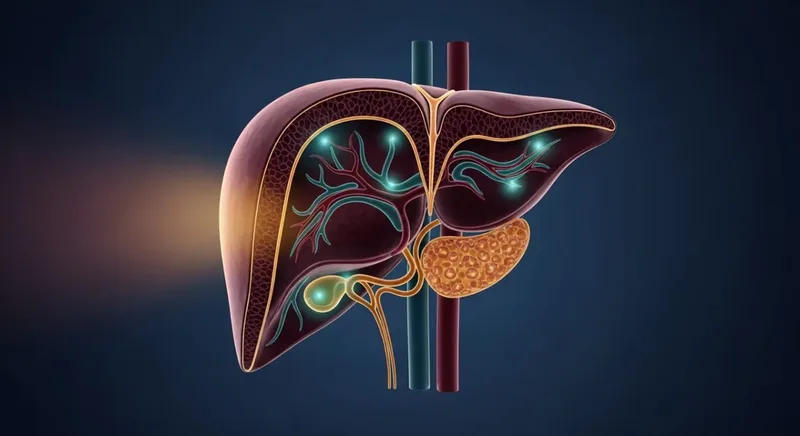
Il fegato è uno degli organi interni più grandi e importanti, il cui compito principale è l'elaborazione di cibi e liquidi. Il fegato immagazzina i nutrienti, rimuove le cellule usurate e le scorie dal sangue. Il fegato filtra anche le tossine presenti nei farmaci o nell'alcol e produce la bile, che aiuta a digerire i grassi.
Metastasi
Il tumore al fegato è una malattia di due tipi. In un caso, le neoformazioni compaiono nel fegato stesso, mentre nell'altro, le neoformazioni nel fegato hanno origine da un'altra sede tumorale – in altre parole, le metastasi nel fegato si diffondono da altri organi.
Nel primo caso, le neoformazioni compaiono nel fegato, più spesso nelle principali cellule epatiche – gli epatociti – formando una neoformazione maligna nel fegato. Questa malattia, chiamata anche carcinoma epatocellulare (HCC), è il tumore al fegato più comune.
Tumore al fegato – perché ci si ammala?
Le cause più comuni di tumore al fegato sono:
- Sovrappeso
- Alcol
- Fumo
- Epatite B cronica
- Epatite C cronica
In alcuni casi, anche la steatosi epatica è elencata come causa di tumore al fegato, ma le cause di questa malattia sono quasi identiche a quelle del tumore al fegato stesso: alcol (tossine), sovrappeso (sovralimentazione), fruttosio (sovralimentazione), trigliceridi (alcol, fruttosio, sovralimentazione), glicemia alta (sovralimentazione), epatite C ed epatite B [5].
Stadi
Ci sono 4 stadi di tumore al fegato [6]:
Lo Stadio 1 (stadio molto precoce) è diviso in stadio 1A e stadio 1B: il tumore è solo nel fegato ed è singolo, con una dimensione inferiore a 2 cm.
Stadio 2 (stadio iniziale): è presente un singolo nodulo nel fegato di dimensioni pari o inferiori a 5 cm, oppure sono presenti più noduli, ciascuno di dimensioni inferiori a 3 cm. I noduli potrebbero essersi diffusi nei vasi sanguigni.
Stadio 3 (stadio intermedio), suddiviso negli stadi 3A e 3B: in questo stadio, può essere presente più di un nodulo, ciascuno di dimensioni superiori a 5 cm. Le metastasi epatiche (diffusione) possono coinvolgere linfonodi, grandi vasi sanguigni o un altro organo.
Stadio 4 (stadio avanzato), suddiviso negli stadi 4A e 4B: il cancro al fegato ha metastatizzato in altre parti del corpo, come polmoni o ossa, oltre che nei linfonodi.
Cancro al fegato – aspettativa di vita
Sebbene l'aspettativa di vita per il cancro al fegato sia aumentata in modo significativo negli ultimi 20 anni, [7], la prognosi per il cancro al fegato non è incoraggiante.
L'aspettativa di vita e la prognosi dipendono da molti fattori:
- Stadio
- Numero di lesioni
- Metastasi
- Salute del tessuto epatico circostante
- Stato di salute generale del paziente
L'American Cancer Society afferma che il tasso di sopravvivenza complessivo a 5 anni per il cancro al fegato è del 20% [8].
Tabella più dettagliata sull'aspettativa di vita.
È possibile prolungare l'aspettativa di vita nel cancro al fegato?
La prognosi per il cancro al fegato non dipende solo dallo stadio o dal metodo di trattamento – la capacità dell'organismo di combattere la malattia è un fattore altrettanto importante. Il sistema immunitario svolge un ruolo cruciale: riconosce le cellule alterate, arresta la diffusione delle metastasi e favorisce il recupero dopo un trattamento chirurgico o chemioterapico.
La ricerca scientifica conferma che alcuni polisaccaridi fungini possono potenziare la risposta immunitaria durante le malattie oncologiche. Queste sostanze attive aiutano l'organismo a mobilitare più efficacemente le cellule di difesa – cellule NK (Natural Killer) e linfociti T – che combattono direttamente la progressione del tumore.
L'esperienza clinica dimostra che i pazienti che combinano il trattamento standard con integratori a supporto del sistema immunitario ottengono più spesso tassi di risposta migliori. Gli integratori non sono una cura per il cancro, ma vengono utilizzati come misura aggiuntiva, in combinazione con il trattamento primario.
Lentinan AXT di Zenius Labs™ – una formula avanzata di polisaccaridi da funghi con una composizione clinicamente studiata, progettata per supportare il sistema immunitario durante le malattie oncologiche.
Scopri di più su Lentinan AXT →Domande frequenti
Cancro — tutto quello che c'è da sapere
Dieta per il cancro
Lentinan
- Kawarada Y et al. Significance of multidisciplinary therapy for hepatocellular carcinoma. Cancer chemotherapy and pharmacology. 1992. PubMed
- Zou Y et al. A polysaccharide from mushroom Huaier retards human hepatocellular carcinoma growth, angiogenesis, and metastasis in nude mice. Tumour biology : the journal of the International Society for Oncodevelopmental Biology and Medicine. 2015. PubMed
- Khinsar KH et al. Anti-tumor effect of polysaccharide from Pleurotus ostreatus on H22 mouse Hepatoma ascites in-vivo and hepatocellular carcinoma in-vitro model. AMB Express. 2021. PubMed
- Li GL et al. The anti-hepatocellular carcinoma effects of polysaccharides from Ganoderma lucidum by regulating macrophage polarization via the MAPK/NF-κB signaling pathway. Food & function. 2023. PubMed
- Yang P et al. Clinical application of a combination therapy of lentinan, multi-electrode RFA and TACE in HCC. Advances in therapy. 2008. PubMed
- Yuan Y et al. TACE-HAIC combined with targeted therapy and immunotherapy versus TACE alone for hepatocellular carcinoma with portal vein tumour thrombus: a propensity score matching study. International journal of surgery (London, England). 2023. PubMed
- Maataoui A et al. Transarterial chemoembolization alone and in combination with other therapies: a comparative study in an animal HCC model. European radiology. 2005. PubMed
- Guo N et al. Transcatheter hepatic arterial chemoembolization plus cinobufotalin injection adjuvant therapy for advanced hepatocellular carcinoma: a meta-analysis of 27 trials involving 2,079 patients. OncoTargets and therapy. 2018. PubMed
- Yang Y et al. Compound kushen injection relieves tumor-associated macrophage-mediated immunosuppression through TNFR1 and sensitizes hepatocellular carcinoma to [placeholder for name of the medicine]. Journal for immunotherapy of cancer. 2020. PubMed
- Wang C et al. Astragali radix - Curcumae rhizoma herb pair enhances [placeholder for name of the medicine] efficacy by inducing ferroptosis and activates Th1 cell immune response synergistically against hepatocellular carcinoma. Phytomedicine : international journal of phytotherapy and phytopharmacology. 2025. PubMed
- Zhang QB et al. Suppression of natural killer cells by [placeholder for name of the medicine] contributes to prometastatic effects in hepatocellular carcinoma. PloS one. 2013. PubMed
- Sun Q et al. Targeting NAD(+) metabolism of hepatocellular carcinoma cells by [placeholder for name of the medicine] promotes M2 macrophages reverse polarization, suppressing the HCC progression. Hepatology international. 2023. PubMed
- Mani SKK et al. Hepatitis B Virus-Associated Hepatocellular Carcinoma and Hepatic Cancer Stem Cells. Genes. 2018. PubMed
- Meng Y et al. Hepatitis B Virus-Mediated m6A Demethylation Increases Hepatocellular Carcinoma Stemness and Immune Escape. Molecular cancer research : MCR. 2024. PubMed
- Ortega-Prieto AM et al. Immune Evasion Strategies during Chronic Hepatitis B and C Virus Infection. Vaccines. 2017. PubMed
- Chisari FV et al. Hepatitis B virus immunopathology. Springer seminars in immunopathology. 1995. PubMed
- Meunier L et al. Chemotherapy-associated steatohepatitis. Annals of hepatology. 2020. PubMed
- Farrell GC Drugs and steatohepatitis. Seminars in liver disease. 2002. PubMed
- Huang DQ et al. Global epidemiology of NAFLD-related HCC: trends, predictions, risk factors and prevention. Nature reviews. Gastroenterology & hepatology. 2021. PubMed
- Llovet JM et al. Nonalcoholic steatohepatitis-related hepatocellular carcinoma: pathogenesis and treatment. Nature reviews. Gastroenterology & hepatology. 2023. PubMed
- Thomas SK et al. Kupffer cells prevent pancreatic ductal adenocarcinoma metastasis to the liver in mice. Nature communications. 2023. PubMed
- Pereira FE et al. Kupffer cell activation with BCG. Corynebacterium parvum or zymosan protects against acute liver injury induced by carbon tetrachloride in rats. Arquivos de gastroenterologia. 1997. PubMed
- Armbrust T et al. Functional characterization of two different Kupffer cell populations of normal rat liver. Journal of hepatology. 1996. PubMed
- Youssef J et al. Activated Kupffer cells attenuate the liver response to the peroxisome proliferator perfluorooctanoic acid. Molecular and cellular biochemistry. 1997. PubMed
- Lau HC et al. Gut microbiome in metabolic dysfunction-associated steatotic liver disease and associated hepatocellular carcinoma. Nature reviews. Gastroenterology & hepatology. 2025. PubMed
- Yu LX et al. The gut microbiome and liver cancer: mechanisms and clinical translation. Nature reviews. Gastroenterology & hepatology. 2017. PubMed
- Jiang JW et al. Gut microbial dysbiosis associates hepatocellular carcinoma via the gut-liver axis. Hepatobiliary & pancreatic diseases international : HBPD INT. 2019. PubMed
- Ahmad MF et al. Ganoderma lucidum: Novel Insight into Hepatoprotective Potential with Mechanisms of Action. Nutrients. 2023. PubMed
- Bahmani M et al. Silybum marianum: Beyond Hepatoprotection. Journal of evidence-based complementary & alternative medicine. 2015. PubMed
- Lu X et al. Pretransplant immunotherapy increases acute rejection yet improves survival outcome of HCC patients with MVI post-liver transplantation. Cancer immunology, immunotherapy : CII. 2024. PubMed
- Rezaee-Zavareh MS et al. Impact of pre-transplant immune checkpoint inhibitor use on post-transplant outcomes in HCC: A systematic review and individual patient data meta-analysis. Journal of hepatology. 2025. PubMed
- Ersan V et al. The Timing of Liver Transplantation Following Downstaging: Wait of Not to Wait?. Journal of gastrointestinal cancer. 2020. PubMed
- Hong G et al. Safety and Therapeutic Outcomes of Adjuvant Immunotherapy With Autologous Cytokine-induced Killer Cells for Patients With Hepatocellular Carcinoma Beyond Milan Criteria After Liver Transplantation. Transplantation. 2025. PubMed
- Leuchte K et al. Microwave ablation enhances tumor-specific immune response in patients with hepatocellular carcinoma. Cancer immunology, immunotherapy : CII. 2021. PubMed
- Lei Y et al. COX-2/PGE(2) axis blockade with [placeholder for name of the medicine] enhances anti-PD-1 efficacy by activating natural killer cells for residual hepatocellular carcinoma after radiofrequency ablation. Journal of experimental & clinical cancer research : CR. 2025. PubMed
- Qian L et al. Potent induction of antitumor immunity by combining cryo-thermal ablation with immune checkpoint inhibitors in hepatocellular carcinoma. Liver international : official journal of the International Association for the Study of the Liver. 2024. PubMed
- Xu X et al. Activation of Anti-tumor Immune Response by Ablation of HCC with Nanosecond Pulsed Electric Field. Journal of clinical and translational hepatology. 2018. PubMed
- Li J et al. Astaxanthin Inhibits Proliferation and Induces Apoptosis of Human Hepatocellular Carcinoma Cells via Inhibition of Nf-Κb P65 and Wnt/Β-Catenin in Vitro. Marine drugs. 2015. PubMed
- Laderian A et al. Hepatoprotective effect of astaxanthin against cholestasis liver fibrosis induced by bile duct ligation in adult Wistar rats. Journal of biochemical and molecular toxicology. 2024. PubMed
- Takada T et al. [Case of hepatocellular carcinoma with a marked reduction in the tumor size induced by PSK administration alone]. Gan to kagaku ryoho. Cancer & chemotherapy. 1983. PubMed
- Hara Y et al. [Disappearance of lung metastases from hepatocellular carcinoma following PSK administration]. Rinsho hoshasen. Clinical radiography. 1988. PubMed
- You J et al. Lentinan induces apoptosis of mouse hepatocellular carcinoma cells through the EGR1/PTEN/AKT signaling axis. Oncology reports. 2023. PubMed
- Wang Z et al. Apaf1 nanoLuc biosensors identified lentinan as a potent synergizer of [placeholder for name of the medicine] in targeting hepatocellular carcinoma cells. Biochemical and biophysical research communications. 2021. PubMed
- Wang Y et al. Effects of tumor-specific antigen induced by lentinan on murine H22 hepatocellular carcinoma immunoprophylaxis. European review for medical and pharmacological sciences. 2015. PubMed
- Isoda N et al. Clinical efficacy of superfine dispersed lentinan (beta-1,3-glucan) in patients with hepatocellular carcinoma. Hepato-gastroenterology. 2009. PubMed
- Wang H et al. Efficacy of biological response modifier lentinan with chemotherapy for advanced cancer: a meta-analysis. Cancer medicine. 2017. PubMed
- Oba K et al. Efficacy of adjuvant immunochemotherapy with polysaccharide K for patients with curative resections of gastric cancer. Cancer immunology, immunotherapy : CII. 2007. PubMed
- Cheng SC et al. mTOR- and HIF-1α-mediated aerobic glycolysis as metabolic basis for trained immunity. Science (New York, N.Y.). 2014. PubMed
- Kidd P Astaxanthin, cell membrane nutrient with diverse clinical benefits and anti-aging potential. Alternative medicine review : a journal of clinical therapeutic. 2011. PubMed
- Wang Y et al. Systematic review and meta-analysis on the efficacy and safety of Injectable Lentinan combined with chemotherapy in the treatment of gastric cancer. Phytomedicine : international journal of phytotherapy and phytopharmacology. 2024. PubMed