El tratamiento del cáncer de pulmón depende del estadio y se elige teniendo en cuenta la edad, el estado y las comorbilidades del paciente. Los estadios iniciales (hasta el 3A inclusive) se tratan con cirugía, que puede ir seguida de quimioterapia y radioterapia adyuvantes.
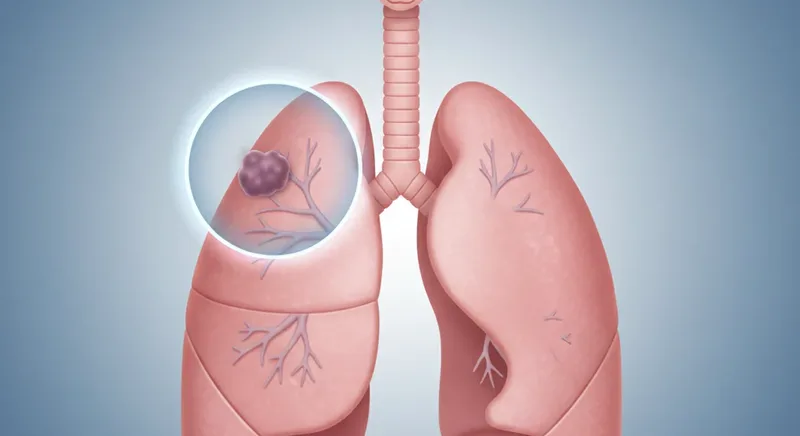
1. Estadios iniciales (1-2): la lucha por la extirpación
Aquí el objetivo principal es la extirpación quirúrgica. Estadio 1A: la cirugía es el "estándar de oro"; por lo general, no se necesita tratamiento adicional (quimioterapia), porque el riesgo supera el beneficio. Estadio 1B: cirugía, más posible quimioterapia solo si hay factores de riesgo (como el tamaño del tumor). Estadio 2: cirugía más quimioterapia adyuvante — aquí el tratamiento adicional aumenta la supervivencia en aproximadamente un 5 %, por lo que se recomienda con más frecuencia.
2. Enfermedad localmente avanzada (estadio 3): un ataque combinado
Este es el grupo más complejo, y el tratamiento a menudo se asemeja a una partida de ajedrez. A veces se administra primero quimioterapia y radioterapia para reducir el tumor, y solo entonces se realiza la cirugía. En otros casos, la cirugía no es posible, por lo que se utiliza un tratamiento agresivo combinado de radiación y fármacos.
3. Cáncer de pulmón avanzado (estadio 4)
Más de un tercio de los diagnosticados ya tienen metástasis — es decir, enfermedad en estadio 4. Debido a la enfermedad avanzada y las metástasis en los pulmones, la esperanza de vida disminuye. Estadísticamente, muchos pacientes no pueden curarse, por lo que es muy importante ayudar al cuerpo a luchar.
La nutrición como escudo antiinflamatorio
El cáncer prospera en un entorno inflamatorio; su objetivo es extinguirlo. Eliminar el azúcar: las células cancerosas consumen glucosa de 10 a 50 veces más rápido que las células sanas, por lo que reducir el azúcar "mata de hambre" al tumor. Grasas antiinflamatorias: aumente el omega-3 (pescado azul, aceite de cáñamo), que ayuda a prevenir la caquexia por cáncer (pérdida de peso). Verduras crucíferas: el brócoli y la col contienen sulforafano, que ayuda al hígado a desintoxicar los residuos de la quimioterapia.
"Afinación" del sistema inmunitario
En el estadio 4, el cuerpo está agotado. Medidas adicionales pueden ayudarlo a no rendirse. Hongos medicinales (lentinano): no tratan el cáncer directamente, pero activan sus células inmunitarias (células NK) para que reconozcan y destruyan las células cancerosas con mayor eficacia. Es importante elegir una fórmula multiextracto concentrada. Vitamina D3: los niveles en sangre suelen ser críticamente bajos en los pacientes con cáncer; mantener un nivel alto (alrededor de 80-100 ng/ml) es fundamental para la inmunidad. La salud emocional y el movimiento también son importantes.
Se estudian los hongos medicinales por su capacidad de activar las células NK para que reconozcan las células cancerosas. Es preferible una fórmula multiextracto concentrada, junto con niveles altos de vitamina D3.
Lentinan AXT de Zenius Labs™ →Preguntas frecuentes
En los estadios 1 y 2, el objetivo principal es la extirpación quirúrgica. Estadio 1A: la cirugía es el estándar de oro, generalmente sin quimioterapia. Estadio 1B: cirugía más quimioterapia solo si existen factores de riesgo. Estadio 2: cirugía más quimioterapia adyuvante, que aumenta la supervivencia en aproximadamente un 5 %.
El estadio 3 es el grupo más complejo. A veces se administra primero quimioterapia y radioterapia para reducir el tumor antes de la cirugía; en otros casos, la cirugía no es posible y se utiliza un tratamiento agresivo combinado de radiación y fármacos.
Más de un tercio de los pacientes tienen metástasis en el momento del diagnóstico. Muchos no pueden curarse, por lo que el tratamiento se centra en controlar la enfermedad y ayudar al cuerpo — mediante una nutrición antiinflamatoria, apoyo inmunitario y vitamina D.
Los hongos medicinales (lentinano) no tratan el cáncer directamente, pero se estudian por su capacidad de activar las células NK para que reconozcan y destruyan las células cancerosas. Es preferible una fórmula multiextracto concentrada como Lentinan AXT de Zenius Labs™, junto con el mantenimiento de niveles altos de vitamina D3.
- Updated Analysis of KEYNOTE-024: Pembrolizumab Versus Platinum-Based Chemothe…. PubMed
- Five-Year Survival Outcomes With Atezolizumab After Chemotherapy in Resected …. PubMed
- Association between time-to-treatment and outcomes in non-small cell lung can…. PubMed
- Efficacy and safety of first-line carboplatin-versus cisplatin-based chemothe…. PubMed
- Yin X et al. A meta-analysis of lentinan injection combined with chemotherapy in the treatment of nonsmall cell lung cancer. Indian journal of cancer. 2015. PubMed
- Zhao C et al. Lentinan combined with cisplatin for the treatment of non-small cell lung cancer. Medicine. 2021. PubMed
- Li M et al. Lentinan triggers oxidative stress-mediated anti-inflammatory responses in lung cancer cells. Molecular and cellular biochemistry. 2022. PubMed
- Gui Y et al. Oridonin improves the therapeutic effect of lentinan on lung cancer. Experimental and therapeutic medicine. 2021. PubMed
- Wang Y et al. Investigation on the efficiency of lentinan for injection combining cisplatin on treating malignant pleural effusion based on systematic review and meta-analysis. Medicine. 2024. PubMed
- Song Z et al. Translational Nanotherapeutics Reprograms Immune Microenvironment in Malignant Pleural Effusion of Lung Adenocarcinoma. Advanced healthcare materials. 2021. PubMed
- Congcong Q et al. Evaluation of Efficacy and Safety for Lentinan in the Control of the Malignant Pleural Effusions via Intrapleural Injection. The American journal of the medical sciences. 2019. PubMed
- Ansell SM et al. PD-1 blockade with nivolumab in relapsed or refractory Hodgkin’s lymphoma. The New England journal of medicine. 2015. PubMed
- Goodman A et al. PD-1-PD-L1 immune-checkpoint blockade in B-cell lymphomas. Nature reviews. Clinical oncology. 2017. PubMed
- Zak J et al. JAK inhibition enhances checkpoint blockade immunotherapy in patients with Hodgkin lymphoma. Science (New York, N.Y.). 2024. PubMed
- Chen H et al. Integrative spatial analysis reveals tumor heterogeneity and immune colony niche related to clinical outcomes in small cell lung cancer. Cancer cell. 2025. PubMed
- Redin E et al. Dasatinib Remodels the Tumor Microenvironment and Sensitizes Small Cell Lung Cancer to Immunotherapy. Cancer research. 2025. PubMed
- Tani M et al. In vitro generation of activated natural killer cells and cytotoxic macrophages with lentinan. European journal of clinical pharmacology. 1992. PubMed
- Hamano K et al. The preoperative administration of lentinan ameliorated the impairment of natural killer activity after cardiopulmonary bypass. International journal of immunopharmacology. 1999. PubMed
- Mattiola I et al. The macrophage tetraspan MS4A4A enhances dectin-1-dependent NK cell-mediated resistance to metastasis. Nature immunology. 2019. PubMed
- Chandrakesan P et al. DCLK1-Isoform2 Alternative Splice Variant Promotes Pancreatic Tumor Immunosuppressive M2-Macrophage Polarization. Molecular cancer therapeutics. 2020. PubMed
- Fan TW et al. Polarization and β-Glucan Reprogram Immunomodulatory Metabolism in Human Macrophages and Ex Vivo in Human Lung Cancer Tissues. Journal of immunology (Baltimore, Md. : 1950). 2022. PubMed
- Fang J et al. Structure of a β-glucan from Grifola frondosa and its antitumor effect by activating Dectin-1/Syk/NF-κB signaling. Glycoconjugate journal. 2012. PubMed
- Zhang M et al. β-Glucan from Saccharomyces cerevisiae induces SBD-1 production in ovine ruminal epithelial cells via the Dectin-1-Syk-NF-κB signaling pathway. Cellular signalling. 2019. PubMed
- Gringhuis SI et al. Dectin-1 directs T helper cell differentiation by controlling noncanonical NF-kappaB activation through Raf-1 and Syk. Nature immunology. 2009. PubMed
- Ooshiro M et al. [Ten cases of advanced gastro-intestinal cancer that required preoperative dosage of PSK]. Gan to kagaku ryoho. Cancer & chemotherapy. 2009. PubMed
- Maehara Y et al. Postoperative PSK and OK-432 immunochemotherapy for patients with gastric cancer. Cancer chemotherapy and pharmacology. 1993. PubMed
- Ito G et al. Correlation between efficacy of PSK postoperative adjuvant immunochemotherapy for gastric cancer and expression of MHC class I. Experimental and therapeutic medicine. 2012. PubMed
- Cheng J et al. The Promising Effects of Astaxanthin on Lung Diseases. Advances in nutrition (Bethesda, Md.). 2021. PubMed
- Wu C et al. [Astaxanthin inhibits proliferation and promotes apoptosis of A549 lung cancer cells via blocking JAK1/STAT3 pathway]. Xi bao yu fen zi mian yi xue za zhi = Chinese journal of cellular and molecular immunology. 2016. PubMed
- Qian J et al. Molecular mechanisms underlying the beneficial effects of Astaxanthin on metabolic changes in lung cancer and diabetes mellitus: A dual pathophysiological perspective. International immunopharmacology. 2025. PubMed
- Park JS et al. Astaxanthin decreased oxidative stress and inflammation and enhanced immune response in humans. Nutrition & metabolism. 2010. PubMed
- Lee J et al. Anti-Oxidant and Anti-Inflammatory Effects of Astaxanthin on Gastrointestinal Diseases. International journal of molecular sciences. 2022. PubMed
- Wang T et al. Astaxanthin protected against the adverse effects induced by diesel exhaust particulate matter via improving membrane stability and anti-oxidative property. Journal of hazardous materials. 2023. PubMed
- Deng S et al. Lentinan inhibits tumor angiogenesis via interferon γ and in a T cell independent manner. Journal of experimental & clinical cancer research : CR. 2018. PubMed
- Deng S et al. Correction to: Lentinan inhibits tumor angiogenesis via interferon γ and in a T cell independent manner. Journal of experimental & clinical cancer research : CR. 2021. PubMed
- Wang H et al. Efficacy of biological response modifier lentinan with chemotherapy for advanced cancer: a meta-analysis. Cancer medicine. 2017. PubMed
- Zhang Y et al. Lentinan as an immunotherapeutic for treating lung cancer: a review of 12 years clinical studies in China. Journal of cancer research and clinical oncology. 2018. PubMed
- Wang XE et al. Immunomodulatory Effect of Lentinan on Aberrant T Subsets and Cytokines Profile in Non-small Cell Lung Cancer Patients. Pathology oncology research : POR. 2020. PubMed
- Wang Y et al. Systematic review and meta-analysis on the efficacy and safety of Injectable Lentinan combined with chemotherapy in the treatment of gastric cancer. Phytomedicine : international journal of phytotherapy and phytopharmacology. 2024. PubMed
- Oba K et al. Efficacy of adjuvant immunochemotherapy with polysaccharide K for patients with curative resections of gastric cancer. Cancer immunology, immunotherapy : CII. 2007. PubMed
- Cheng SC et al. mTOR- and HIF-1α-mediated aerobic glycolysis as metabolic basis for trained immunity. Science (New York, N.Y.). 2014. PubMed
- Kidd P Astaxanthin, cell membrane nutrient with diverse clinical benefits and anti-aging potential. Alternative medicine review : a journal of clinical therapeutic. 2011. PubMed