Die Behandlung von Lungenkrebs hängt vom Stadium ab und wird unter Berücksichtigung von Alter, Zustand und Komorbiditäten des Patienten gewählt. Frühe Stadien (bis einschließlich 3A) werden mit einer Operation behandelt, auf die eine adjuvante Chemotherapie und Strahlentherapie folgen kann.
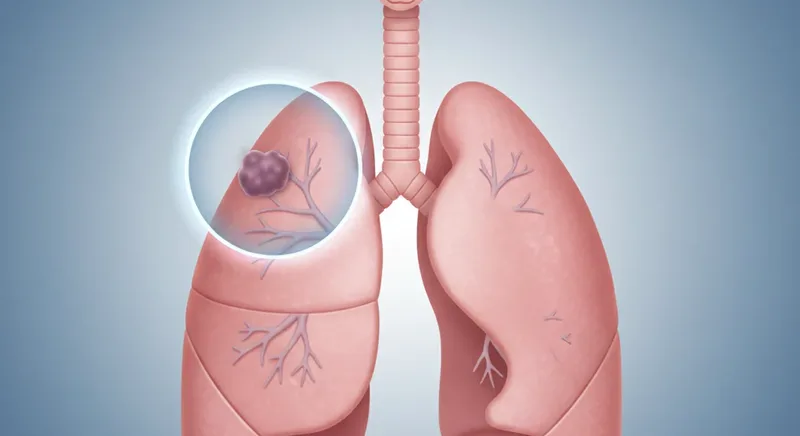
1. Frühe Stadien (1–2): der Kampf um die Entfernung
Hier ist das Hauptziel die chirurgische Entfernung. Stadium 1A: Die Operation ist der „Goldstandard“; eine zusätzliche Behandlung (Chemotherapie) ist in der Regel nicht erforderlich, da das Risiko den Nutzen überwiegt. Stadium 1B: Operation, plus mögliche Chemotherapie nur bei Vorliegen von Risikofaktoren (wie z. B. der Tumorgröße). Stadium 2: Operation plus adjuvante Chemotherapie — hier erhöht die zusätzliche Behandlung das Überleben um etwa 5 %, weshalb sie häufiger empfohlen wird.
2. Lokal fortgeschrittene Erkrankung (Stadium 3): ein kombinierter Angriff
Dies ist die komplexeste Gruppe, und die Behandlung ähnelt oft einem Schachspiel. Manchmal werden zuerst Chemotherapie und Strahlentherapie verabreicht, um den Tumor zu verkleinern, und erst dann wird operiert. In anderen Fällen ist eine Operation nicht möglich, sodass eine aggressive kombinierte Strahlen- und medikamentöse Behandlung eingesetzt wird.
3. Fortgeschrittener Lungenkrebs (Stadium 4)
Mehr als ein Drittel der Diagnostizierten hat bereits Metastasen — das heißt, eine Erkrankung im Stadium 4. Aufgrund der fortgeschrittenen Erkrankung und der Metastasen in der Lunge sinkt die Lebenserwartung. Statistisch gesehen können viele Patienten nicht geheilt werden, daher ist es sehr wichtig, den Körper im Kampf zu unterstützen.
Ernährung als entzündungshemmender Schutzschild
Krebs gedeiht in einer entzündlichen Umgebung; Ihr Ziel ist es, diese auszulöschen. Zucker eliminieren: Krebszellen verbrauchen Glukose 10–50 Mal schneller als gesunde Zellen, daher „hungert“ eine Reduzierung des Zuckers den Tumor aus. Entzündungshemmende Fette: Erhöhen Sie Omega-3 (Fettfisch, Hanföl), was hilft, Krebskachexie (Gewichtsverlust) zu verhindern. Kreuzblütler: Brokkoli und Kohl enthalten Sulforaphan, das der Leber hilft, Rückstände der Chemotherapie zu entgiften.
„Tuning“ des Immunsystems
Im Stadium 4 ist der Körper erschöpft. Zusätzliche Maßnahmen können ihm helfen, nicht aufzugeben. Heilpilze (Lentinan): Sie behandeln Krebs nicht direkt, sondern aktivieren Ihre Immunzellen (NK-Zellen), damit diese Krebszellen effektiver erkennen und zerstören. Es ist wichtig, eine konzentrierte Multi-Extrakt-Formel zu wählen. Vitamin D3: Die Blutspiegel sind bei Krebspatienten oft kritisch niedrig; die Aufrechterhaltung eines hohen Spiegels (etwa 80–100 ng/ml) ist für die Immunität entscheidend. Emotionale Gesundheit und Bewegung sind ebenfalls wichtig.
Heilpilze werden auf ihre Fähigkeit untersucht, NK-Zellen zu aktivieren, um Krebszellen zu erkennen. Eine konzentrierte Multi-Extrakt-Formel wird bevorzugt, zusammen mit einem hohen Vitamin-D3-Spiegel.
Lentinan AXT von Zenius Labs™ →Häufig gestellte Fragen
In den Stadien 1–2 ist das Hauptziel die chirurgische Entfernung. Stadium 1A: Die Operation ist der Goldstandard, in der Regel ohne Chemotherapie. Stadium 1B: Operation plus Chemotherapie nur bei Vorliegen von Risikofaktoren. Stadium 2: Operation plus adjuvante Chemotherapie, die das Überleben um etwa 5 % erhöht.
Stadium 3 ist die komplexeste Gruppe. Manchmal werden Chemotherapie und Strahlentherapie zuerst verabreicht, um den Tumor vor der Operation zu verkleinern; in anderen Fällen ist eine Operation nicht möglich und es wird eine aggressive kombinierte Strahlen- und medikamentöse Behandlung eingesetzt.
Mehr als ein Drittel der Patienten hat bei der Diagnose Metastasen. Viele können nicht geheilt werden, daher konzentriert sich die Behandlung auf die Kontrolle der Krankheit und die Unterstützung des Körpers — durch entzündungshemmende Ernährung, Immununterstützung und Vitamin D.
Heilpilze (Lentinan) behandeln Krebs nicht direkt, werden aber auf ihre Fähigkeit untersucht, NK-Zellen zu aktivieren, um Krebszellen zu erkennen und zu zerstören. Eine konzentrierte Multi-Extrakt-Formel wie Lentinan AXT von Zenius Labs™ ist vorzuziehen, zusammen mit der Aufrechterhaltung hoher Vitamin-D3-Spiegel.
- Updated Analysis of KEYNOTE-024: Pembrolizumab Versus Platinum-Based Chemothe…. PubMed
- Five-Year Survival Outcomes With Atezolizumab After Chemotherapy in Resected …. PubMed
- Association between time-to-treatment and outcomes in non-small cell lung can…. PubMed
- Efficacy and safety of first-line carboplatin-versus cisplatin-based chemothe…. PubMed
- Yin X et al. A meta-analysis of lentinan injection combined with chemotherapy in the treatment of nonsmall cell lung cancer. Indian journal of cancer. 2015. PubMed
- Zhao C et al. Lentinan combined with cisplatin for the treatment of non-small cell lung cancer. Medicine. 2021. PubMed
- Li M et al. Lentinan triggers oxidative stress-mediated anti-inflammatory responses in lung cancer cells. Molecular and cellular biochemistry. 2022. PubMed
- Gui Y et al. Oridonin improves the therapeutic effect of lentinan on lung cancer. Experimental and therapeutic medicine. 2021. PubMed
- Wang Y et al. Investigation on the efficiency of lentinan for injection combining cisplatin on treating malignant pleural effusion based on systematic review and meta-analysis. Medicine. 2024. PubMed
- Song Z et al. Translational Nanotherapeutics Reprograms Immune Microenvironment in Malignant Pleural Effusion of Lung Adenocarcinoma. Advanced healthcare materials. 2021. PubMed
- Congcong Q et al. Evaluation of Efficacy and Safety for Lentinan in the Control of the Malignant Pleural Effusions via Intrapleural Injection. The American journal of the medical sciences. 2019. PubMed
- Ansell SM et al. PD-1 blockade with nivolumab in relapsed or refractory Hodgkin’s lymphoma. The New England journal of medicine. 2015. PubMed
- Goodman A et al. PD-1-PD-L1 immune-checkpoint blockade in B-cell lymphomas. Nature reviews. Clinical oncology. 2017. PubMed
- Zak J et al. JAK inhibition enhances checkpoint blockade immunotherapy in patients with Hodgkin lymphoma. Science (New York, N.Y.). 2024. PubMed
- Chen H et al. Integrative spatial analysis reveals tumor heterogeneity and immune colony niche related to clinical outcomes in small cell lung cancer. Cancer cell. 2025. PubMed
- Redin E et al. Dasatinib Remodels the Tumor Microenvironment and Sensitizes Small Cell Lung Cancer to Immunotherapy. Cancer research. 2025. PubMed
- Tani M et al. In vitro generation of activated natural killer cells and cytotoxic macrophages with lentinan. European journal of clinical pharmacology. 1992. PubMed
- Hamano K et al. The preoperative administration of lentinan ameliorated the impairment of natural killer activity after cardiopulmonary bypass. International journal of immunopharmacology. 1999. PubMed
- Mattiola I et al. The macrophage tetraspan MS4A4A enhances dectin-1-dependent NK cell-mediated resistance to metastasis. Nature immunology. 2019. PubMed
- Chandrakesan P et al. DCLK1-Isoform2 Alternative Splice Variant Promotes Pancreatic Tumor Immunosuppressive M2-Macrophage Polarization. Molecular cancer therapeutics. 2020. PubMed
- Fan TW et al. Polarization and β-Glucan Reprogram Immunomodulatory Metabolism in Human Macrophages and Ex Vivo in Human Lung Cancer Tissues. Journal of immunology (Baltimore, Md. : 1950). 2022. PubMed
- Fang J et al. Structure of a β-glucan from Grifola frondosa and its antitumor effect by activating Dectin-1/Syk/NF-κB signaling. Glycoconjugate journal. 2012. PubMed
- Zhang M et al. β-Glucan from Saccharomyces cerevisiae induces SBD-1 production in ovine ruminal epithelial cells via the Dectin-1-Syk-NF-κB signaling pathway. Cellular signalling. 2019. PubMed
- Gringhuis SI et al. Dectin-1 directs T helper cell differentiation by controlling noncanonical NF-kappaB activation through Raf-1 and Syk. Nature immunology. 2009. PubMed
- Ooshiro M et al. [Ten cases of advanced gastro-intestinal cancer that required preoperative dosage of PSK]. Gan to kagaku ryoho. Cancer & chemotherapy. 2009. PubMed
- Maehara Y et al. Postoperative PSK and OK-432 immunochemotherapy for patients with gastric cancer. Cancer chemotherapy and pharmacology. 1993. PubMed
- Ito G et al. Correlation between efficacy of PSK postoperative adjuvant immunochemotherapy for gastric cancer and expression of MHC class I. Experimental and therapeutic medicine. 2012. PubMed
- Cheng J et al. The Promising Effects of Astaxanthin on Lung Diseases. Advances in nutrition (Bethesda, Md.). 2021. PubMed
- Wu C et al. [Astaxanthin inhibits proliferation and promotes apoptosis of A549 lung cancer cells via blocking JAK1/STAT3 pathway]. Xi bao yu fen zi mian yi xue za zhi = Chinese journal of cellular and molecular immunology. 2016. PubMed
- Qian J et al. Molecular mechanisms underlying the beneficial effects of Astaxanthin on metabolic changes in lung cancer and diabetes mellitus: A dual pathophysiological perspective. International immunopharmacology. 2025. PubMed
- Park JS et al. Astaxanthin decreased oxidative stress and inflammation and enhanced immune response in humans. Nutrition & metabolism. 2010. PubMed
- Lee J et al. Anti-Oxidant and Anti-Inflammatory Effects of Astaxanthin on Gastrointestinal Diseases. International journal of molecular sciences. 2022. PubMed
- Wang T et al. Astaxanthin protected against the adverse effects induced by diesel exhaust particulate matter via improving membrane stability and anti-oxidative property. Journal of hazardous materials. 2023. PubMed
- Deng S et al. Lentinan inhibits tumor angiogenesis via interferon γ and in a T cell independent manner. Journal of experimental & clinical cancer research : CR. 2018. PubMed
- Deng S et al. Correction to: Lentinan inhibits tumor angiogenesis via interferon γ and in a T cell independent manner. Journal of experimental & clinical cancer research : CR. 2021. PubMed
- Wang H et al. Efficacy of biological response modifier lentinan with chemotherapy for advanced cancer: a meta-analysis. Cancer medicine. 2017. PubMed
- Zhang Y et al. Lentinan as an immunotherapeutic for treating lung cancer: a review of 12 years clinical studies in China. Journal of cancer research and clinical oncology. 2018. PubMed
- Wang XE et al. Immunomodulatory Effect of Lentinan on Aberrant T Subsets and Cytokines Profile in Non-small Cell Lung Cancer Patients. Pathology oncology research : POR. 2020. PubMed
- Wang Y et al. Systematic review and meta-analysis on the efficacy and safety of Injectable Lentinan combined with chemotherapy in the treatment of gastric cancer. Phytomedicine : international journal of phytotherapy and phytopharmacology. 2024. PubMed
- Oba K et al. Efficacy of adjuvant immunochemotherapy with polysaccharide K for patients with curative resections of gastric cancer. Cancer immunology, immunotherapy : CII. 2007. PubMed
- Cheng SC et al. mTOR- and HIF-1α-mediated aerobic glycolysis as metabolic basis for trained immunity. Science (New York, N.Y.). 2014. PubMed
- Kidd P Astaxanthin, cell membrane nutrient with diverse clinical benefits and anti-aging potential. Alternative medicine review : a journal of clinical therapeutic. 2011. PubMed