De behandeling van longkanker hangt af van het stadium en wordt gekozen met inachtneming van de leeftijd, de conditie en de comorbiditeiten van de patiënt. Vroege stadia (tot en met 3A) worden behandeld met chirurgie, die gevolgd kan worden door adjuvante chemotherapie en radiotherapie.
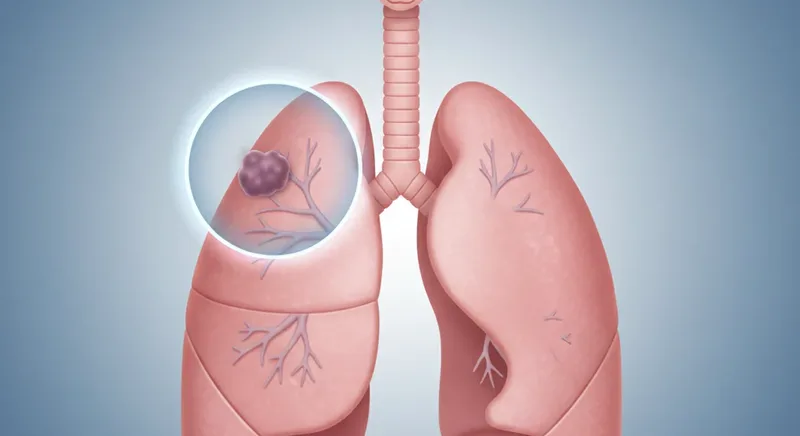
1. Vroege stadia (1–2): de strijd om verwijdering
Hier is het hoofddoel chirurgische verwijdering. Stadium 1A: chirurgie is de "gouden standaard"; aanvullende behandeling (chemotherapie) is meestal niet nodig, omdat het risico zwaarder weegt dan het voordeel. Stadium 1B: chirurgie, plus eventuele chemotherapie alleen als er risicofactoren aanwezig zijn (zoals de tumorgrootte). Stadium 2: chirurgie plus adjuvante chemotherapie — hier verhoogt de aanvullende behandeling de overleving met ongeveer 5%, dus wordt het vaker aanbevolen.
2. Lokaal gevorderde ziekte (stadium 3): een gecombineerde aanval
Dit is de meest complexe groep en de behandeling lijkt vaak op een schaakspel. Soms worden eerst chemotherapie en radiotherapie gegeven om de tumor te verkleinen, en pas daarna wordt er geopereerd. In andere gevallen is een operatie niet mogelijk, dus wordt een agressieve gecombineerde behandeling met bestraling en medicijnen toegepast.
3. Gevorderde longkanker (stadium 4)
Meer dan een derde van de gediagnosticeerden heeft al uitzaaiingen — dat wil zeggen, ziekte in stadium 4. Vanwege de gevorderde ziekte en uitzaaiingen in de longen daalt de levensverwachting. Statistisch gezien kunnen veel patiënten niet worden genezen, dus is het erg belangrijk om het lichaam te helpen vechten.
Voeding als een ontstekingsremmend schild
Kanker gedijt in een inflammatoire omgeving; uw doel is om deze te doven. Suiker elimineren: kankercellen verbruiken 10–50 keer sneller glucose dan gezonde cellen, dus het verminderen van suiker "verhongert" de tumor. Ontstekingsremmende vetten: verhoog de inname van omega-3 (vette vis, hennepolie), wat helpt om cachexie door kanker (gewichtsverlies) te voorkomen. Kruisbloemige groenten: broccoli en kool bevatten sulforafaan, wat de lever helpt bij het ontgiften van chemotherapieresten.
"Afstemming" van het immuunsysteem
In stadium 4 is het lichaam uitgeput. Aanvullende maatregelen kunnen het helpen om niet op te geven. Medicinale paddenstoelen (lentinan): ze behandelen kanker niet rechtstreeks, maar activeren uw immuuncellen (NK-cellen) om kankercellen effectiever te herkennen en te vernietigen. Het is belangrijk om een geconcentreerde multi-extractformule te kiezen. Vitamine D3: de bloedspiegels zijn vaak kritiek laag bij kankerpatiënten; het handhaven van een hoog niveau (ongeveer 80–100 ng/ml) is cruciaal voor de immuniteit. Emotionele gezondheid en beweging zijn ook van belang.
Medicinale paddenstoelen worden bestudeerd voor het activeren van NK-cellen om kankercellen te herkennen. Een geconcentreerde multi-extractformule heeft de voorkeur, naast een hoge vitamine D3-spiegel.
Lentinan AXT van Zenius Labs™ →Veelgestelde vragen
In stadium 1–2 is het hoofddoel chirurgische verwijdering. Stadium 1A: chirurgie is de gouden standaard, meestal zonder chemotherapie. Stadium 1B: chirurgie plus chemotherapie alleen als er risicofactoren aanwezig zijn. Stadium 2: chirurgie plus adjuvante chemotherapie, wat de overleving met ongeveer 5% verhoogt.
Stadium 3 is de meest complexe groep. Soms worden eerst chemotherapie en radiotherapie gegeven om de tumor te verkleinen vóór de operatie; in andere gevallen is een operatie niet mogelijk en wordt een agressieve gecombineerde behandeling met bestraling en medicijnen toegepast.
Meer dan een derde van de patiënten heeft uitzaaiingen bij de diagnose. Velen kunnen niet worden genezen, dus de behandeling richt zich op het beheersen van de ziekte en het helpen van het lichaam — door middel van ontstekingsremmende voeding, immuunondersteuning en vitamine D.
Medicinale paddenstoelen (lentinan) behandelen kanker niet rechtstreeks, maar worden bestudeerd voor het activeren van NK-cellen om kankercellen te herkennen en te vernietigen. Een geconcentreerde multi-extractformule zoals Lentinan AXT van Zenius Labs™ heeft de voorkeur, naast het handhaven van hoge vitamine D3-spiegels.
- Updated Analysis of KEYNOTE-024: Pembrolizumab Versus Platinum-Based Chemothe…. PubMed
- Five-Year Survival Outcomes With Atezolizumab After Chemotherapy in Resected …. PubMed
- Association between time-to-treatment and outcomes in non-small cell lung can…. PubMed
- Efficacy and safety of first-line carboplatin-versus cisplatin-based chemothe…. PubMed
- Yin X et al. A meta-analysis of lentinan injection combined with chemotherapy in the treatment of nonsmall cell lung cancer. Indian journal of cancer. 2015. PubMed
- Zhao C et al. Lentinan combined with cisplatin for the treatment of non-small cell lung cancer. Medicine. 2021. PubMed
- Li M et al. Lentinan triggers oxidative stress-mediated anti-inflammatory responses in lung cancer cells. Molecular and cellular biochemistry. 2022. PubMed
- Gui Y et al. Oridonin improves the therapeutic effect of lentinan on lung cancer. Experimental and therapeutic medicine. 2021. PubMed
- Wang Y et al. Investigation on the efficiency of lentinan for injection combining cisplatin on treating malignant pleural effusion based on systematic review and meta-analysis. Medicine. 2024. PubMed
- Song Z et al. Translational Nanotherapeutics Reprograms Immune Microenvironment in Malignant Pleural Effusion of Lung Adenocarcinoma. Advanced healthcare materials. 2021. PubMed
- Congcong Q et al. Evaluation of Efficacy and Safety for Lentinan in the Control of the Malignant Pleural Effusions via Intrapleural Injection. The American journal of the medical sciences. 2019. PubMed
- Ansell SM et al. PD-1 blockade with nivolumab in relapsed or refractory Hodgkin’s lymphoma. The New England journal of medicine. 2015. PubMed
- Goodman A et al. PD-1-PD-L1 immune-checkpoint blockade in B-cell lymphomas. Nature reviews. Clinical oncology. 2017. PubMed
- Zak J et al. JAK inhibition enhances checkpoint blockade immunotherapy in patients with Hodgkin lymphoma. Science (New York, N.Y.). 2024. PubMed
- Chen H et al. Integrative spatial analysis reveals tumor heterogeneity and immune colony niche related to clinical outcomes in small cell lung cancer. Cancer cell. 2025. PubMed
- Redin E et al. Dasatinib Remodels the Tumor Microenvironment and Sensitizes Small Cell Lung Cancer to Immunotherapy. Cancer research. 2025. PubMed
- Tani M et al. In vitro generation of activated natural killer cells and cytotoxic macrophages with lentinan. European journal of clinical pharmacology. 1992. PubMed
- Hamano K et al. The preoperative administration of lentinan ameliorated the impairment of natural killer activity after cardiopulmonary bypass. International journal of immunopharmacology. 1999. PubMed
- Mattiola I et al. The macrophage tetraspan MS4A4A enhances dectin-1-dependent NK cell-mediated resistance to metastasis. Nature immunology. 2019. PubMed
- Chandrakesan P et al. DCLK1-Isoform2 Alternative Splice Variant Promotes Pancreatic Tumor Immunosuppressive M2-Macrophage Polarization. Molecular cancer therapeutics. 2020. PubMed
- Fan TW et al. Polarization and β-Glucan Reprogram Immunomodulatory Metabolism in Human Macrophages and Ex Vivo in Human Lung Cancer Tissues. Journal of immunology (Baltimore, Md. : 1950). 2022. PubMed
- Fang J et al. Structure of a β-glucan from Grifola frondosa and its antitumor effect by activating Dectin-1/Syk/NF-κB signaling. Glycoconjugate journal. 2012. PubMed
- Zhang M et al. β-Glucan from Saccharomyces cerevisiae induces SBD-1 production in ovine ruminal epithelial cells via the Dectin-1-Syk-NF-κB signaling pathway. Cellular signalling. 2019. PubMed
- Gringhuis SI et al. Dectin-1 directs T helper cell differentiation by controlling noncanonical NF-kappaB activation through Raf-1 and Syk. Nature immunology. 2009. PubMed
- Ooshiro M et al. [Ten cases of advanced gastro-intestinal cancer that required preoperative dosage of PSK]. Gan to kagaku ryoho. Cancer & chemotherapy. 2009. PubMed
- Maehara Y et al. Postoperative PSK and OK-432 immunochemotherapy for patients with gastric cancer. Cancer chemotherapy and pharmacology. 1993. PubMed
- Ito G et al. Correlation between efficacy of PSK postoperative adjuvant immunochemotherapy for gastric cancer and expression of MHC class I. Experimental and therapeutic medicine. 2012. PubMed
- Cheng J et al. The Promising Effects of Astaxanthin on Lung Diseases. Advances in nutrition (Bethesda, Md.). 2021. PubMed
- Wu C et al. [Astaxanthin inhibits proliferation and promotes apoptosis of A549 lung cancer cells via blocking JAK1/STAT3 pathway]. Xi bao yu fen zi mian yi xue za zhi = Chinese journal of cellular and molecular immunology. 2016. PubMed
- Qian J et al. Molecular mechanisms underlying the beneficial effects of Astaxanthin on metabolic changes in lung cancer and diabetes mellitus: A dual pathophysiological perspective. International immunopharmacology. 2025. PubMed
- Park JS et al. Astaxanthin decreased oxidative stress and inflammation and enhanced immune response in humans. Nutrition & metabolism. 2010. PubMed
- Lee J et al. Anti-Oxidant and Anti-Inflammatory Effects of Astaxanthin on Gastrointestinal Diseases. International journal of molecular sciences. 2022. PubMed
- Wang T et al. Astaxanthin protected against the adverse effects induced by diesel exhaust particulate matter via improving membrane stability and anti-oxidative property. Journal of hazardous materials. 2023. PubMed
- Deng S et al. Lentinan inhibits tumor angiogenesis via interferon γ and in a T cell independent manner. Journal of experimental & clinical cancer research : CR. 2018. PubMed
- Deng S et al. Correction to: Lentinan inhibits tumor angiogenesis via interferon γ and in a T cell independent manner. Journal of experimental & clinical cancer research : CR. 2021. PubMed
- Wang H et al. Efficacy of biological response modifier lentinan with chemotherapy for advanced cancer: a meta-analysis. Cancer medicine. 2017. PubMed
- Zhang Y et al. Lentinan as an immunotherapeutic for treating lung cancer: a review of 12 years clinical studies in China. Journal of cancer research and clinical oncology. 2018. PubMed
- Wang XE et al. Immunomodulatory Effect of Lentinan on Aberrant T Subsets and Cytokines Profile in Non-small Cell Lung Cancer Patients. Pathology oncology research : POR. 2020. PubMed
- Wang Y et al. Systematic review and meta-analysis on the efficacy and safety of Injectable Lentinan combined with chemotherapy in the treatment of gastric cancer. Phytomedicine : international journal of phytotherapy and phytopharmacology. 2024. PubMed
- Oba K et al. Efficacy of adjuvant immunochemotherapy with polysaccharide K for patients with curative resections of gastric cancer. Cancer immunology, immunotherapy : CII. 2007. PubMed
- Cheng SC et al. mTOR- and HIF-1α-mediated aerobic glycolysis as metabolic basis for trained immunity. Science (New York, N.Y.). 2014. PubMed
- Kidd P Astaxanthin, cell membrane nutrient with diverse clinical benefits and anti-aging potential. Alternative medicine review : a journal of clinical therapeutic. 2011. PubMed