¿Qué es el cáncer de páncreas?
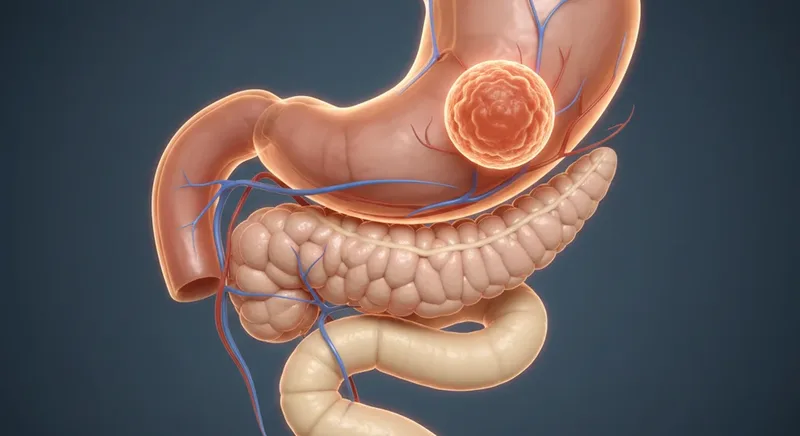
El cáncer de páncreas es un tumor que se encuentra en cualquier parte del páncreas. El cáncer comienza cuando las células empiezan a multiplicarse sin control. El adenocarcinoma de páncreas es el tipo más común. El páncreas produce hormonas y enzimas que ayudan a digerir los alimentos y, entre otras funciones, regulan los niveles de azúcar en la sangre.
Síntomas
El cáncer de páncreas a menudo no presenta síntomas hasta que alcanza un estadio avanzado — por lo que no hay signos tempranos fiables. Los síntomas más comunes del cáncer establecido son:
- Pérdida de apetito
- Pérdida de peso
- Dolor abdominal o de espalda
- Coágulos sanguíneos
- Coloración amarillenta de los ojos (ictericia)
- Depresión
A medida que el cáncer se extiende, los síntomas se vuelven más pronunciados y pueden aparecer otros nuevos.
¿Lo heredé?
Solo hasta 1 de cada 10 casos de cáncer de páncreas puede ser hereditario. El otro 90 % son adquiridos — mutaciones que ocurren durante la vida, no heredadas. Estas mutaciones del ADN no se transmiten de padres a hijos.1
¿Por qué lo contraemos?
Causas bajo su control:
- Azúcar, bebidas azucaradas y dulces2
- Fumar3
- Alcohol4
- Pesticidas5
- Exceso de peso3
- Sustancias químicas ambientales6
- Cadmio7
Estadios
Una vez que se detecta el cáncer de páncreas, se realizan más pruebas para evaluar cuánto se ha extendido. En función de los resultados, el oncólogo asigna un estadio:
- Estadio 1: el cáncer está limitado al páncreas.
- Estadio 2: se ha extendido a los tejidos o ganglios linfáticos cercanos.
- Estadio 3: se ha extendido a los principales vasos sanguíneos y ganglios linfáticos.
- Estadio 4: se ha extendido a otros órganos, como el hígado.
La esperanza de vida con cáncer de páncreas depende en gran medida de la extensión, el tratamiento elegido y el estado del paciente.
Tratamiento
El tratamiento y la supervivencia dependen del estadio. El objetivo es destruir las células cancerosas y evitar que la enfermedad se extienda. Las complicaciones más frecuentes durante el tratamiento son la pérdida de peso, el estreñimiento, el dolor abdominal y la insuficiencia hepática.
Cirugía: el estadio y la localización determinan si se realiza la cirugía. La cirugía puede extirpar el tumor primario, pero no eliminará el cáncer que se haya extendido a otras partes — por lo que puede no ser adecuada para personas con cáncer de páncreas en estadio avanzado. Radioterapia: cuando el cáncer se ha extendido más allá del páncreas, puede prescribirse radioterapia, que utiliza rayos X y otras radiaciones para destruir las células cancerosas. Quimioterapia: en algunos casos, el oncólogo puede combinar la quimioterapia con otros tratamientos.
¿Qué más puedo hacer en la lucha contra el cáncer de páncreas?
Si quiere ayudar a su cuerpo a sanar, reducir la inflamación, equilibrar su dieta y reforzar la capacidad del sistema inmunitario para reconocer y destruir las células alteradas, no bastará con recurrir únicamente a la quimioterapia, la cirugía o la radioterapia (aunque no debe evitarlas — con la prevención ya llega tarde). Se ayudará considerablemente haciendo lo siguiente:
- Los suplementos de Lentinan se utilizan en todas las fases del tratamiento del cáncer. El Lentinan mejora la eficacia del tratamiento convencional, reduce los efectos secundarios y mejora la calidad de vida. Se trata de compuestos activos extraídos de hongos medicinales, muy utilizados en Oriente (Japón), por ser potentes inmunomoduladores que incitan al sistema inmunitario a detectar y destruir las células cancerosas. El tratamiento mínimo recomendado es de 3 meses — cuanto más tiempo se tome, mejores serán los resultados.
- Ejercicios de respiración — investigue el método Wim Hof.
- Ejercicio (¡no lo subestime!).
- Y no olvide leer sobre qué comer después de la quimioterapia.
El cáncer de páncreas es difícil de detectar a tiempo. Se estudian los polisacáridos concentrados de hongos por su papel de apoyo a la actividad de las células NK y los macrófagos junto con el tratamiento convencional.
Lentinan AXT de Zenius Labs™ →Preguntas frecuentes
El cáncer de páncreas a menudo no causa síntomas hasta una fase más avanzada, por lo que no hay signos precoces fiables. Los síntomas comunes de la enfermedad establecida incluyen pérdida de apetito, pérdida de peso, dolor abdominal o de espalda, coágulos sanguíneos, ictericia (coloración amarillenta de los ojos) y depresión.
Solo hasta 1 de cada 10 casos puede ser hereditario. El otro 90% son adquiridos — mutaciones del DNA que se producen durante la vida y no se transmiten de padres a hijos.
Sí. La quimioterapia y la radioterapia deprimen el sistema inmunitario. Se estudian los extractos concentrados de polisacáridos de hongos por su papel en la activación de las células natural killer y los macrófagos. Es importante elegir una fórmula multiextracto concentrada como Lentinan AXT de Zenius Labs™ en lugar de simples polvos.
Los factores que puede controlar incluyen el azúcar y las bebidas azucaradas, el tabaquismo, el alcohol, el exceso de peso, los pesticidas, las sustancias químicas ambientales y el cadmio. La genética solo representa alrededor del 10% de los casos.
- Heavy Drinking Linked to Pancreatic Cancer. WebMD
- Environment and Health Research Newsletter. European Commission
- Common Chemicals Linked to Pancreatic Cancer. WebMD
- Risk of pancreatic cancer and occupational exposures in Spain. Cancer Epidemiology
- Capula M et al. Role of drug catabolism, modulation of oncogenic signaling and tumor microenvironment in microbe-mediated pancreatic cancer chemoresistance. Drug resistance updates : reviews and commentaries in antimicrobial and anticancer chemotherapy. 2022. PubMed
- Kim G nab-Paclitaxel for the treatment of pancreatic cancer. Cancer management and research. 2017. PubMed
- Zhang Y et al. Immune Therapy in Pancreatic Cancer: Now and the Future?. Reviews on recent clinical trials. 2015. PubMed
- Das S et al. Harnessing the Immune System in Pancreatic Cancer. Current treatment options in oncology. 2018. PubMed
- Carpenter ES et al. Targeting the Microenvironment to Overcome Gemcitabine Resistance in Pancreatic Cancer. Cancer research. 2020. PubMed
- Tang M et al. Can intracellular drug delivery using hyaluronic acid functionalised pH-sensitive liposomes overcome gemcitabine resistance in pancreatic cancer?. Journal of controlled release : official journal of the Controlled Release Society. 2019. PubMed
- Zheng R et al. Saikosaponin D overcomes gemcitabine resistance in pancreatic cancer via AKT/mTOR pathway inhibition and synergistic induction of apoptosis and autophagy. Oncology reports. 2026. PubMed
- Jiang S et al. Macrophage-organoid co-culture model for identifying treatment strategies against macrophage-related gemcitabine resistance. Journal of experimental & clinical cancer research : CR. 2023. PubMed
- Goetze TO et al. Adjuvant Gemcitabine Versus Neoadjuvant/Adjuvant FOLFIRINOX in Resectable Pancreatic Cancer: The Randomized Multicenter Phase II NEPAFOX Trial. Annals of surgical oncology. 2024. PubMed
- Byrne JD et al. Impact of formulation on the iontophoretic delivery of the FOLFIRINOX regimen for the treatment of pancreatic cancer. Cancer chemotherapy and pharmacology. 2018. PubMed
- Nywening TM et al. Targeting tumour-associated macrophages with CCR2 inhibition in combination with FOLFIRINOX in patients with borderline resectable and locally advanced pancreatic cancer: a single-centre, open-label, dose-finding, non-randomised, phase 1b trial. The Lancet. Oncology. 2016. PubMed
- Tran NH et al. Phase 2 Trial of Neoadjuvant FOLFIRINOX and Intensity Modulated Radiation Therapy Concurrent With Fixed-Dose Rate-Gemcitabine in Patients With Borderline Resectable Pancreatic Cancer. International journal of radiation oncology, biology, physics. 2020. PubMed
- Lee JH et al. Lithium Chloride Protects against Sepsis-Induced Skeletal Muscle Atrophy and Cancer Cachexia. Cells. 2021. PubMed
- Zhang Y et al. Sophocarpine and matrine inhibit the production of TNF-alpha and IL-6 in murine macrophages and prevent cachexia-related symptoms induced by colon26 adenocarcinoma in mice. International immunopharmacology. 2008. PubMed
- Yu X et al. Astaxanthin Ameliorates Skeletal Muscle Atrophy in Mice With Cancer Cachexia. Nutrition and cancer. 2024. PubMed
- Bossi P et al. The Spectrum of Malnutrition/Cachexia/Sarcopenia in Oncology According to Different Cancer Types and Settings: A Narrative Review. Nutrients. 2021. PubMed
- Luo L et al. Reprogramming the pancreatic cancer stroma and immune landscape by a silicasome nanocarrier delivering nintedanib, a protein tyrosine kinase inhibitor. Nano today. 2024. PubMed
- Mortezaee K Enriched cancer stem cells, dense stroma, and cold immunity: Interrelated events in pancreatic cancer. Journal of biochemical and molecular toxicology. 2021. PubMed
- Liu X et al. Stromal reprogramming overcomes resistance to RAS-MAPK inhibition to improve pancreas cancer responses to cytotoxic and immune therapy. Science translational medicine. 2024. PubMed
- Datta J et al. Combined MEK and STAT3 Inhibition Uncovers Stromal Plasticity by Enriching for Cancer-Associated Fibroblasts With Mesenchymal Stem Cell-Like Features to Overcome Immunotherapy Resistance in Pancreatic Cancer. Gastroenterology. 2022. PubMed
- Lin HJ et al. Polarization of Cancer-Associated Macrophages Maneuver Neoplastic Attributes of Pancreatic Ductal Adenocarcinoma. Cancers. 2023. PubMed
- Chandrakesan P et al. DCLK1-Isoform2 Alternative Splice Variant Promotes Pancreatic Tumor Immunosuppressive M2-Macrophage Polarization. Molecular cancer therapeutics. 2020. PubMed
- Liu Y et al. CTCF enhances pancreatic cancer progression via FLG-AS1-dependent epigenetic regulation and macrophage polarization. Cell death and differentiation. 2025. PubMed
- Zhou J et al. A novel role of TGFBI in macrophage polarization and macrophage-induced pancreatic cancer growth and therapeutic resistance. Cancer letters. 2023. PubMed
- Deng Y et al. Glucocorticoid receptor regulates PD-L1 and MHC-I in pancreatic cancer cells to promote immune evasion and immunotherapy resistance. Nature communications. 2021. PubMed
- Zhou W et al. Pancreatic cancer-targeting exosomes for enhancing immunotherapy and reprogramming tumor microenvironment. Biomaterials. 2021. PubMed
- Mukherji R et al. The Role of Immunotherapy in Pancreatic Cancer. Current oncology (Toronto, Ont.). 2022. PubMed
- Feng M et al. PD-1/PD-L1 and immunotherapy for pancreatic cancer. Cancer letters. 2017. PubMed
- Jolly G et al. Cholecystokinin Receptor Antagonist Induces Pancreatic Stellate Cell Plasticity Rendering the Tumor Microenvironment Less Oncogenic. Cancers. 2023. PubMed
- Bangolo AI et al. Impact of gut microbiome in the development and treatment of pancreatic cancer: Newer insights. World journal of gastroenterology. 2023. PubMed
- Halle-Smith JM et al. Pancreatic Exocrine Insufficiency and the Gut Microbiome in Pancreatic Cancer: A Target for Future Diagnostic Tests and Therapies?. Cancers. 2023. PubMed
- Li P et al. Current status and prospect of gut and oral microbiome in pancreatic cancer: Clinical and translational perspectives. Cancer letters. 2024. PubMed
- Park JS et al. Astaxanthin decreased oxidative stress and inflammation and enhanced immune response in humans. Nutrition & metabolism. 2010. PubMed
- Cheng J et al. The Promising Effects of Astaxanthin on Lung Diseases. Advances in nutrition (Bethesda, Md.). 2021. PubMed
- Lee J et al. Anti-Oxidant and Anti-Inflammatory Effects of Astaxanthin on Gastrointestinal Diseases. International journal of molecular sciences. 2022. PubMed
- Wang T et al. Astaxanthin protected against the adverse effects induced by diesel exhaust particulate matter via improving membrane stability and anti-oxidative property. Journal of hazardous materials. 2023. PubMed
- Lu H et al. TLR2 agonist PSK activates human NK cells and enhances the antitumor effect of HER2-targeted monoclonal antibody therapy. Clinical cancer research : an official journal of the American Association for Cancer Research. 2011. PubMed
- Ooshiro M et al. [Ten cases of advanced gastro-intestinal cancer that required preoperative dosage of PSK]. Gan to kagaku ryoho. Cancer & chemotherapy. 2009. PubMed
- Maehara Y et al. Postoperative PSK and OK-432 immunochemotherapy for patients with gastric cancer. Cancer chemotherapy and pharmacology. 1993. PubMed
- Ito G et al. Correlation between efficacy of PSK postoperative adjuvant immunochemotherapy for gastric cancer and expression of MHC class I. Experimental and therapeutic medicine. 2012. PubMed
- Sun M et al. Lentinan reduces tumor progression by enhancing gemcitabine chemotherapy in urothelial bladder cancer. Surgical oncology. 2015. PubMed
- Zhang P et al. A carbon nanotube-gemcitabine-lentinan three-component composite for chemo-photothermal synergistic therapy of cancer. International journal of nanomedicine. 2018. PubMed
- Shimizu K et al. Efficacy of oral administered superfine dispersed lentinan for advanced pancreatic cancer. Hepato-gastroenterology. 2009. PubMed
- Wang Y et al. Systematic review and meta-analysis on the efficacy and safety of Injectable Lentinan combined with chemotherapy in the treatment of gastric cancer. Phytomedicine : international journal of phytotherapy and phytopharmacology. 2024. PubMed
- Geller AE et al. The induction of peripheral trained immunity in the pancreas incites anti-tumor activity to control pancreatic cancer progression. Nature communications. 2022. PubMed
- Fang J et al. Structure of a β-glucan from Grifola frondosa and its antitumor effect by activating Dectin-1/Syk/NF-κB signaling. Glycoconjugate journal. 2012. PubMed
- Zhang M et al. β-Glucan from Saccharomyces cerevisiae induces SBD-1 production in ovine ruminal epithelial cells via the Dectin-1-Syk-NF-κB signaling pathway. Cellular signalling. 2019. PubMed
- Gringhuis SI et al. Dectin-1 directs T helper cell differentiation by controlling noncanonical NF-kappaB activation through Raf-1 and Syk. Nature immunology. 2009. PubMed
- Wang H et al. Efficacy of biological response modifier lentinan with chemotherapy for advanced cancer: a meta-analysis. Cancer medicine. 2017. PubMed
- Oba K et al. Efficacy of adjuvant immunochemotherapy with polysaccharide K for patients with curative resections of gastric cancer. Cancer immunology, immunotherapy : CII. 2007. PubMed
- Cheng SC et al. mTOR- and HIF-1α-mediated aerobic glycolysis as metabolic basis for trained immunity. Science (New York, N.Y.). 2014. PubMed
- Kidd P Astaxanthin, cell membrane nutrient with diverse clinical benefits and anti-aging potential. Alternative medicine review : a journal of clinical therapeutic. 2011. PubMed