Was ist Bauchspeicheldrüsenkrebs?
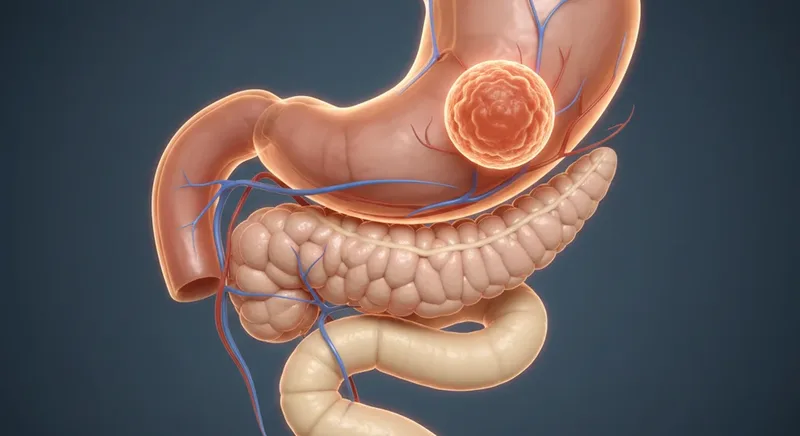
Bauchspeicheldrüsenkrebs ist ein Tumor, der in jedem Teil der Bauchspeicheldrüse auftreten kann. Krebs entsteht, wenn Zellen beginnen, sich unkontrolliert zu vermehren. Das Pankreas-Adenokarzinom ist die häufigste Art. Die Bauchspeicheldrüse produziert Hormone und Enzyme, die bei der Verdauung von Nahrung helfen und unter anderem den Blutzuckerspiegel regulieren.
Symptome
Bauchspeicheldrüsenkrebs zeigt oft keine Symptome, bis er ein späteres Stadium erreicht — es gibt also keine verlässlichen frühen Anzeichen. Die häufigsten Symptome bei einem manifesten Krebs sind:
- Appetitlosigkeit
- Gewichtsverlust
- Bauch- oder Rückenschmerzen
- Blutgerinnsel
- Gelbfärbung der Augen (Gelbsucht)
- Depression
Wenn der Krebs fortschreitet, werden die Symptome ausgeprägter und neue können hinzukommen.
Habe ich ihn geerbt?
Nur bis zu 1 von 10 Fällen von Bauchspeicheldrüsenkrebs kann erblich bedingt sein. Die anderen 90 % sind erworben — Mutationen, die im Laufe des Lebens auftreten, nicht vererbte. Diese DNA-Mutationen werden nicht von den Eltern an die Kinder weitergegeben.1
Warum bekommen wir ihn?
Ursachen, die Sie selbst in der Hand haben:
- Zucker, gesüßte Getränke und Süßigkeiten2
- Rauchen3
- Alkohol4
- Pestizide5
- Übergewicht3
- Umweltchemikalien6
- Cadmium7
Stadien
Sobald Bauchspeicheldrüsenkrebs festgestellt wird, beurteilen weitere Tests, wie weit er sich ausgebreitet hat. Anhand der Ergebnisse weist der Onkologe ein Stadium zu:
- Stadium 1: Der Krebs ist auf die Bauchspeicheldrüse beschränkt.
- Stadium 2: Ausbreitung auf nahegelegenes Gewebe oder Lymphknoten.
- Stadium 3: Ausbreitung auf große Blutgefäße und Lymphknoten.
- Stadium 4: Ausbreitung auf andere Organe, wie z. B. die Leber.
Die Lebenserwartung bei Bauchspeicheldrüsenkrebs hängt stark von der Ausbreitung, der gewählten Behandlung und dem Zustand des Patienten ab.
Behandlung
Behandlung und Überleben hängen vom Stadium ab. Das Ziel ist es, Krebszellen zu zerstören und die Ausbreitung der Krankheit zu verhindern. Die häufigsten Komplikationen während der Behandlung sind Gewichtsverlust, Verstopfung, Bauchschmerzen und Leberversagen.
Operation: Das Stadium und die Lage bestimmen, ob eine Operation durchgeführt wird. Durch eine Operation kann der Primärtumor entfernt werden, aber nicht der Krebs, der sich an anderer Stelle ausgebreitet hat – daher ist sie für Menschen mit Bauchspeicheldrüsenkrebs im fortgeschrittenen Stadium möglicherweise ungeeignet. Strahlentherapie: Wenn sich der Krebs über die Bauchspeicheldrüse hinaus ausgebreitet hat, kann eine Strahlentherapie verordnet werden, bei der Röntgenstrahlen und andere Strahlung zur Zerstörung von Krebszellen eingesetzt werden. Chemotherapie: In einigen Fällen kann der Onkologe die Chemotherapie mit anderen Behandlungen kombinieren.
Was kann ich sonst noch im Kampf gegen Bauchspeicheldrüsenkrebs tun?
Wenn Sie Ihrem Körper bei der Heilung helfen, Entzündungen reduzieren, Ihre Ernährung ausgleichen und die Fähigkeit des Immunsystems stärken wollen, veränderte Zellen zu erkennen und zu zerstören, wird es nicht ausreichen, sich allein auf Chemotherapie, Operation oder Strahlentherapie zu verlassen (vermeiden Sie diese jedoch nicht – mit der Prävention sind Sie bereits zu spät dran). Sie werden sich selbst erheblich helfen, indem Sie Folgendes tun:
- Lentinan-Ergänzungsmittel werden in allen Stadien der Krebsbehandlung eingesetzt. Lentinan verbessert die Wirksamkeit der konventionellen Behandlung, reduziert Nebenwirkungen und verbessert die Lebensqualität. Dies sind aktive Verbindungen, die aus Heilpilzen extrahiert werden und im Osten (Japan) weit verbreitet sind, da sie starke Immunmodulatoren sind, die das Immunsystem veranlassen, Krebszellen zu erkennen und zu zerstören. Die kürzeste empfohlene Kur dauert 3 Monate – je länger sie eingenommen wird, desto besser die Ergebnisse.
- Atemübungen – befassen Sie sich mit der Wim-Hof-Methode.
- Bewegung (unterschätzen Sie sie nicht!).
- Und lesen Sie unbedingt, was Sie nach einer Chemotherapie essen sollten.
Bauchspeicheldrüsenkrebs ist schwer frühzeitig zu erkennen. Konzentrierte Pilz-Polysaccharide werden auf ihre Rolle bei der Unterstützung der Aktivität von NK-Zellen und Makrophagen neben der konventionellen Behandlung untersucht.
Lentinan AXT von Zenius Labs™ →Häufig gestellte Fragen
Bauchspeicheldrüsenkrebs verursacht oft erst in einem späteren Stadium Symptome, sodass es keine zuverlässigen Frühwarnzeichen gibt. Häufige Symptome einer etablierten Erkrankung sind Appetitlosigkeit, Gewichtsverlust, Bauch- oder Rückenschmerzen, Blutgerinnsel, Gelbsucht (Gelbfärbung der Augen) und Depressionen.
Nur bis zu 1 von 10 Fällen kann vererbt sein. Die anderen 90 % sind erworben – DNA-Mutationen, die im Laufe des Lebens auftreten und nicht von den Eltern an die Kinder weitergegeben werden.
Ja. Chemotherapie und Strahlentherapie unterdrücken das Immunsystem. Konzentrierte Pilz-Polysaccharid-Extrakte werden auf ihre Rolle bei der Aktivierung von natürlichen Killerzellen und Makrophagen untersucht. Es ist wichtig, eine konzentrierte Multi-Extrakt-Formel wie Lentinan AXT von Zenius Labs™ anstelle von einfachen Pulvern zu wählen.
Zu den Faktoren, die Sie kontrollieren können, gehören Zucker und gesüßte Getränke, Rauchen, Alkohol, Übergewicht, Pestizide, Umweltchemikalien und Cadmium. Die Genetik macht nur etwa 10 % der Fälle aus.
- Heavy Drinking Linked to Pancreatic Cancer. WebMD
- Environment and Health Research Newsletter. European Commission
- Common Chemicals Linked to Pancreatic Cancer. WebMD
- Risk of pancreatic cancer and occupational exposures in Spain. Cancer Epidemiology
- Capula M et al. Role of drug catabolism, modulation of oncogenic signaling and tumor microenvironment in microbe-mediated pancreatic cancer chemoresistance. Drug resistance updates : reviews and commentaries in antimicrobial and anticancer chemotherapy. 2022. PubMed
- Kim G nab-Paclitaxel for the treatment of pancreatic cancer. Cancer management and research. 2017. PubMed
- Zhang Y et al. Immune Therapy in Pancreatic Cancer: Now and the Future?. Reviews on recent clinical trials. 2015. PubMed
- Das S et al. Harnessing the Immune System in Pancreatic Cancer. Current treatment options in oncology. 2018. PubMed
- Carpenter ES et al. Targeting the Microenvironment to Overcome Gemcitabine Resistance in Pancreatic Cancer. Cancer research. 2020. PubMed
- Tang M et al. Can intracellular drug delivery using hyaluronic acid functionalised pH-sensitive liposomes overcome gemcitabine resistance in pancreatic cancer?. Journal of controlled release : official journal of the Controlled Release Society. 2019. PubMed
- Zheng R et al. Saikosaponin D overcomes gemcitabine resistance in pancreatic cancer via AKT/mTOR pathway inhibition and synergistic induction of apoptosis and autophagy. Oncology reports. 2026. PubMed
- Jiang S et al. Macrophage-organoid co-culture model for identifying treatment strategies against macrophage-related gemcitabine resistance. Journal of experimental & clinical cancer research : CR. 2023. PubMed
- Goetze TO et al. Adjuvant Gemcitabine Versus Neoadjuvant/Adjuvant FOLFIRINOX in Resectable Pancreatic Cancer: The Randomized Multicenter Phase II NEPAFOX Trial. Annals of surgical oncology. 2024. PubMed
- Byrne JD et al. Impact of formulation on the iontophoretic delivery of the FOLFIRINOX regimen for the treatment of pancreatic cancer. Cancer chemotherapy and pharmacology. 2018. PubMed
- Nywening TM et al. Targeting tumour-associated macrophages with CCR2 inhibition in combination with FOLFIRINOX in patients with borderline resectable and locally advanced pancreatic cancer: a single-centre, open-label, dose-finding, non-randomised, phase 1b trial. The Lancet. Oncology. 2016. PubMed
- Tran NH et al. Phase 2 Trial of Neoadjuvant FOLFIRINOX and Intensity Modulated Radiation Therapy Concurrent With Fixed-Dose Rate-Gemcitabine in Patients With Borderline Resectable Pancreatic Cancer. International journal of radiation oncology, biology, physics. 2020. PubMed
- Lee JH et al. Lithium Chloride Protects against Sepsis-Induced Skeletal Muscle Atrophy and Cancer Cachexia. Cells. 2021. PubMed
- Zhang Y et al. Sophocarpine and matrine inhibit the production of TNF-alpha and IL-6 in murine macrophages and prevent cachexia-related symptoms induced by colon26 adenocarcinoma in mice. International immunopharmacology. 2008. PubMed
- Yu X et al. Astaxanthin Ameliorates Skeletal Muscle Atrophy in Mice With Cancer Cachexia. Nutrition and cancer. 2024. PubMed
- Bossi P et al. The Spectrum of Malnutrition/Cachexia/Sarcopenia in Oncology According to Different Cancer Types and Settings: A Narrative Review. Nutrients. 2021. PubMed
- Luo L et al. Reprogramming the pancreatic cancer stroma and immune landscape by a silicasome nanocarrier delivering nintedanib, a protein tyrosine kinase inhibitor. Nano today. 2024. PubMed
- Mortezaee K Enriched cancer stem cells, dense stroma, and cold immunity: Interrelated events in pancreatic cancer. Journal of biochemical and molecular toxicology. 2021. PubMed
- Liu X et al. Stromal reprogramming overcomes resistance to RAS-MAPK inhibition to improve pancreas cancer responses to cytotoxic and immune therapy. Science translational medicine. 2024. PubMed
- Datta J et al. Combined MEK and STAT3 Inhibition Uncovers Stromal Plasticity by Enriching for Cancer-Associated Fibroblasts With Mesenchymal Stem Cell-Like Features to Overcome Immunotherapy Resistance in Pancreatic Cancer. Gastroenterology. 2022. PubMed
- Lin HJ et al. Polarization of Cancer-Associated Macrophages Maneuver Neoplastic Attributes of Pancreatic Ductal Adenocarcinoma. Cancers. 2023. PubMed
- Chandrakesan P et al. DCLK1-Isoform2 Alternative Splice Variant Promotes Pancreatic Tumor Immunosuppressive M2-Macrophage Polarization. Molecular cancer therapeutics. 2020. PubMed
- Liu Y et al. CTCF enhances pancreatic cancer progression via FLG-AS1-dependent epigenetic regulation and macrophage polarization. Cell death and differentiation. 2025. PubMed
- Zhou J et al. A novel role of TGFBI in macrophage polarization and macrophage-induced pancreatic cancer growth and therapeutic resistance. Cancer letters. 2023. PubMed
- Deng Y et al. Glucocorticoid receptor regulates PD-L1 and MHC-I in pancreatic cancer cells to promote immune evasion and immunotherapy resistance. Nature communications. 2021. PubMed
- Zhou W et al. Pancreatic cancer-targeting exosomes for enhancing immunotherapy and reprogramming tumor microenvironment. Biomaterials. 2021. PubMed
- Mukherji R et al. The Role of Immunotherapy in Pancreatic Cancer. Current oncology (Toronto, Ont.). 2022. PubMed
- Feng M et al. PD-1/PD-L1 and immunotherapy for pancreatic cancer. Cancer letters. 2017. PubMed
- Jolly G et al. Cholecystokinin Receptor Antagonist Induces Pancreatic Stellate Cell Plasticity Rendering the Tumor Microenvironment Less Oncogenic. Cancers. 2023. PubMed
- Bangolo AI et al. Impact of gut microbiome in the development and treatment of pancreatic cancer: Newer insights. World journal of gastroenterology. 2023. PubMed
- Halle-Smith JM et al. Pancreatic Exocrine Insufficiency and the Gut Microbiome in Pancreatic Cancer: A Target for Future Diagnostic Tests and Therapies?. Cancers. 2023. PubMed
- Li P et al. Current status and prospect of gut and oral microbiome in pancreatic cancer: Clinical and translational perspectives. Cancer letters. 2024. PubMed
- Park JS et al. Astaxanthin decreased oxidative stress and inflammation and enhanced immune response in humans. Nutrition & metabolism. 2010. PubMed
- Cheng J et al. The Promising Effects of Astaxanthin on Lung Diseases. Advances in nutrition (Bethesda, Md.). 2021. PubMed
- Lee J et al. Anti-Oxidant and Anti-Inflammatory Effects of Astaxanthin on Gastrointestinal Diseases. International journal of molecular sciences. 2022. PubMed
- Wang T et al. Astaxanthin protected against the adverse effects induced by diesel exhaust particulate matter via improving membrane stability and anti-oxidative property. Journal of hazardous materials. 2023. PubMed
- Lu H et al. TLR2 agonist PSK activates human NK cells and enhances the antitumor effect of HER2-targeted monoclonal antibody therapy. Clinical cancer research : an official journal of the American Association for Cancer Research. 2011. PubMed
- Ooshiro M et al. [Ten cases of advanced gastro-intestinal cancer that required preoperative dosage of PSK]. Gan to kagaku ryoho. Cancer & chemotherapy. 2009. PubMed
- Maehara Y et al. Postoperative PSK and OK-432 immunochemotherapy for patients with gastric cancer. Cancer chemotherapy and pharmacology. 1993. PubMed
- Ito G et al. Correlation between efficacy of PSK postoperative adjuvant immunochemotherapy for gastric cancer and expression of MHC class I. Experimental and therapeutic medicine. 2012. PubMed
- Sun M et al. Lentinan reduces tumor progression by enhancing gemcitabine chemotherapy in urothelial bladder cancer. Surgical oncology. 2015. PubMed
- Zhang P et al. A carbon nanotube-gemcitabine-lentinan three-component composite for chemo-photothermal synergistic therapy of cancer. International journal of nanomedicine. 2018. PubMed
- Shimizu K et al. Efficacy of oral administered superfine dispersed lentinan for advanced pancreatic cancer. Hepato-gastroenterology. 2009. PubMed
- Wang Y et al. Systematic review and meta-analysis on the efficacy and safety of Injectable Lentinan combined with chemotherapy in the treatment of gastric cancer. Phytomedicine : international journal of phytotherapy and phytopharmacology. 2024. PubMed
- Geller AE et al. The induction of peripheral trained immunity in the pancreas incites anti-tumor activity to control pancreatic cancer progression. Nature communications. 2022. PubMed
- Fang J et al. Structure of a β-glucan from Grifola frondosa and its antitumor effect by activating Dectin-1/Syk/NF-κB signaling. Glycoconjugate journal. 2012. PubMed
- Zhang M et al. β-Glucan from Saccharomyces cerevisiae induces SBD-1 production in ovine ruminal epithelial cells via the Dectin-1-Syk-NF-κB signaling pathway. Cellular signalling. 2019. PubMed
- Gringhuis SI et al. Dectin-1 directs T helper cell differentiation by controlling noncanonical NF-kappaB activation through Raf-1 and Syk. Nature immunology. 2009. PubMed
- Wang H et al. Efficacy of biological response modifier lentinan with chemotherapy for advanced cancer: a meta-analysis. Cancer medicine. 2017. PubMed
- Oba K et al. Efficacy of adjuvant immunochemotherapy with polysaccharide K for patients with curative resections of gastric cancer. Cancer immunology, immunotherapy : CII. 2007. PubMed
- Cheng SC et al. mTOR- and HIF-1α-mediated aerobic glycolysis as metabolic basis for trained immunity. Science (New York, N.Y.). 2014. PubMed
- Kidd P Astaxanthin, cell membrane nutrient with diverse clinical benefits and anti-aging potential. Alternative medicine review : a journal of clinical therapeutic. 2011. PubMed