Wat is alvleesklierkanker?
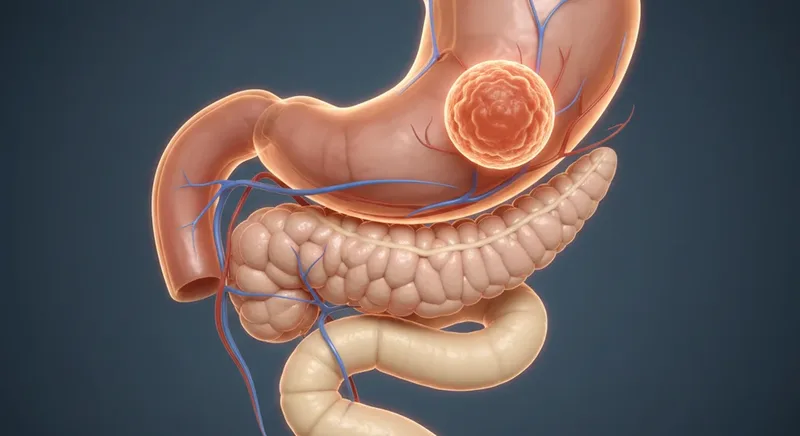
Alvleesklierkanker is een tumor die in elk deel van de alvleesklier kan worden gevonden. Kanker begint wanneer cellen zich oncontroleerbaar beginnen te vermenigvuldigen. Pancreatisch adenocarcinoom is het meest voorkomende type. De alvleesklier produceert hormonen en enzymen die helpen bij het verteren van voedsel en, naast andere functies, de bloedsuikerspiegel reguleren.
Symptomen
Alvleesklierkanker geeft vaak geen symptomen totdat het een later stadium bereikt — er zijn dus geen betrouwbare vroege tekenen. De meest voorkomende symptomen van vastgestelde kanker zijn:
- Verlies van eetlust
- Gewichtsverlies
- Buik- of rugpijn
- Bloedstolsels
- Geelverkleuring van de ogen (geelzucht)
- Depressie
Naarmate de kanker zich verspreidt, worden de symptomen duidelijker en kunnen er nieuwe verschijnen.
Heb ik het geërfd?
Slechts tot 1 op de 10 gevallen van alvleesklierkanker kan erfelijk zijn. De overige 90% zijn verworven — mutaties die tijdens het leven optreden, geen erfelijke. Deze DNA-mutaties worden niet van ouders op kinderen doorgegeven.1
Waarom krijgen we het?
Oorzaken die u zelf in de hand heeft:
- Suiker, gezoete dranken en snoep2
- Roken3
- Alcohol4
- Pesticiden5
- Overgewicht3
- Chemische stoffen in het milieu6
- Cadmium7
Stadia
Zodra alvleesklierkanker is vastgesteld, wordt met verder onderzoek bepaald hoe ver de ziekte zich heeft verspreid. Op basis van de resultaten kent de oncoloog een stadium toe:
- Stadium 1: de kanker is beperkt tot de alvleesklier.
- Stadium 2: verspreid naar nabijgelegen weefsels of lymfeklieren.
- Stadium 3: verspreid naar belangrijke bloedvaten en lymfeklieren.
- Stadium 4: verspreid naar andere organen, zoals de lever.
De levensverwachting bij alvleesklierkanker is sterk afhankelijk van de verspreiding, de gekozen behandeling en de conditie van de patiënt.
Behandeling
Behandeling en overleving hangen af van het stadium. Het doel is om kankercellen te vernietigen en te voorkomen dat de ziekte zich verspreidt. De meest voorkomende complicaties tijdens de behandeling zijn gewichtsverlies, constipatie, buikpijn en leverfalen.
Chirurgie: het stadium en de locatie bepalen of er een operatie wordt uitgevoerd. Met een operatie kan de primaire tumor worden verwijderd, maar niet de kanker die zich elders heeft verspreid — dus het kan ongeschikt zijn voor mensen met alvleesklierkanker in een vergevorderd stadium. Radiotherapie: wanneer de kanker zich buiten de alvleesklier heeft verspreid, kan radiotherapie worden voorgeschreven, waarbij röntgenstralen en andere straling worden gebruikt om kankercellen te vernietigen. Chemotherapie: in sommige gevallen kan de oncoloog chemotherapie combineren met andere behandelingen.
Wat kan ik nog meer doen in de strijd tegen alvleesklierkanker?
Als u uw lichaam wilt helpen genezen, ontstekingen wilt verminderen, uw dieet in evenwicht wilt brengen en het vermogen van het immuunsysteem om veranderde cellen te herkennen en te vernietigen wilt versterken, is alleen vertrouwen op chemotherapie, chirurgie of radiotherapie niet genoeg (hoewel u deze niet moet vermijden — met preventie bent u al te laat). U helpt uzelf aanzienlijk door het volgende te doen:
- Lentinan-supplementen worden in alle stadia van de kankerbehandeling gebruikt. Lentinan verbetert de effectiviteit van de conventionele behandeling, vermindert bijwerkingen en verbetert de kwaliteit van leven. Dit zijn actieve stoffen die worden geëxtraheerd uit medicinale paddenstoelen en die veel worden gebruikt in het Oosten (Japan), omdat het krachtige immunomodulatoren zijn die het immuunsysteem aanzetten om kankercellen op te sporen en te vernietigen. De kortste aanbevolen kuur is 3 maanden — hoe langer het wordt ingenomen, hoe beter de resultaten.
- Ademhalingsoefeningen — verdiep u in de Wim Hof-methode.
- Lichaamsbeweging (onderschat dit niet!).
- En lees zeker over wat u moet eten na chemotherapie.
Alvleesklierkanker is moeilijk vroeg te ontdekken. Geconcentreerde polysachariden uit paddenstoelen worden bestudeerd voor hun rol bij het ondersteunen van de activiteit van NK-cellen en macrofagen naast de conventionele behandeling.
Lentinan AXT van Zenius Labs™ →Veelgestelde vragen
Alvleesklierkanker veroorzaakt vaak geen symptomen tot een later stadium, dus er zijn geen betrouwbare vroege tekenen. Veelvoorkomende symptomen van een vastgestelde ziekte zijn onder meer verlies van eetlust, gewichtsverlies, buik- of rugpijn, bloedstolsels, geelzucht (gele verkleuring van de ogen) en depressie.
Slechts tot 1 op de 10 gevallen kan erfelijk zijn. De overige 90% is verworven — DNA-mutaties die tijdens het leven optreden en niet van ouders op kinderen worden doorgegeven.
Ja. Chemotherapie en radiotherapie onderdrukken het immuunsysteem. Geconcentreerde extracten van polysachariden uit paddenstoelen worden bestudeerd voor hun rol bij het helpen activeren van natural killer-cellen en macrofagen. Het is belangrijk om een geconcentreerde formule met meerdere extracten te kiezen, zoals Lentinan AXT van Zenius Labs™, in plaats van eenvoudige poeders.
Factoren die u zelf in de hand heeft, zijn onder meer suiker en gezoete dranken, roken, alcohol, overgewicht, pesticiden, chemicaliën in het milieu en cadmium. Genetica is slechts verantwoordelijk voor ongeveer 10% van de gevallen.
- Heavy Drinking Linked to Pancreatic Cancer. WebMD
- Environment and Health Research Newsletter. European Commission
- Common Chemicals Linked to Pancreatic Cancer. WebMD
- Risk of pancreatic cancer and occupational exposures in Spain. Cancer Epidemiology
- Capula M et al. Role of drug catabolism, modulation of oncogenic signaling and tumor microenvironment in microbe-mediated pancreatic cancer chemoresistance. Drug resistance updates : reviews and commentaries in antimicrobial and anticancer chemotherapy. 2022. PubMed
- Kim G nab-Paclitaxel for the treatment of pancreatic cancer. Cancer management and research. 2017. PubMed
- Zhang Y et al. Immune Therapy in Pancreatic Cancer: Now and the Future?. Reviews on recent clinical trials. 2015. PubMed
- Das S et al. Harnessing the Immune System in Pancreatic Cancer. Current treatment options in oncology. 2018. PubMed
- Carpenter ES et al. Targeting the Microenvironment to Overcome Gemcitabine Resistance in Pancreatic Cancer. Cancer research. 2020. PubMed
- Tang M et al. Can intracellular drug delivery using hyaluronic acid functionalised pH-sensitive liposomes overcome gemcitabine resistance in pancreatic cancer?. Journal of controlled release : official journal of the Controlled Release Society. 2019. PubMed
- Zheng R et al. Saikosaponin D overcomes gemcitabine resistance in pancreatic cancer via AKT/mTOR pathway inhibition and synergistic induction of apoptosis and autophagy. Oncology reports. 2026. PubMed
- Jiang S et al. Macrophage-organoid co-culture model for identifying treatment strategies against macrophage-related gemcitabine resistance. Journal of experimental & clinical cancer research : CR. 2023. PubMed
- Goetze TO et al. Adjuvant Gemcitabine Versus Neoadjuvant/Adjuvant FOLFIRINOX in Resectable Pancreatic Cancer: The Randomized Multicenter Phase II NEPAFOX Trial. Annals of surgical oncology. 2024. PubMed
- Byrne JD et al. Impact of formulation on the iontophoretic delivery of the FOLFIRINOX regimen for the treatment of pancreatic cancer. Cancer chemotherapy and pharmacology. 2018. PubMed
- Nywening TM et al. Targeting tumour-associated macrophages with CCR2 inhibition in combination with FOLFIRINOX in patients with borderline resectable and locally advanced pancreatic cancer: a single-centre, open-label, dose-finding, non-randomised, phase 1b trial. The Lancet. Oncology. 2016. PubMed
- Tran NH et al. Phase 2 Trial of Neoadjuvant FOLFIRINOX and Intensity Modulated Radiation Therapy Concurrent With Fixed-Dose Rate-Gemcitabine in Patients With Borderline Resectable Pancreatic Cancer. International journal of radiation oncology, biology, physics. 2020. PubMed
- Lee JH et al. Lithium Chloride Protects against Sepsis-Induced Skeletal Muscle Atrophy and Cancer Cachexia. Cells. 2021. PubMed
- Zhang Y et al. Sophocarpine and matrine inhibit the production of TNF-alpha and IL-6 in murine macrophages and prevent cachexia-related symptoms induced by colon26 adenocarcinoma in mice. International immunopharmacology. 2008. PubMed
- Yu X et al. Astaxanthin Ameliorates Skeletal Muscle Atrophy in Mice With Cancer Cachexia. Nutrition and cancer. 2024. PubMed
- Bossi P et al. The Spectrum of Malnutrition/Cachexia/Sarcopenia in Oncology According to Different Cancer Types and Settings: A Narrative Review. Nutrients. 2021. PubMed
- Luo L et al. Reprogramming the pancreatic cancer stroma and immune landscape by a silicasome nanocarrier delivering nintedanib, a protein tyrosine kinase inhibitor. Nano today. 2024. PubMed
- Mortezaee K Enriched cancer stem cells, dense stroma, and cold immunity: Interrelated events in pancreatic cancer. Journal of biochemical and molecular toxicology. 2021. PubMed
- Liu X et al. Stromal reprogramming overcomes resistance to RAS-MAPK inhibition to improve pancreas cancer responses to cytotoxic and immune therapy. Science translational medicine. 2024. PubMed
- Datta J et al. Combined MEK and STAT3 Inhibition Uncovers Stromal Plasticity by Enriching for Cancer-Associated Fibroblasts With Mesenchymal Stem Cell-Like Features to Overcome Immunotherapy Resistance in Pancreatic Cancer. Gastroenterology. 2022. PubMed
- Lin HJ et al. Polarization of Cancer-Associated Macrophages Maneuver Neoplastic Attributes of Pancreatic Ductal Adenocarcinoma. Cancers. 2023. PubMed
- Chandrakesan P et al. DCLK1-Isoform2 Alternative Splice Variant Promotes Pancreatic Tumor Immunosuppressive M2-Macrophage Polarization. Molecular cancer therapeutics. 2020. PubMed
- Liu Y et al. CTCF enhances pancreatic cancer progression via FLG-AS1-dependent epigenetic regulation and macrophage polarization. Cell death and differentiation. 2025. PubMed
- Zhou J et al. A novel role of TGFBI in macrophage polarization and macrophage-induced pancreatic cancer growth and therapeutic resistance. Cancer letters. 2023. PubMed
- Deng Y et al. Glucocorticoid receptor regulates PD-L1 and MHC-I in pancreatic cancer cells to promote immune evasion and immunotherapy resistance. Nature communications. 2021. PubMed
- Zhou W et al. Pancreatic cancer-targeting exosomes for enhancing immunotherapy and reprogramming tumor microenvironment. Biomaterials. 2021. PubMed
- Mukherji R et al. The Role of Immunotherapy in Pancreatic Cancer. Current oncology (Toronto, Ont.). 2022. PubMed
- Feng M et al. PD-1/PD-L1 and immunotherapy for pancreatic cancer. Cancer letters. 2017. PubMed
- Jolly G et al. Cholecystokinin Receptor Antagonist Induces Pancreatic Stellate Cell Plasticity Rendering the Tumor Microenvironment Less Oncogenic. Cancers. 2023. PubMed
- Bangolo AI et al. Impact of gut microbiome in the development and treatment of pancreatic cancer: Newer insights. World journal of gastroenterology. 2023. PubMed
- Halle-Smith JM et al. Pancreatic Exocrine Insufficiency and the Gut Microbiome in Pancreatic Cancer: A Target for Future Diagnostic Tests and Therapies?. Cancers. 2023. PubMed
- Li P et al. Current status and prospect of gut and oral microbiome in pancreatic cancer: Clinical and translational perspectives. Cancer letters. 2024. PubMed
- Park JS et al. Astaxanthin decreased oxidative stress and inflammation and enhanced immune response in humans. Nutrition & metabolism. 2010. PubMed
- Cheng J et al. The Promising Effects of Astaxanthin on Lung Diseases. Advances in nutrition (Bethesda, Md.). 2021. PubMed
- Lee J et al. Anti-Oxidant and Anti-Inflammatory Effects of Astaxanthin on Gastrointestinal Diseases. International journal of molecular sciences. 2022. PubMed
- Wang T et al. Astaxanthin protected against the adverse effects induced by diesel exhaust particulate matter via improving membrane stability and anti-oxidative property. Journal of hazardous materials. 2023. PubMed
- Lu H et al. TLR2 agonist PSK activates human NK cells and enhances the antitumor effect of HER2-targeted monoclonal antibody therapy. Clinical cancer research : an official journal of the American Association for Cancer Research. 2011. PubMed
- Ooshiro M et al. [Ten cases of advanced gastro-intestinal cancer that required preoperative dosage of PSK]. Gan to kagaku ryoho. Cancer & chemotherapy. 2009. PubMed
- Maehara Y et al. Postoperative PSK and OK-432 immunochemotherapy for patients with gastric cancer. Cancer chemotherapy and pharmacology. 1993. PubMed
- Ito G et al. Correlation between efficacy of PSK postoperative adjuvant immunochemotherapy for gastric cancer and expression of MHC class I. Experimental and therapeutic medicine. 2012. PubMed
- Sun M et al. Lentinan reduces tumor progression by enhancing gemcitabine chemotherapy in urothelial bladder cancer. Surgical oncology. 2015. PubMed
- Zhang P et al. A carbon nanotube-gemcitabine-lentinan three-component composite for chemo-photothermal synergistic therapy of cancer. International journal of nanomedicine. 2018. PubMed
- Shimizu K et al. Efficacy of oral administered superfine dispersed lentinan for advanced pancreatic cancer. Hepato-gastroenterology. 2009. PubMed
- Wang Y et al. Systematic review and meta-analysis on the efficacy and safety of Injectable Lentinan combined with chemotherapy in the treatment of gastric cancer. Phytomedicine : international journal of phytotherapy and phytopharmacology. 2024. PubMed
- Geller AE et al. The induction of peripheral trained immunity in the pancreas incites anti-tumor activity to control pancreatic cancer progression. Nature communications. 2022. PubMed
- Fang J et al. Structure of a β-glucan from Grifola frondosa and its antitumor effect by activating Dectin-1/Syk/NF-κB signaling. Glycoconjugate journal. 2012. PubMed
- Zhang M et al. β-Glucan from Saccharomyces cerevisiae induces SBD-1 production in ovine ruminal epithelial cells via the Dectin-1-Syk-NF-κB signaling pathway. Cellular signalling. 2019. PubMed
- Gringhuis SI et al. Dectin-1 directs T helper cell differentiation by controlling noncanonical NF-kappaB activation through Raf-1 and Syk. Nature immunology. 2009. PubMed
- Wang H et al. Efficacy of biological response modifier lentinan with chemotherapy for advanced cancer: a meta-analysis. Cancer medicine. 2017. PubMed
- Oba K et al. Efficacy of adjuvant immunochemotherapy with polysaccharide K for patients with curative resections of gastric cancer. Cancer immunology, immunotherapy : CII. 2007. PubMed
- Cheng SC et al. mTOR- and HIF-1α-mediated aerobic glycolysis as metabolic basis for trained immunity. Science (New York, N.Y.). 2014. PubMed
- Kidd P Astaxanthin, cell membrane nutrient with diverse clinical benefits and anti-aging potential. Alternative medicine review : a journal of clinical therapeutic. 2011. PubMed