Lung Cancer
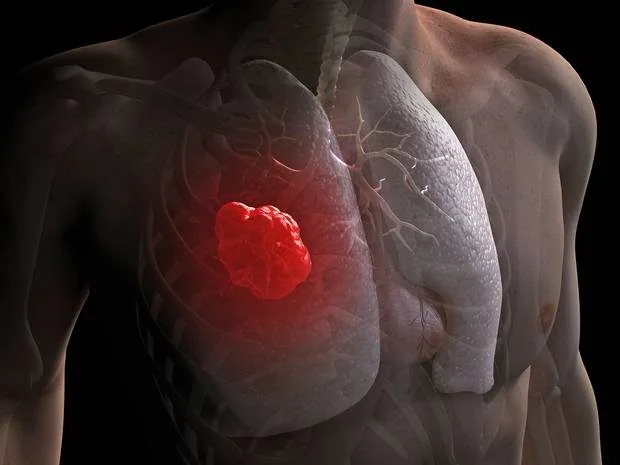
It is the most common cancer. Lung cancer accounts for 11.1% of all diagnosed cancers[1]. It is a relentless leader – lung cancer is responsible for 20,6 % of all cancer deaths (more than breast, prostate, and colorectal cancers combined)[1]. In other words, it is very difficult to cure, so (for now) the best way to fight it is prevention. Often, lung cancer symptoms can be similar to those of other diseases, so regular check-ups are essential. We will discuss how to tip the statistics in your favor later.
Classification
Main types of lung cancer:
Small cell lung carcinoma: a very aggressive, rapidly growing form of lung cancer, accounting for up to 20% of lung cancer cases. It can be effectively treated with anticancer drugs and radiotherapy, but often recurs.
Non-small cell lung carcinoma: the most common form of lung cancer, accounting for about 80% of cases.
Other neuroendocrine lung tumors: these are a rare type of cancer. They are usually slow-growing cancerous tumors that can often be cured.
Lung Cancer Symptoms
Lung cancer symptoms directly depend on the type of cancer and its location in the lungs. It is important to understand that in early stages, up to 2–6 % of people experience no symptoms at all, making preventive screening vital.
1. Non-Small Cell Lung Cancer (NSCLC)
This is the most common form (85 %), whose signs are often related to respiratory tract irritation.
| Symptom | Frequency (%) | Why does this happen? |
|---|---|---|
| Cough | 45–75 % | The tumor irritates the airways. |
| Weight loss | 20–70 % | The body expends energy fighting the disease. |
| Shortness of breath | 40–60 % | The tumor compresses the airways or causes fluid accumulation. |
| Chest pain | 30–45 % | Cancer reaches the pleura or chest wall. |
| Coughing up blood | 25–35 % | The tumor damages blood vessels. |
| Bone pain | 6–25 % | A sign that the disease may have spread to the bones. |
2. Small cell lung cancer (SCLC)
This is a more aggressive form that more often presents with systemic changes and specific syndromes.
| Symptom | Frequency (%) | Characteristic |
|---|---|---|
| Cough | 8–75 % | May start suddenly and be very bothersome. |
| Weight loss / Anorexia | 18–68 % | Sudden loss of appetite is very characteristic. |
| Superior vena cava syndrome | 10–15 % | Swelling of the face and neck (the tumor compresses the vein). |
| Hoarseness | 2–18 % | The tumor damages the nerve responsible for the voice. |
| Finger changes (clubbing) | 0–20 % | Nails become convex and phalanges thicken (a sign of oxygen deficiency). |
| Fever | 0–20 % | Common due to accompanying lung infections. |
Causes of lung cancer
What cancer is and what its causes are known (inherited genes account for only a very, very small part[2]). The International Agency for Research on Cancer (International Agency on Research on Cancer) has compiled a list of carcinogens (substances that cause cancer). The causes of lung cancer are quite simple and can be divided into two groups:
1. SMOKING – responsible for nearly 80-90% of lung cancer cases! Yes, the harm of smoking to the body is enormous… Moreover, if you smoke, you are at risk not only for cancer, as smoking also affects the heart, blood vessels, the brain, and the entire body…
According to statistics, if the 'smoking prevention system' worked effectively, lung cancer could be reduced by as much as 90%! So why doesn't it work as it should? For example: a natural disaster somewhere in an exotic country (flood, earthquake, etc.), a hundred people die, what happens? – the whole world donates money, military, teams, and the Red Cross go to help, food is sent, it is broadcast on the news, discussed on the radio, newspapers, and other mass media.. 'A huge disaster' – the headlines read… But what is that hundred dead compared to 2 million people who die annually from (just) lung cancer? Why isn't anyone sounding the alarm? According to statistics, one in two people will develop cancer in their lifetime. Is that normal (considering that it has long been known what causes cancer)?
What is the proposed system for reducing smoking? The scare system: if you smoke, you will get cancer (or another disease). History proves that such a scare system does not work. Do you know why? Because it causes stress! And what does a smoker do when under stress? – they go for a smoke. Even now, that smoker reading this text already feels a desire somewhere in their throat inviting them to take a drag, just one puff… The smoker logically sees that the only way to stay healthy is to quit smoking, which again causes immense stress and the desire only intensifies. Unlike 'recognized smoking cessation programs', we do not recommend patches, candies, or any other substitutes, because they only maintain your addiction. Look into the "easy way to quit smoking" and stop smoking without stress. Books in Lithuanian are also sold in bookstores.
2. Other materials harmful to your lungs cause the remaining 10% of cancer cases. Asbestos, coal tar products, arsenic, vinyl chloride, nickel chromate, radon gas, construction dust, wood dust, dust of any origin, diesel engine exhaust fumes… And air pollution![3] Yes, life expectancy in the countryside is significantly longer than in the city. Car exhaust fumes contain substances that cause cancer and are included in the list of carcinogens. If you live in a city center, seriously consider whether 'jogging' will be good for your health… Pollution is not just car exhaust fumes, it is also the enormous scale of modern industry, therefore, as a community, it is necessary to participate and look for 'greener' production process methods, and individually, it would certainly be advisable to assess the pollution around your home (or work) and perhaps consider the possibility of exchanging that apartment in the city center for a small house near the city.
How is lung cancer diagnosed
First, a chest X-ray is performed. This test is quite accurate in diagnosing lung cancer. In lung cancer, very rarely are no changes found on a chest X-ray (only 2% of all cases). Regardless of the nature of the findings on the chest X-ray, patients are recommended to undergo a computed tomography of the chest with intravenous contrast material. To check for metastases (spread of cancer to other organs), other tests may be performed: tomography, scintigraphy, ultrasound examinations, sonography, spirometry, thoracoscopy, or mediastinoscopy. The tests, according to the symptoms and the patient's condition, must be selected by a doctor. Interventional diagnostic tests are also used (e.g., bronchoscopy (a tube is inserted into the airways, thus inspecting the airways) or transthoracic lung tissue biopsy).
Lung cancer stages
The stage of lung cancer (determining the extent of the disease) is assessed in order to select the appropriate treatment and possible disease prognosis (survival). The spread (metastases) of small cell and non-small cell lung cancer is described by evaluating the primary tumor (T), lung cancer metastases in regional lymph nodes (N), and distant metastases (M). This yields the clinical classification (TNM). More about lung cancer stages
Lung cancer treatment
Treatment depends on the cancer stage and is selected considering age, condition, and comorbidities. Early stages (up to and including 3A) are treated with surgery, which may be followed by adjuvant chemotherapy and radiotherapy. If surgery is not possible, treatment may be with concurrent radiotherapy and chemotherapy. Locally advanced disease stages 3A-3B may be treated with chemotherapy and radiotherapy, followed by surgery. Advanced disease stages with many metastases are treated with anticancer drugs. More about lung cancer treatment
Lung cancer survival
Non-small cell lung cancer survival
| Stage | 5-year survival (%) |
|---|---|
| Lung cancer stage 1A | 50 |
| Lung cancer stage 1B | 43 |
| Lung cancer stage 2A | 36 |
| Lung cancer stage 2B | 25 |
| Lung cancer stage 3A | 19 |
| Lung cancer stage 3B | 7 |
| Lung cancer stage 4 | 2 |
Small cell lung cancer survival rate
| Stage | 5-year survival rate (%) |
|---|---|
| Lung cancer stage 1A | 38 |
| Lung cancer stage 1B | 21 |
| Lung cancer stage 2A | 38 |
| Lung cancer stage 2B | 18 |
| Lung cancer stage 3A | 13 |
| Lung cancer stage 3B | 9 |
| Lung cancer stage 4 | 1 |
Is lung cancer curable?
Yes, lung cancer survival prognoses based on statistics are quite grim, but do not give up. After all, a prognosis is not and cannot be zero. You need to ensure you become part of the percentage of people who successfully overcome cancer. Often, this is not a coincidence! No matter if metastases are found in the lungs, the statistics can be "adjusted"[4]if you are ready to give up harmful habits, balance your diet and lifestyle.
Quality immune support in lung cancer
If you want to help your body heal, reduce inflammation, balance your diet, and strengthen the immune system to recognize and destroy altered cells, relying solely on chemotherapy, surgery, or radiotherapy will not be enough.
Lentinan is a polysaccharide extracted from medicinal mushrooms, which was officially approved in Japan in 1985 as a supportive treatment for oncological diseases [5]. Since then, it has been widely used in Asian countries as an adjunctive therapy alongside chemotherapy and radiotherapy.
However, it is important to understand that a single mushroom extract is often not sufficient. Different medicinal mushrooms have different mechanisms of action: some activate NK cells (natural killer cells), others strengthen the macrophage response, and still others act as antioxidants [6]. That is precisely why a concentrated multi-extract formula is more effective than individual ingredients.
In addition to mushroom polysaccharides, antioxidant support is also extremely important. Astaxanthin, the strongest known antioxidant, helps protect cellular DNA from oxidative stress, which is particularly intensified during chemotherapy [7]. A formula combining mushroom polysaccharide extracts with a maximum dose of astaxanthin provides comprehensive support for the body.
For prevention and support in early stages (I–II), a course of at least 3 months is recommended. In cases of advanced cancer, during active treatment, or during recovery after treatment, specialists recommend significantly longer, unlimited-duration courses with higher doses. The logic is simple – the immune system does not take vacations, so its support should not either. Consistency without breaks is key. The longer and more consistent the use, the more pronounced and long-lasting the results.
Side effects are only possible in case of an allergy to mushrooms (extremely rare).
Also very important: breathing exercises (look into the Wim Hof method) and exercise – do not underestimate the power of physical activity.
Lentinan AXT from Zenius Labs™ combines the most potent mushroom polysaccharide extracts with a maximum dose of astaxanthin in one formula – comprehensive support for immunity and cell protection during oncological diseases.
Frequently asked questions
In early stages, lung cancer often causes no symptoms. As the disease progresses, symptoms may include a persistent cough, coughing up blood, shortness of breath, chest pain, and unexplained weight loss. That is why regular preventive check-ups are extremely important, especially for smokers.
Yes. Chemotherapy and radiotherapy significantly suppress the immune system. Concentrated mushroom polysaccharide extracts can help activate natural killer cells and macrophages. It is important to choose not simple powders, but a concentrated multi-extract formula such as Lentinan AXT from Zenius Labs™.
Lung cancer diagnosed early (stage I–II) is often treated successfully, especially with surgical treatment. However, even after successful treatment, the risk of recurrence remains, so long-term immune system support and lifestyle changes are essential.
Smoking is the primary factor, accounting for about 85% of all lung cancer cases. Other factors include secondhand smoke, radon, asbestos, air pollution, and genetic predisposition, although genetics account for less than 5% of cases.
Non-small cell lung cancer accounts for about 85% of all cases and typically grows more slowly. Small cell lung cancer is more aggressive and spreads faster, but often responds better to chemotherapy.
- Lung and Bronchus Cancer — Cancer Stat Facts. SEER
- What Causes Lung Cancer? Cancer.org
- List of IARC Group 1 Agents — Carcinogenic to Humans. Wikipedia
- Promoting a healthy lifestyle among cancer survivors. PMC
- Lentinan for treating different types of cancers — 9,474 cases across 135 clinical studies. PubMed
- Antitumor and metastasis-inhibitory activities of lentinan as immunomodulator — NK cells, T-cell adjuvant. PubMed
- Astaxanthin decreased oxidative stress, blocked DNA damage and enhanced immune response in humans. PubMed
- Yin X et al. A meta-analysis of lentinan injection combined with chemotherapy in the treatment of nonsmall cell lung cancer. Indian journal of cancer. 2015. PubMed
- Zhao C et al. Lentinan combined with cisplatin for the treatment of non-small cell lung cancer. Medicine. 2021. PubMed
- Li M et al. Lentinan triggers oxidative stress-mediated anti-inflammatory responses in lung cancer cells. Molecular and cellular biochemistry. 2022. PubMed
- Gui Y et al. Oridonin improves the therapeutic effect of lentinan on lung cancer. Experimental and therapeutic medicine. 2021. PubMed
- Wang Y et al. Investigation on the efficiency of lentinan for injection combining cisplatin on treating malignant pleural effusion based on systematic review and meta-analysis. Medicine. 2024. PubMed
- Song Z et al. Translational Nanotherapeutics Reprograms Immune Microenvironment in Malignant Pleural Effusion of Lung Adenocarcinoma. Advanced healthcare materials. 2021. PubMed
- Congcong Q et al. Evaluation of Efficacy and Safety for Lentinan in the Control of the Malignant Pleural Effusions via Intrapleural Injection. The American journal of the medical sciences. 2019. PubMed
- Ansell SM et al. PD-1 blockade with nivolumab in relapsed or refractory Hodgkin's lymphoma. The New England journal of medicine. 2015. PubMed
- Goodman A et al. PD-1-PD-L1 immune-checkpoint blockade in B-cell lymphomas. Nature reviews. Clinical oncology. 2017. PubMed
- Zak J et al. JAK inhibition enhances checkpoint blockade immunotherapy in patients with Hodgkin lymphoma. Science (New York, N.Y.). 2024. PubMed
- Chen H et al. Integrative spatial analysis reveals tumor heterogeneity and immune colony niche related to clinical outcomes in small cell lung cancer. Cancer cell. 2025. PubMed
- Redin E et al. Dasatinib Remodels the Tumor Microenvironment and Sensitizes Small Cell Lung Cancer to Immunotherapy. Cancer research. 2025. PubMed
- Tani M et al. In vitro generation of activated natural killer cells and cytotoxic macrophages with lentinan. European journal of clinical pharmacology. 1992. PubMed
- Hamano K et al. The preoperative administration of lentinan ameliorated the impairment of natural killer activity after cardiopulmonary bypass. International journal of immunopharmacology. 1999. PubMed
- Mattiola I et al. The macrophage tetraspan MS4A4A enhances dectin-1-dependent NK cell-mediated resistance to metastasis. Nature immunology. 2019. PubMed
- Chandrakesan P et al. DCLK1-Isoform2 Alternative Splice Variant Promotes Pancreatic Tumor Immunosuppressive M2-Macrophage Polarization. Molecular cancer therapeutics. 2020. PubMed
- Fan TW et al. Polarization and β-Glucan Reprogram Immunomodulatory Metabolism in Human Macrophages and Ex Vivo in Human Lung Cancer Tissues. Journal of immunology (Baltimore, Md. : 1950). 2022. PubMed
- Fang J et al. Structure of a β-glucan from Grifola frondosa and its antitumor effect by activating Dectin-1/Syk/NF-κB signaling. Glycoconjugate journal. 2012. PubMed
- Zhang M et al. β-Glucan from Saccharomyces cerevisiae induces SBD-1 production in ovine ruminal epithelial cells via the Dectin-1-Syk-NF-κB signaling pathway. Cellular signalling. 2019. PubMed
- Gringhuis SI et al. Dectin-1 directs T helper cell differentiation by controlling noncanonical NF-kappaB activation through Raf-1 and Syk. Nature immunology. 2009. PubMed
- Ooshiro M et al. [Ten cases of advanced gastro-intestinal cancer that required preoperative dosage of PSK]. Gan to kagaku ryoho. Cancer & chemotherapy. 2009. PubMed
- Maehara Y et al. Postoperative PSK and OK-432 immunochemotherapy for patients with gastric cancer. Cancer chemotherapy and pharmacology. 1993. PubMed
- Ito G et al. Correlation between efficacy of PSK postoperative adjuvant immunochemotherapy for gastric cancer and expression of MHC class I. Experimental and therapeutic medicine. 2012. PubMed
- Cheng J et al. The Promising Effects of Astaxanthin on Lung Diseases. Advances in nutrition (Bethesda, Md.). 2021. PubMed
- Wu C et al. [Astaxanthin inhibits proliferation and promotes apoptosis of A549 lung cancer cells via blocking JAK1/STAT3 pathway]. Xi bao yu fen zi mian yi xue za zhi = Chinese journal of cellular and molecular immunology. 2016. PubMed
- Qian J et al. Molecular mechanisms underlying the beneficial effects of Astaxanthin on metabolic changes in lung cancer and diabetes mellitus: A dual pathophysiological perspective. International immunopharmacology. 2025. PubMed
- Park JS et al. Astaxanthin decreased oxidative stress and inflammation and enhanced immune response in humans. Nutrition & metabolism. 2010. PubMed
- Lee J et al. Anti-Oxidant and Anti-Inflammatory Effects of Astaxanthin on Gastrointestinal Diseases. International journal of molecular sciences. 2022. PubMed
- Wang T et al. Astaxanthin protected against the adverse effects induced by diesel exhaust particulate matter via improving membrane stability and anti-oxidative property. Journal of hazardous materials. 2023. PubMed
- Deng S et al. Lentinan inhibits tumor angiogenesis via interferon γ and in a T cell independent manner. Journal of experimental & clinical cancer research : CR. 2018. PubMed
- Deng S et al. Correction to: Lentinan inhibits tumor angiogenesis via interferon γ and in a T cell independent manner. Journal of experimental & clinical cancer research : CR. 2021. PubMed
- Wang H et al. Efficacy of biological response modifier lentinan with chemotherapy for advanced cancer: a meta-analysis. Cancer medicine. 2017. PubMed
- Zhang Y et al. Lentinan as an immunotherapeutic for treating lung cancer: a review of 12 years clinical studies in China. Journal of cancer research and clinical oncology. 2018. PubMed
- Wang XE et al. Immunomodulatory Effect of Lentinan on Aberrant T Subsets and Cytokines Profile in Non-small Cell Lung Cancer Patients. Pathology oncology research : POR. 2020. PubMed
- Wang Y et al. Systematic review and meta-analysis on the efficacy and safety of Injectable Lentinan combined with chemotherapy in the treatment of gastric cancer. Phytomedicine : international journal of phytotherapy and phytopharmacology. 2024. PubMed
- Oba K et al. Efficacy of adjuvant immunochemotherapy with polysaccharide K for patients with curative resections of gastric cancer. Cancer immunology, immunotherapy : CII. 2007. PubMed
- Cheng SC et al. mTOR- and HIF-1α-mediated aerobic glycolysis as metabolic basis for trained immunity. Science (New York, N.Y.). 2014. PubMed
- Kidd P Astaxanthin, cell membrane nutrient with diverse clinical benefits and anti-aging potential. Alternative medicine review : a journal of clinical therapeutic. 2011. PubMed