Medicinal Mushrooms
Mushrooms have always held an unusual place in the human psyche, its evolution, and development. They have always been associated with power and mysticism. Used for food, rituals, and, of course, healing.
Mushrooms are neither plants nor animals, which is why they greatly attract scientists, as they contain various substances not found anywhere else. It all began with the antibiotic Penicillin (derived from the fungus Penicillium), which is estimated to have saved up to 200 million lives[1].
The rapidly growing number of studies conducted worldwide proves the value of mushrooms in the treatment and prevention of health problems. Few people know that active substances derived from mushrooms are widely used in medicine. A few examples:
- Antibacterial substances (antibiotics)[2]: peptides, β-lactams, and other antimicrobial substances.
- Statins for cholesterol reduction were also invented from fungi[3]: patented as early as 1979.
- Antifungal drugs: Caspofungin, Anidulafungin and others.
- Immunosuppressants (immune-stimulating ones, we will discuss later): Cyclosporine, Mizoribine and others.
- Antimalarials: Efrapeptins, Codinaeopsins.
- Drugs for diabetes, such as DPP-4 inhibitors[4], which lower blood glucose, and α-glucosidase inhibitors[5], which inhibit carbohydrate absorption, are also derived from mushrooms.
- Undoubtedly, mushrooms contain unique substances for fighting cancer[6].
How cancer cells protect themselves from immunity
Normally, immune cells, macrophages, find and destroy altered cells. However, it is known that cancer cells have various survival strategies. They use sophisticated proteins such as PD-L1, CD47 or CD24, which, when attached to cell surfaces, send a 'don't attack me' signal[7]. Macrophages that receive such a signal do not attack altered cells, believing them to be healthy cells; this acts like an 'invisibility cloak' for cancer cells. This signal is a natural part of the immune system, preventing immune cells from attacking healthy cells. Blocking these 'don't attack me' signals is the basis of some anticancer therapies[8].
It is known that natural immunoregulators, such as Lentinan, help block this signal from cancer cells[9], making it easier for immune cells to detect altered cells.
Lentinan – a polysaccharide from Lentinula edodes mushrooms
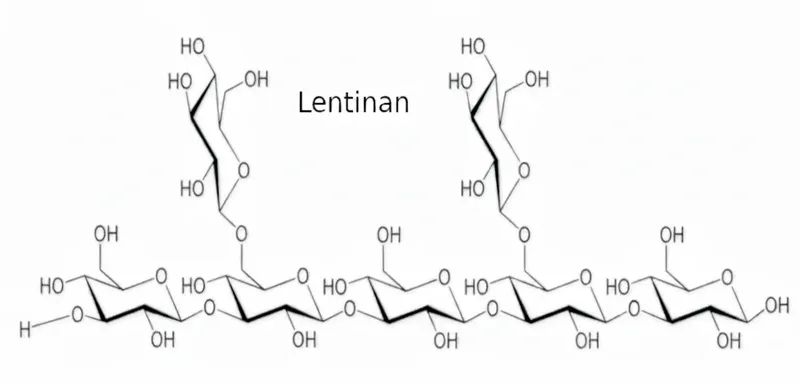
From a medical perspective, Lentinula edodes (lat. Lentinula edodes) is a 'heavyweight' category mushroom that fights many health disorders. This mushroom, used for millennia in Eastern medicine, contains unique substances. One of them is the polysaccharide Lentinan, known for its antibacterial, antimicrobial, antiviral, anticancer, and immune-stimulating properties.
How does Lentinan work?
Lentinan binds to the surface of lymphocytes, which activate macrophages, T-helper cells, and NK cells (natural killer cells). It increases antibody production, including interleukins (IL-2) and interferon (IFN-g). This then triggers an “attack” on foreign bodies, bacteria, viruses, or altered cells. The activity and interaction of these cells is what we call the “immune system.” Additionally, studies show that the compounds of this unique mushroom are effective in protecting against the side effects of radiation and chemotherapy .
Is the use of Lentinan considered “alternative” (or non-conventional) medicine?
In some countries, unfortunately, yes. However, in certain states, even highly developed ones like Japan, this has long ceased to be “alternative” medicine. In Japan, active compounds extracted from Lentinula edodes mushrooms are prescribed for cancer. They are used before, during, and after chemo/radiation therapies, as they inhibit tumor growth/spread and reduce the likelihood of cancer recurrence. In fact, in Japan, polysaccharide-based supplements are leading preparations prescribed for treating cancer.
When is Lentinan used?
As mentioned, since Lentinan stimulates/strengthens the immune system, this polysaccharide is used for a vast array of ailments and diseases.
The person most responsible for the current immense interest and widespread research into the active compounds of Lentinula edodes mushrooms is Japanese Ph.D. Kisaku Mori. He founded the Mushroom Research Institute in Tokyo as early as 1936. Until his death, Dr. Mori worked with scientists from around the world, researching the therapeutic properties of polysaccharides. After years of conducting studies on the human body, he discovered that this active compound is effective in treating a very long list of diseases.
The active compounds extracted from the Lentinula edodes mushroom are like a “pot of gold” for both people and the scientists studying them, as they possess antiviral, antibacterial, and antitumor properties. It has been determined that, based on its mechanism of action, Lentinan, acting as an immunomodulator, is most suitable for patients with oncological diseases. After thousands of long-term studies, this effect of Lentinan was identified:
Effect on the tumor: Inhibits the proliferation/growth of cancer cells [10] Promotes apoptosis of cancer cells (death of cancer cells) [11] Blocks angiogenesis (growth of tumor blood vessels to prevent nutrient supply) [11]
Effect on immunity: Increases NK cell activity (NK – Natural killer cells)[11] Increases cytokine production (cytokines coordinate immune system activity)[11] Activates macrophages (immune cells)[11] Increases LAK cell activity (LAK – Lymphokine-activated killer cells (recognize and destroy tumors)) [11] Reduces IAP (Immunosuppressive acidic protein – the lower, the better)[11] Increases interleukins associated with the immune response to cancer cells.[11] Reduces interleukins associated with allergic immune response (e.g., asthma). [11] Activates T cells (one of the main immune cells for fighting cancer; chemotherapy reduces their number, so restoration is necessary). [12]
Use with chemotherapy: Enhances the effect of chemotherapy [13] Reduces the side effects of chemotherapy [11] Improves quality of life [11] Extends lifespan [11]
What you need to know before buying
The market is flooded with preparations bearing the name "Lentinan," yet the differences between them can be enormous. The most important factor is the extraction method: biologically active polysaccharides are only obtained using water. Ethanol extraction is cheaper and faster, but it does not extract the active ingredients. Although the package may boast a fancy name, there will be no clinically significant amount present. Another crucial indicator that must be stated on the package is the standardized polysaccharide content (as a percentage). The higher it is, the more raw mushroom material was required to produce one gram of the capsule – this is a direct indicator of concentration. Also important is the adequate daily dose, as the preparation's effectiveness directly depends on the amount consumed and the duration of use. The shortest recommended course for health maintenance and prevention lasts 3 months. In the case of an active oncological process, metastases, or late stages of the disease, specialists recommend extending the duration of use and increasing the dose proportionally to the severity of the condition.
However, not all polysaccharides are the same, and this is a key point worth understanding before purchasing a preparation. Lentinula edodes 's active substance, Lentinan, was officially approved in Japan as an adjunctive oncological treatment as early as 1985[11]. This is confirmed by hundreds of clinical studies. It is not simply an herbal preparation – it is a state-recognized medical tool, used for decades before, during, and after chemotherapy. Lentinan acts as a targeted immunomodulator: it binds to specific receptors on immune cells and activates the entire defense chain – NK cells (natural killer cells), macrophages, T-cells, and also increases the production of interleukin IL-2 and interferon IFN-γ[11]. There is also another rarely discussed aspect: cancer cells actively send signals to the immune system that suppress its attack ("don't attack me"). Lentinan helps block these signals, allowing the immune system to recognize and destroy the altered cells.[9].
However, the immune system is not a single weapon—it is an entire army composed of different units fighting on various fronts. NK cells and macrophages are only part of this army. Dendritic cells, which serve as instructors of the immune system, identify targets and give the command to attack. Meanwhile, LAK cells (lymphokine-activated killer cells) directly recognize and destroy tumor cells. This is where the second of the most extensively studied medicinal mushrooms in oncology becomes important – Coriolus versicolor. Its efficacy is supported by hundreds of independent clinical trials[14]. The active compounds of this mushroom activate dendritic and LAK cells. In Japan, extracts of this mushroom have been included in the standard oncology protocol since 1977, and in China since 1987.[15]
What else to take?
Antioxidants. After examining the effects of antioxidant use during and after chemotherapy and comparing 93 clinical trials[10] , it was found that in 70% of cases, chemotherapy effectiveness increases, in 88% of cases, antioxidant use alleviates chemotherapy-induced toxicity and in 63% of cases prolongs patient survival time.
The strongest known natural antioxidant – astaxanthin. Make sure that along with Lentinan there is astaxanthin.
Lentinan AXT from Zenius Labs™ — a scientifically based formula for the immune system when it needs it most.
Frequently asked questions
Lentinan is a polysaccharide extracted from the medicinal mushroom Lentinula edodes. It has immunomodulating, antiviral, and antitumor properties. In Japan, Lentinan is officially used as an adjunctive treatment in oncology.
Not in all countries. In Japan, mushroom polysaccharides are leading preparations administered alongside chemotherapy. In Europe and the USA, they are classified as dietary supplements, but their mechanisms of action are based on decades of scientific research.
Lentinan binds to the surface of lymphocytes and activates macrophages, T-cells, and NK cells (natural killer cells). It also increases antibody production and helps block the 'don't attack me' signals sent by cancer cells.
Three essential criteria: water-based extraction (not alcohol), polysaccharide concentration of at least 30%, and a minimum daily dose of 1200 mg. Cheap products with 5–15% polysaccharides are 2–6 times weaker. A formula combining several mushroom extracts with an antioxidant (astaxanthin) is more effective than single ingredients.
Yes. Studies show that mushroom polysaccharides can enhance the effects of chemotherapy, reduce side effects, and improve quality of life. In Japan, this is standard practice. Always inform your doctor about any supplements you are taking.
Cancer — everything you need to know
Chemotherapy
Cancer Diet
- Fleming A. On the antibacterial action of cultures of a Penicillium. Adelaide University
- Antibacterial compounds from mushrooms. Wikipedia
- Statins: discovery and development from fungal origins. PubMed
- DPP-4 inhibitors from fungal sources. Wikipedia
- Alpha-glucosidase inhibitors. Wikipedia
- Mushroom polysaccharides and cancer — review. PMC
- CD47 „don’t eat me“ signal in cancer. Stanford Medicine
- Immune checkpoint therapy. Cancer.gov
- Lentinan modulates PD-L1 expression. Hilaris Publisher
- Antioxidants and chemotherapy: systematic review of 93 clinical trials. PubMed
- Lentinan: antitumor mechanisms and clinical applications. PubMed
- Zhang Y, et al. Efficacy of lentinan with chemotherapy — meta-analysis. PubMed
- Wang J, et al. Lentinan combined with chemotherapy — meta-analysis. PubMed
- Chang Y, et al. Coriolus versicolor polysaccharopeptide as an immunotherapeutic in China. Prog Mol Biol Transl Sci. 2019. PubMed
- Saleh MH, et al. Immunomodulatory Properties of Coriolus versicolor. Front Immunol. 2017. PubMed
- Wang Y et al. Systematic review and meta-analysis on the efficacy and safety of Injectable Lentinan combined with chemotherapy in the treatment of gastric cancer. Phytomedicine : international journal of phytotherapy and phytopharmacology. 2024. PubMed
- Oba K et al. Individual patient based meta-analysis of lentinan for unresectable/recurrent gastric cancer. Anticancer research. 2009. PubMed
- Wang Y et al. Investigation on the efficiency of lentinan for injection combining cisplatin on treating malignant pleural effusion based on systematic review and meta-analysis. Medicine. 2024. PubMed
- Zhang M et al. Mushroom polysaccharide lentinan for treating different types of cancers: A review of 12 years clinical studies in China. Progress in molecular biology and translational science. 2019. PubMed
- Yin X et al. A meta-analysis of lentinan injection combined with chemotherapy in the treatment of nonsmall cell lung cancer. Indian journal of cancer. 2015. PubMed
- Baral B Holistic Evaluation of Shiitake mushrooms (Lentinula edodes): Unraveling Its Medicinal and Therapeutic Potentials. Chemistry & biodiversity. 2025. PubMed
- Ooi SL et al. Modified Rice Bran Arabinoxylan by Lentinus edodes Mycelial Enzyme as an Immunoceutical for Health and Aging-A Comprehensive Literature Review. Molecules (Basel, Switzerland). 2023. PubMed
- Choi JY et al. Dietary supplementation with rice bran fermented with Lentinus edodes increases interferon-γ activity without causing adverse effects: a randomized, double-blind, placebo-controlled, parallel-group study. Nutrition journal. 2014. PubMed
- Gaullier JM et al. Supplementation with a soluble β-glucan exported from Shiitake medicinal mushroom, Lentinus edodes (Berk.) singer mycelium: a crossover, placebo-controlled study in healthy elderly. International journal of medicinal mushrooms. 2011. PubMed
- Lu H et al. TLR2 agonist PSK activates human NK cells and enhances the antitumor effect of HER2-targeted monoclonal antibody therapy. Clinical cancer research : an official journal of the American Association for Cancer Research. 2011. PubMed
- Ooshiro M et al. [Ten cases of advanced gastro-intestinal cancer that required preoperative dosage of PSK]. Gan to kagaku ryoho. Cancer & chemotherapy. 2009. PubMed
- Tanaka H et al. Impact of adjuvant immunochemotherapy using protein-bound polysaccharide-K on overall survival of patients with gastric cancer. Anticancer research. 2012. PubMed
- Maehara Y et al. Postoperative PSK and OK-432 immunochemotherapy for patients with gastric cancer. Cancer chemotherapy and pharmacology. 1993. PubMed
- Ito G et al. Correlation between efficacy of PSK postoperative adjuvant immunochemotherapy for gastric cancer and expression of MHC class I. Experimental and therapeutic medicine. 2012. PubMed
- Standish LJ et al. Trametes versicolor mushroom immune therapy in breast cancer. Journal of the Society for Integrative Oncology. 2008. PubMed
- Eliza WL et al. Efficacy of Yun Zhi (Coriolus versicolor) on survival in cancer patients: systematic review and meta-analysis. Recent patents on inflammation & allergy drug discovery. 2012. PubMed
- He Z et al. Polysaccharide-Peptide from Trametes versicolor: The Potential Medicine for Colorectal Cancer Treatment. Biomedicines. 2022. PubMed
- Chang Y et al. Preclinical and clinical studies of Coriolus versicolor polysaccharopeptide as an immunotherapeutic in China. Discovery medicine. 2017. PubMed
- Ziaja-Sołtys M et al. Exploring the Anticancer Potential of Coriolus versicolor in Breast Cancer: A Review. Current issues in molecular biology. 2025. PubMed
- Park JS et al. Astaxanthin decreased oxidative stress and inflammation and enhanced immune response in humans. Nutrition & metabolism. 2010. PubMed
- Cheng J et al. The Promising Effects of Astaxanthin on Lung Diseases. Advances in nutrition (Bethesda, Md.). 2021. PubMed
- Lee J et al. Anti-Oxidant and Anti-Inflammatory Effects of Astaxanthin on Gastrointestinal Diseases. International journal of molecular sciences. 2022. PubMed
- Wang T et al. Astaxanthin protected against the adverse effects induced by diesel exhaust particulate matter via improving membrane stability and anti-oxidative property. Journal of hazardous materials. 2023. PubMed
- He J et al. Astaxanthin Alleviates Oxidative Stress in Mouse Preantral Follicles and Enhances Follicular Development Through the AMPK Signaling Pathway. International journal of molecular sciences. 2025. PubMed
- Akramiene D et al. Effects of beta-glucans on the immune system. Medicina (Kaunas, Lithuania). 2007. PubMed
- Ross GD et al. Therapeutic intervention with complement and beta-glucan in cancer. Immunopharmacology. 1999. PubMed
- Li B et al. Yeast beta-glucan amplifies phagocyte killing of iC3b-opsonized tumor cells via complement receptor 3-Syk-phosphatidylinositol 3-kinase pathway. Journal of immunology (Baltimore, Md. : 1950). 2006. PubMed
- Liu J et al. Combined yeast-derived beta-glucan with anti-tumor monoclonal antibody for cancer immunotherapy. Experimental and molecular pathology. 2009. PubMed
- Xia Y et al. The beta-glucan-binding lectin site of mouse CR3 (CD11b/CD18) and its function in generating a primed state of the receptor that mediates cytotoxic activation in response to iC3b-opsonized target cells. Journal of immunology (Baltimore, Md. : 1950). 1999. PubMed
- Fang J et al. Structure of a β-glucan from Grifola frondosa and its antitumor effect by activating Dectin-1/Syk/NF-κB signaling. Glycoconjugate journal. 2012. PubMed
- Zhang M et al. β-Glucan from Saccharomyces cerevisiae induces SBD-1 production in ovine ruminal epithelial cells via the Dectin-1-Syk-NF-κB signaling pathway. Cellular signalling. 2019. PubMed
- Gringhuis SI et al. Dectin-1 directs T helper cell differentiation by controlling noncanonical NF-kappaB activation through Raf-1 and Syk. Nature immunology. 2009. PubMed
- Jia XM et al. CARD9 mediates Dectin-1-induced ERK activation by linking Ras-GRF1 to H-Ras for antifungal immunity. The Journal of experimental medicine. 2014. PubMed
- Bode K et al. Dectin-1 Binding to Annexins on Apoptotic Cells Induces Peripheral Immune Tolerance via NADPH Oxidase-2. Cell reports. 2019. PubMed
- Zou X et al. Radioprotective effect of edible and medicinal mushrooms against ionizing radiation: Components, potential mechanisms, and applications. Food research international (Ottawa, Ont.). 2025. PubMed
- Dan A et al. Therapeutic Effects of Medicinal Mushrooms on Gastric, Breast, and Colorectal Cancer: A Scoping Review. Cureus. 2023. PubMed
- Abidin MHZ et al. Antiatherogenic Potential of Extracts from the Gray Oyster Medicinal Mushroom, Pleurotus pulmonarius (Agaricomycetes), In Vitro. International journal of medicinal mushrooms. 2018. PubMed
- Zhang X et al. Edible mushroom polysaccharides: Structural characteristics, chemical modification strategies, and structure-activity relationship: A review. International journal of biological macromolecules. 2025. PubMed
- Narayanan S et al. Medicinal Mushroom Supplements in Cancer: A Systematic Review of Clinical Studies. Current oncology reports. 2023. PubMed
- Wang H et al. Efficacy of biological response modifier lentinan with chemotherapy for advanced cancer: a meta-analysis. Cancer medicine. 2017. PubMed
- Oba K et al. Efficacy of adjuvant immunochemotherapy with polysaccharide K for patients with curative resections of gastric cancer. Cancer immunology, immunotherapy : CII. 2007. PubMed
- Cheng SC et al. mTOR- and HIF-1α-mediated aerobic glycolysis as metabolic basis for trained immunity. Science (New York, N.Y.). 2014. PubMed
- Kidd P Astaxanthin, cell membrane nutrient with diverse clinical benefits and anti-aging potential. Alternative medicine review : a journal of clinical therapeutic. 2011. PubMed