Signs of a panic attack
A panic attack can be very frightening. It may feel as if you:
- are fainting
- are having a heart attack
- are detaching from your body or surroundings
- are dying
- are losing control
It all happens in your head — there is no real danger — but at the time it really does feel real to you.
Physically, panic attacks can trigger these signs:
- difficulty breathing
- rapid heartbeat
- nausea or dizziness
- raised blood pressure
- heat or cold
- chest pain
To people who have never had a serious panic attack, it can seem like “child’s play” or some “imaginary bogeyman” — yet panic attacks can seriously affect life and daily functioning.
How long does a panic attack last?
A panic attack lasts about 10 minutes and then begins to fade. A strong panic attack may last longer, or you may experience several in succession (rarely). If you experience many panic attacks at unpredictable times and seemingly without obvious cause, you may be diagnosed with panic disorder.
What is a panic attack
When the body senses danger, it activates the “fight or flight” state, releasing hormones, neurotransmitters and so on. And this is genuinely useful if, at dusk, in an abandoned old building site, you spot a drunk repeat-offender striding briskly toward you — with a sword in hand. Then the fight-or-flight state is very useful (I hope you would choose the “flight” part).
Panic attacks happen when the fight-or-flight state is triggered even though no real danger is present.
At that moment the balance of neurotransmitters and hormones suddenly shifts. The calming ones (GABA) fall and the stimulating ones (adrenaline, dopamine) rise. You can read more about the causes of anxiety and panic attacks here.
When do panic attacks strike?
Panic attacks can strike each person at different times. Nocturnal panic attacks, obviously, happen during sleep. They occur at varying frequency and may recur once a month or several times a day — or even one after another. You may notice that certain places, situations or activities seem to set off an attack: before a tense meeting, after alcohol, after certain food (for example, poor-quality or fast food), and so on.
Our body always tries to protect us from danger, so after an attack the body “remembers” where and when it happened, or with which people. So it is normal for the mind to “help” us avoid those things in future. Say a panic attack hit you while driving — twice. What does the mind do? You start to fear or feel uneasy driving, and you start avoiding it, until eventually you stop driving. It can be anything: a place, an action or certain people. A panic attack during sleep is no exception — then anxiety can start to torment you at the mere thought of going to bed. Some people withdraw into themselves instead of looking for ways to treat panic attacks. And there really are ways to fight panic attacks!
Panic disorder
If you experience many panic attacks at unpredictable times and seemingly without obvious cause, you may be diagnosed with panic disorder. Panic disorder and certain phobias often appear together. You will understand more about this neurotransmitter-balance disorder by reading what anxiety is.
How to manage panic attacks
There are several strategies you can use to manage panic attacks. When an attack strikes, you will already know what to do:
- Remind yourself: this will soon pass. Recognize that this is a panic attack, not a heart attack.
- If you can, stay where you are. If you retreat to a calmer place, you may start to fear that place and avoid it in future.
- If you feel you are losing touch with your body, do “grounding” exercises: put your hands in cold or hot water, splash your face, touch or firmly squeeze an object near you.
- If a friend is nearby, tell them what is happening. They can help you calm down and reassure you that it will soon pass.
- Focus on your breathing. Only on your breathing. Breathing is the most powerful of all the exercises. To any attempt by the mind to frighten you further, respond by turning your attention to the exhale. Breathe deeply and slowly. Breathing directly influences neurotransmitter activity.
The golden breathing rule during an attack: the exhale must be longer than the inhale. Breathe in slowly, and breathe out even more slowly. The inhale drives stress; the exhale drives calm.
Panic attack treatment
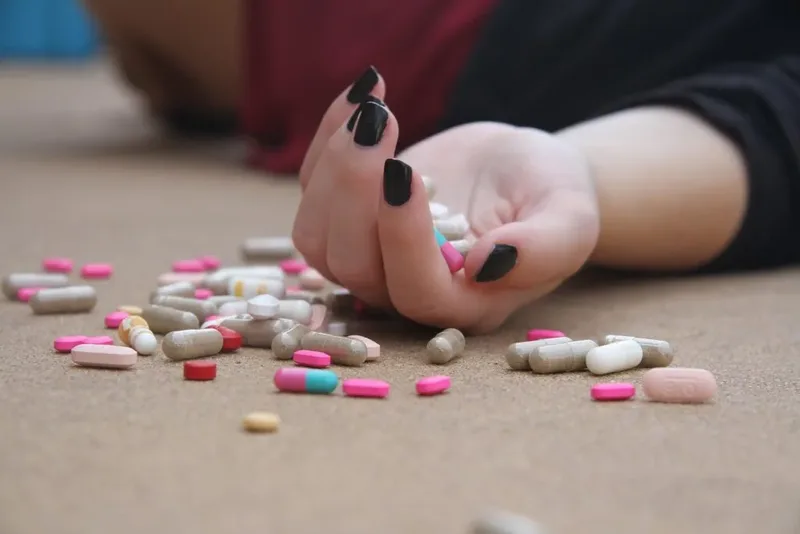
Panic attacks and anxiety can be greatly reduced — or, at the least, strongly diminished — if the necessary lifestyle changes are made. Chemical drugs for panic attacks are not always the answer. In the fight against anxiety, every aspect of your lifestyle can be a powerful weapon: sauna and cold exposure, once mastered, can become strong tools. Your treatment will consist of several elements — understanding why anxiety troubles you, what affects your neurotransmitters, and what to eat and avoid.
During a panic attack, calming GABA drops and adrenaline surges. Vitexin is studied for acting on the GABA-A pathway as a modulator, examined as complementary support.
Vitexin 90 by Zenius Labs™ →What else can I do besides medication?
In the fight against anxiety, every aspect of your lifestyle can be a powerful weapon. Sauna therapy and cold therapy help overcome anxiety and, once mastered, can become strong pillars of mental resilience. Alongside these, intense exercise effectively reduces anxiety, since it stimulates the release of endorphins and neurotrophic factors, which set off a neurochemical cascade that improves your state, mood and anxiety.
How to actually recover?
Treating your panic attacks will involve several things. Why anxiety torments you, what affects the neurotransmitters, what to eat and what to avoid — read here (the article is long).
Frequently Asked Questions
Panic attacks occur when the brain activates the "fight or flight" response without real danger. This causes a sudden surge of adrenaline and cortisol and a drop in GABA — the calming neurotransmitter. Chronic stress, lack of sleep, alcohol or caffeine often contribute.
Not directly. Although the symptoms (racing heart, breathing difficulty, chest pain) feel threatening, panic attacks are not life-threatening. But without a long-term strategy they can develop into panic disorder and restrict daily life.
Remind yourself it will pass and that it is a panic attack, not a heart attack. Stay where you are if you can. Use grounding (cold water, gripping an object). Most importantly, focus only on your breathing — slow, controlled breaths are the most powerful tool.
About 10 minutes before it begins to fade. A strong one may last longer, or several may occur in succession (rarely). Frequent, unpredictable attacks may indicate panic disorder.
- Velasquez ACA et al. Effects of Passiflora incarnata and Valeriana officinalis in the control of anxiety due to tooth extraction: a randomized controlled clinical trial. Oral and maxillofacial surgery. 2024. PubMed
- Miyasaka LS et al. Passiflora for anxiety disorder. The Cochrane database of systematic reviews. 2007. PubMed
- Wolfman C et al. Possible anxiolytic effects of chrysin, a central benzodiazepine receptor ligand isolated from Passiflora coerulea. Pharmacology, biochemistry, and behavior. 1994. PubMed
- Grundmann O et al. Anxiolytic activity of a phytochemically characterized Passiflora incarnata extract is mediated via the GABAergic system. Planta medica. 2008. PubMed
- Zhong H et al. Neonatal inflammation via persistent TGF-β1 downregulation decreases GABA(A)R expression in basolateral amygdala leading to the imbalance of the local excitation-inhibition circuits and anxiety-like phenotype in adult mice. Neurobiology of disease. 2022. PubMed
- Mori K et al. Nerve growth factor-inducing activity of Hericium erinaceus in 1321N1 human astrocytoma cells. Biological & pharmaceutical bulletin. 2008. PubMed
- Lai PL et al. Neurotrophic properties of the Lion’s mane medicinal mushroom, Hericium erinaceus (Higher Basidiomycetes) from Malaysia. International journal of medicinal mushrooms. 2013. PubMed
- Chiu CH et al. Erinacine A-Enriched Hericium erinaceus Mycelium Produces Antidepressant-Like Effects through Modulating BDNF/PI3K/Akt/GSK-3β Signaling in Mice. International journal of molecular sciences. 2018. PubMed
- Cipriano GL et al. Beyond Neurotrophins: A Proposed Neurotrophic-Epigenetic Axis Mediated by Non-Coding RNA Networks for Hericium erinaceus Bioactives-A Hypothesis-Driven Review. International journal of molecular sciences. 2026. PubMed
- Nagano M et al. Reduction of depression and anxiety by 4 weeks Hericium erinaceus intake. Biomedical research (Tokyo, Japan). 2010. PubMed
- Vigna L et al. Hericium erinaceus Improves Mood and Sleep Disorders in Patients Affected by Overweight or Obesity: Could Circulating Pro-BDNF and BDNF Be Potential Biomarkers?. Evidence-based complementary and alternative medicine : eCAM. 2019. PubMed
- Koszła O et al. Biotransformation of Ganoderma lucidum and Hericium erinaceus for ex vivo gut-brain axis modulation and mood-related outcomes in humans: CREB/BDNF signaling and microbiota-driven synergies. Journal of ethnopharmacology. 2025. PubMed
- Pétursson H The benzodiazepine withdrawal syndrome. Addiction (Abingdon, England). 1994. PubMed
- Soyka M Treatment of Benzodiazepine Dependence. The New England journal of medicine. 2017. PubMed
- O’brien CP Benzodiazepine use, abuse, and dependence. The Journal of clinical psychiatry. 2005. PubMed
- Jeanclos E et al. Improved cognition, mild anxiety-like behavior and decreased motor performance in pyridoxal phosphatase-deficient mice. Biochimica et biophysica acta. Molecular basis of disease. 2019. PubMed
- Ratto D et al. Hericium erinaceus Improves Recognition Memory and Induces Hippocampal and Cerebellar Neurogenesis in Frail Mice during Aging. Nutrients. 2019. PubMed
- Amigó J et al. The absence of 5-HT(4) receptors modulates depression- and anxiety-like responses and influences the response medicals in olfactory bulbectomised mice: Adaptive changes in hippocampal neuroplasticity markers and 5-HT(1A) autoreceptor. Neuropharmacology. 2016. PubMed
- Paliokha R et al. Effects of pre-gestational exposure to the stressors and perinatal medicine administration on the excitability of hippocampal glutamate and brainstem monoaminergic neurons, hippocampal neuroplasticity, and anxiety-like behavior in rats. Molecular psychiatry. 2026. PubMed
- Cryan JF et al. The Microbiota-Gut-Brain Axis. Physiological reviews. 2019. PubMed
- Rutsch A et al. The Gut-Brain Axis: How Microbiota and Host Inflammasome Influence Brain Physiology and Pathology. Frontiers in immunology. 2020. PubMed
- Foster JA et al. Stress & the gut-brain axis: Regulation by the microbiome. Neurobiology of stress. 2017. PubMed
- Bear T et al. The Microbiome-Gut-Brain Axis and Resilience to Developing Anxiety or Depression under Stress. Microorganisms. 2021. PubMed